
Every time you turn on a light, charge your phone, or adjust your thermostat, your home’s electrical system goes to work. Behind the walls, a network of wires, circuits, outlets, and protective devices delivers power where you need it. Most homeowners rarely think about this infrastructure until something stops working.
Understanding electrical systems can help you recognize potential problems, make informed decisions about repairs, and prepare your home for new technology. It can also help you avoid costly mistakes when renovating, installing appliances, or upgrading outdated equipment.
Modern homes depend on electricity more than ever. Heating and cooling equipment, kitchen appliances, home offices, security devices, and electric vehicle chargers all place demands on residential electrical infrastructure. An electrical system that worked well decades ago may struggle to meet today’s needs.
Whether you own an older home in Forest Lake or a newer property in the Twin Cities, knowing how your electrical system operates is an important part of maintaining a safe, comfortable living environment.
What Are Electrical Systems?
Electrical systems are a connected network of equipment designed to receive, distribute, control, and safely deliver electricity throughout a building.
In residential properties, electrical systems provide power for lighting, appliances, heating and cooling equipment, electronics, and other devices. Commercial electrical systems perform similar functions but often support larger equipment, higher electrical loads, and more complex distribution requirements.
A typical home electrical system includes several interconnected components:
- Electrical service connections that bring utility power into the property.
- Electrical panels that distribute electricity to individual circuits.
- Circuit breakers that protect wiring from excessive current.
- Electrical wiring that carries power throughout the building.
- Outlets and switches that provide access to and control electricity.
- Grounding and bonding systems that support electrical safety.
- Protective devices that reduce the risk of electric shock, electrical fires, and equipment damage.
These components must work together. A properly installed electrical panel cannot compensate for damaged wiring, and new outlets will not solve problems caused by overloaded circuits.
The condition of the entire system determines how safely and reliably electricity reaches your appliances and equipment.
How Do Electrical Systems Work?
Residential electrical systems operate by receiving electricity from a utility provider and distributing it through circuits designed for specific electrical loads.
Most homes in the United States receive 120/240-volt split-phase electrical service. This arrangement allows standard household devices to operate at approximately 120 volts while larger appliances can use 240 volts.
1. Electricity Enters Through the Service Connection
Electricity reaches your property through overhead power lines or underground service cables.
The utility’s electrical distribution network supplies power to the home, where it passes through metering equipment that measures electricity consumption.
From there, electricity travels to the main electrical service equipment.
The exact arrangement depends on the home’s age, electrical service design, and local utility requirements.
2. The Electrical Panel Distributes Power
The main electrical panel acts as the central distribution point for your home’s electricity.
Inside the panel, bus bars distribute power to circuit breakers. Each breaker serves a specific circuit or group of electrical loads.
For example, your kitchen countertop outlets may be supplied by circuits separate from bedroom lighting. Large appliances, such as electric ranges and dryers, often require dedicated circuits.
This arrangement helps distribute electrical demand and allows individual circuits to be protected independently.
3. Electrical Wiring Carries Power Throughout the Home
Once electricity leaves the panel, conductors carry it to outlets, switches, lighting fixtures, and permanently connected equipment.
Most modern residential branch circuits include:
- Hot conductors that deliver electrical power.
- Neutral conductors that provide a return path for current under normal operating conditions.
- Equipment grounding conductors that provide a low-impedance fault-current path when properly installed.
Not every circuit uses the same conductor arrangement. A 240-volt appliance circuit, for example, may have different wiring requirements depending on whether the equipment needs a neutral.
Wire size, insulation type, circuit protection, and installation methods must be appropriate for the intended load and environment.
4. Switches and Outlets Control Access to Electricity
Electrical outlets provide connection points for appliances and electronic devices. Switches control lighting fixtures, fans, and other connected equipment.
When you turn on a light, the switch completes the intended circuit path, allowing current to flow through the lighting equipment.
Electrical receptacles perform a different function. They provide a connection point where compatible devices can draw electricity from the branch circuit.
5. Protective Devices Respond to Electrical Problems
Electrical protection is built into multiple parts of the system.
Circuit breakers interrupt current when certain overloads or faults occur. Ground-fault circuit interrupters detect current imbalances that may indicate electricity is flowing along an unintended path.
Arc-fault circuit interrupters detect certain hazardous arcing conditions that could contribute to electrical fires.
Each device addresses a different electrical hazard, which is why modern electrical installations often require several types of protection.
Main Components of a Residential Electrical System
Understanding the major components of home electrical systems makes it easier to identify problems and plan improvements.
Electrical Panels and Circuit Breakers
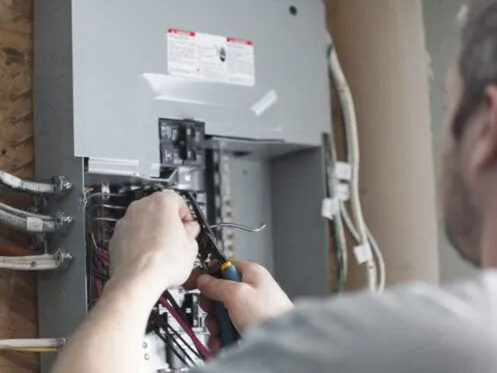
The electrical panel is one of the most important pieces of equipment in a residential electrical installation.
It contains circuit breakers that distribute and protect electrical circuits throughout the home.
Common residential service ratings include 100, 150, and 200 amps, although other configurations exist.
A home’s required electrical capacity depends on factors such as square footage, heating equipment, major appliances, and anticipated electrical demand.
An older 100-amp service is not automatically unsafe or inadequate. However, additional loads may make an upgrade necessary.
Homeowners may need an electrical panel replacement when their existing equipment is damaged, obsolete, improperly installed, or unable to support a calculated electrical load.
Warning signs include repeated breaker trips, visible corrosion, unusual sounds, and evidence of overheating.
Electrical Wiring and Conductors
Electrical wiring forms the distribution network that connects your panel to the rest of your home.
Copper is widely used in residential wiring because of its conductivity, durability, and compatibility with many electrical devices.
Aluminum conductors are also used in electrical installations, particularly for larger feeders and service conductors. Certain older aluminum branch-circuit wiring installations require special attention because connection problems can develop when incompatible devices or installation methods are used.
The age of the wiring alone does not determine whether replacement is necessary.
Electricians evaluate conductor condition, insulation, grounding, circuit capacity, and connection integrity before recommending repairs or replacement.
Homes with deteriorated wiring, unsafe modifications, or extensive electrical deficiencies may benefit from professional wiring and rewiring services.
Electrical Outlets and Receptacles
Electrical outlets connect household equipment to the electrical distribution system.
Different receptacles are designed for different voltages, amperage ratings, and installation environments.
Common types include standard 120-volt receptacles, GFCI-protected outlets, weather-resistant outdoor receptacles, and dedicated receptacles for certain appliances.
Modern electrical installations may also include USB charging receptacles and smart outlets.
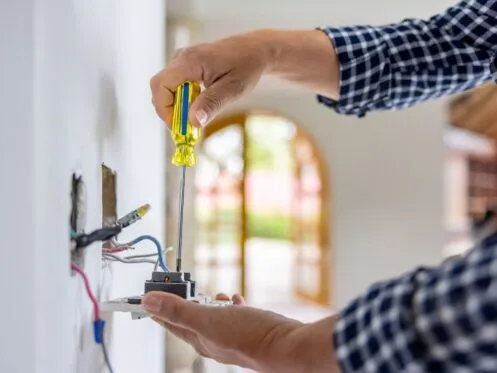
Adding an outlet requires more than choosing a convenient location. An electrician must determine whether the existing circuit can safely support the additional load and whether the installation meets applicable electrical requirements.
Professional electrical outlet installation can improve convenience while addressing issues such as worn receptacles, improper grounding, and inadequate circuit capacity.
Electrical Switches and Controls
Light switches control the operation of lighting fixtures and other connected electrical equipment.
Traditional switches provide simple on-and-off operation. More advanced controls allow homeowners to adjust brightness, automate lighting schedules, or operate fixtures from multiple locations.
Common options include dimmer switches, occupancy sensors, timers, and smart switches.
Not every switch is compatible with every lighting fixture. LED lighting, for example, may require a compatible dimmer to prevent flickering or poor performance.
Grounding and Bonding Systems
Grounding and bonding are essential elements of electrical safety.
Grounding connects designated parts of an electrical system to earth through an approved grounding electrode system.
Bonding electrically connects conductive components so they remain at substantially the same electrical potential and provide an effective fault-current path.
These systems serve related but distinct purposes.
During certain electrical faults, the equipment grounding and bonding paths help enough current flow to operate the appropriate overcurrent protective device.
Proper grounding also supports the operation of some surge protective equipment.
An electrical inspection can identify missing bonding connections, improper grounding arrangements, and other deficiencies that may not be visible during everyday use.
Different Types of Electrical Systems
Electrical systems vary according to the property, equipment, and intended application.
Residential Electrical Systems
Residential systems supply electricity to houses, townhomes, condominiums, and other living spaces.
Their design must account for everyday household loads, including lighting, refrigeration, laundry equipment, heating and cooling systems, and electronics.
Larger homes may require multiple distribution panels, dedicated appliance circuits, and additional capacity for equipment such as EV chargers.
Commercial Electrical Systems
Commercial electrical systems support offices, retail stores, restaurants, warehouses, and other business properties.
Compared with typical residential installations, they may involve more extensive distribution equipment, larger electrical loads, emergency lighting, and specialized circuits.
Many commercial buildings use three-phase power because it is well suited for distributing substantial electrical loads and operating certain motors and mechanical equipment.
Commercial electrical design must also account for occupancy requirements, equipment specifications, and applicable building and electrical codes.
Industrial Electrical Systems
Industrial electrical systems power manufacturing equipment, production machinery, pumps, compressors, and automated processes.
These installations frequently include motor control centers, industrial control panels, transformers, variable-frequency drives, and specialized protective devices.
Reliability is particularly important because an electrical failure may interrupt production or damage expensive equipment.
Industrial installations often require detailed coordination between electrical engineers, maintenance personnel, and qualified electricians.
Low-Voltage Electrical Systems
The term low voltage has different meanings depending on the technical standard and application.
In residential and commercial construction, it often refers informally to systems such as doorbells, communications wiring, security devices, and certain lighting controls that operate at voltages below standard branch-circuit levels.
These systems may support:
- Security cameras and alarm equipment.
- Network and communication connections.
- Doorbells and access controls.
- Thermostats and building controls.
- Landscape lighting.
- Audio and video equipment.
Even when operating at relatively low voltages, these installations must use suitable equipment and wiring methods.
Understanding Electrical Circuits and Electrical Loads
An electrical circuit is a complete path through which electric current can flow.
Every circuit has limitations determined by conductor size, protective devices, equipment ratings, and installation conditions.
Three basic electrical measurements help explain how circuits operate.
Voltage
Voltage represents the electrical potential difference between two points.
Standard residential receptacles in the United States generally provide approximately 120 volts. Many large appliances operate at 240 volts.
Voltage must match the requirements of the connected equipment.
Amperage
Amperage measures electric current.
A circuit rated for 20 amps can carry more current than a comparable 15-amp circuit, provided the conductors, devices, and installation are properly rated.
However, the circuit rating does not mean that every connected load can continuously draw the full breaker rating.
Continuous loads generally require additional sizing considerations under applicable electrical codes.
Wattage
Wattage measures the rate at which electrical energy is used.
For simple resistive loads, power can be calculated by multiplying voltage by current.
For example, a 1,500-watt electric heater operating at 120 volts draws approximately 12.5 amps.
That is a substantial portion of a typical 15-amp branch circuit.
If the same circuit also supplies other high-demand appliances, the total electrical load may exceed its safe operating capacity.
For alternating-current equipment with motors or electronic power supplies, power factor and equipment characteristics may also affect current demand.
Dedicated Circuits vs. Shared Circuits
A shared branch circuit supplies multiple outlets or devices.
A dedicated circuit is intended to serve a particular appliance or piece of equipment.
Equipment that may require a dedicated circuit includes electric ranges, dryers, certain HVAC systems, and EV charging equipment.
Whether a dedicated circuit is required depends on the appliance specifications, electrical load, and applicable code provisions.
Adding dedicated circuits can reduce nuisance breaker trips and help ensure that large appliances receive appropriate electrical power.
Common Electrical System Problems in Homes
Electrical problems are not always obvious. Some develop slowly as connections deteriorate or equipment ages.
Recognizing early warning signs can help prevent more serious damage.
Circuit Breakers Keep Tripping
A breaker that trips repeatedly may be responding to an overloaded circuit, short circuit, ground fault, or equipment problem.
A single trip does not necessarily indicate a major electrical defect. However, recurring trips should be investigated.
Repeatedly resetting a breaker without identifying the cause can allow a dangerous condition to continue.
Lights Flicker or Dim Unexpectedly
Occasional dimming may occur when certain large electrical loads start.
Persistent flickering, particularly across multiple rooms, can indicate loose connections, voltage problems, or other electrical deficiencies.
If several circuits experience unusual brightness changes, a service connection or neutral problem may be involved.
These conditions deserve prompt professional attention.
Outlets Feel Warm or Show Discoloration
A receptacle that becomes unusually hot, produces a burning smell, or shows signs of scorching may have a loose connection, damaged contacts, or another electrical defect.
Stop using the affected outlet and arrange an electrical inspection.
Discoloration around an outlet should never be dismissed as normal wear without determining its cause.
Buzzing Sounds Come From Electrical Equipment
A persistent buzzing or crackling sound near an outlet, switch, or electrical panel may indicate arcing, a loose connection, or malfunctioning equipment.
Some electrical equipment naturally produces a slight operational hum, but new or unusual sounds should be evaluated.
Some Outlets Stop Working
An outlet that suddenly stops supplying power may be connected to a tripped breaker or GFCI device.
Other possible causes include damaged wiring, failed receptacles, and loose electrical connections.
If the cause is not obvious from normal user-accessible controls, professional troubleshooting is appropriate.
Burning Smells or Visible Sparks
A burning odor, smoke, or sustained sparking can indicate an urgent electrical hazard.
Do not continue operating affected equipment. If smoke or fire is present, evacuate and contact emergency services.
Electrical problems involving overheating can develop rapidly, especially when combustible materials are nearby.
When Should You Upgrade Your Electrical System?
Not every older home requires a complete electrical replacement.
The decision should be based on the condition of the existing installation, its available capacity, and the electrical demands of the property.
Several situations commonly justify an electrical system evaluation.
Your Home Has Outdated Electrical Equipment
Older homes may contain electrical panels, wiring methods, or devices that no longer meet current needs.
Some equipment remains serviceable for decades when properly installed and maintained.
Other installations may have known safety concerns, deteriorated components, or limited replacement-part availability.
A licensed electrician can evaluate whether targeted repairs are sufficient or whether replacement is the better long-term solution.
You Are Remodeling Your Kitchen or Bathroom
Renovations frequently change how electricity is used.
A kitchen remodel may introduce additional countertop outlets, new appliances, under-cabinet lighting, and higher electrical loads.
Bathroom renovations may require new lighting, ventilation equipment, and GFCI protection.
Electrical planning should occur before walls are closed and finished surfaces are installed.
Addressing electrical requirements early can reduce construction delays and avoid expensive modifications later.
You Are Installing an Electric Vehicle Charger
Home EV charging can place a substantial load on an electrical system.
Level 2 charging equipment commonly operates on a 240-volt circuit and may require a dedicated branch circuit.
The appropriate circuit rating depends on the charging equipment and the intended charging current.
For example, a charger delivering 40 amps continuously generally requires a 50-amp branch circuit under standard continuous-load sizing rules.
Before installing an EV charger, an electrician should evaluate the home’s available electrical capacity, panel configuration, and installation location.
Some properties can accommodate charging equipment without a service upgrade. Others may need load management, circuit modifications, or additional electrical capacity.
You Are Adding Major Appliances
Electric water heaters, heat pumps, electric ranges, and other large appliances can significantly change household electrical demand.
Installing new equipment without evaluating existing circuits may result in overloaded wiring or inadequate electrical capacity.
An electrical load calculation helps determine whether the existing system can support the proposed equipment.
You Need More Outlets or Circuits
Extension cords and power strips are useful for limited applications, but they should not become permanent substitutes for properly installed wiring.
If a room consistently lacks enough receptacles, additional outlets or circuits may be the safer and more convenient solution.
Electrical Panel Upgrades: 100-Amp vs. 200-Amp Service
One of the most common questions homeowners ask is whether they need a 200-amp electrical panel.
The answer depends on the home’s electrical load, not simply its age or size.
A 100-amp electrical service may be adequate for a smaller home with modest electrical demand.
A 200-amp service provides greater capacity for homes with multiple large appliances, electric heating equipment, and other substantial loads.
| Feature | 100-Amp Service | 200-Amp Service |
| Electrical capacity | Lower | Higher |
| Typical suitability | Homes with modest calculated loads | Homes with larger calculated loads |
| Additional equipment | May have limited available capacity | Often provides more flexibility |
| EV charging | May require load management | Often easier to accommodate |
| Upgrade necessity | Depends on load and equipment condition | Depends on actual demand |
A larger panel does not automatically make a home more energy-efficient or reduce electricity bills.
It increases the amount of electrical current the service can safely accommodate when the complete installation is appropriately designed.
A panel with more breaker spaces also does not necessarily provide more electrical capacity.
Before recommending an upgrade, an electrician should assess the service conductors, existing equipment, utility requirements, and calculated demand.
Electrical System Safety Features Every Homeowner Should Understand
Modern electrical safety relies on several protective measures working together.
Ground-Fault Circuit Interrupters
GFCI protection helps reduce the risk of electric shock by detecting certain differences between outgoing and returning current.
These devices are particularly important in locations where moisture increases the potential for electrical hazards.
Depending on the adopted electrical code and installation conditions, GFCI protection may be required in bathrooms, kitchens, garages, outdoor locations, laundry areas, basements, and other spaces.
GFCI protection can be provided by a receptacle, circuit breaker, or another listed protective device.
Arc-Fault Circuit Interrupters
AFCI devices are designed to detect certain electrical arcing conditions associated with fire hazards.
Damaged wiring, deteriorated insulation, and loose electrical connections can contribute to dangerous arcing.
AFCI protection is required for many residential branch circuits under modern electrical codes, subject to the adopted code edition and applicable amendments.
Whole-Home Surge Protection
Electrical surges are brief increases in voltage that can damage sensitive equipment.
They may originate from utility disturbances, lightning-related events, or switching operations involving electrical equipment.
Whole-home surge protection is designed to limit certain transient overvoltages before they reach connected devices.
A surge protective device installed at the electrical service or distribution equipment can provide an important layer of protection.
However, no surge protector can guarantee protection against every electrical event, particularly a direct lightning strike.
For homeowners with expensive electronics, smart appliances, and home office equipment, professionally installed surge protection can be a worthwhile improvement.
Smoke and Carbon Monoxide Alarms
Smoke alarms and carbon monoxide alarms are also important parts of a home’s overall safety infrastructure.
Depending on the equipment and building requirements, alarms may be battery-powered, hardwired, or interconnected.
Proper placement, testing, and replacement help ensure that these devices operate when needed.
How Electrical Systems Affect Energy Efficiency
Electrical infrastructure and energy efficiency are closely related, but they are not the same thing.
Replacing an electrical panel does not ordinarily reduce electricity consumption by itself.
Energy savings generally come from improving the efficiency of connected equipment, reducing unnecessary operating time, and addressing certain electrical losses.
Upgrade to LED Lighting
LED fixtures typically use substantially less electricity than traditional incandescent lighting while providing comparable illumination.
They also generally last longer, reducing replacement frequency.
Homeowners can improve lighting efficiency by combining LED fixtures with suitable dimmers, occupancy sensors, and timers.
Install Smart Lighting Controls
Smart switches and lighting controls can reduce unnecessary electricity use by automatically turning lights off when rooms are unoccupied.
Scheduling features are particularly useful for outdoor lighting and frequently used living spaces.
Improve Outdoor Lighting Efficiency
Modern outdoor lighting systems can combine energy-efficient fixtures with motion sensors, photocells, and timers.
This provides illumination when needed without requiring lights to operate continuously.
Proper installation also helps protect outdoor wiring and connections from moisture, temperature changes, and physical damage.
Evaluate Older Electrical Equipment
Damaged connections and deteriorated electrical equipment can generate unwanted heat.
These conditions should be corrected primarily for safety and reliability, although eliminating abnormal electrical resistance can also reduce wasted energy.
The greatest energy savings generally come from efficient appliances, lighting, HVAC equipment, and sensible operating practices.
Electrical Systems in Minnesota: Special Considerations for Twin Cities Homes
Minnesota’s climate and housing conditions create several practical considerations for residential electrical installations.
Homeowners in Forest Lake, Minneapolis, St. Paul, and surrounding communities should account for seasonal temperatures, snow, moisture, and the age of existing electrical infrastructure.
Cold Weather and Outdoor Electrical Equipment
Outdoor receptacles, lighting fixtures, and EV charging equipment must be suitable for their installation environment.
Minnesota winters expose equipment to freezing temperatures, ice, snow, and moisture.
Outdoor electrical installations may require weather-resistant components, appropriate enclosures, suitable wiring methods, and protection against physical damage.
Equipment installed in garages or exposed locations should also meet the manufacturer’s temperature and environmental specifications.
Older Homes and Electrical Renovations
Many Twin Cities neighborhoods contain homes built before today’s electrical demands became common.
These properties may have undergone several renovations over the years.
An older home might contain a combination of original wiring, newer circuits, replaced outlets, and updated electrical panels.
This mixture is not necessarily unsafe, but it can make troubleshooting more complicated.
A thorough electrical evaluation can help identify incompatible equipment, improper modifications, and circuits that no longer meet the property’s needs.
Electrical Permits and Code Requirements
Electrical installations in Minnesota are governed by the electrical code adopted by the state, along with applicable administrative requirements.
The Minnesota State Electrical Code is based on the National Electrical Code, with state-specific provisions.
Permit and inspection requirements depend on the type of work, property, and jurisdiction.
Professional electricians must account for the applicable code edition, local inspection authority, and utility requirements when planning installations.
Preparing for Storms and Power Outages
Severe weather can interrupt utility service throughout the Twin Cities.
Homeowners who experience recurring outages may consider standby generators, properly installed transfer equipment, or other backup power solutions.
Backup systems must be designed to prevent dangerous backfeeding into utility lines.
An electrician can help determine which essential circuits should receive backup power and whether additional electrical modifications are necessary.
What Happens During a Professional Electrical System Inspection?
An electrical inspection helps determine whether existing equipment is operating safely and whether the system can support current or planned electrical loads.
The scope depends on the property and the reason for the inspection.
A typical evaluation may include several areas.
Electrical Panel Evaluation
The electrician examines accessible panel components for signs of overheating, corrosion, improper connections, damaged equipment, and other deficiencies.
They may also evaluate circuit labeling, breaker compatibility, and available electrical capacity.
Wiring and Circuit Assessment
Accessible wiring and connections may be inspected for deterioration, improper installation, or signs of previous damage.
Testing can help identify wiring faults, grounding problems, and other electrical issues.
Outlet and Switch Testing
Receptacles and switches may be checked for correct operation, polarity, grounding, and physical condition.
GFCI and AFCI protection can also be evaluated where applicable.
Electrical Load Review
An electrician may calculate the electrical demand of the property, particularly when a homeowner plans to add large appliances or charging equipment.
This assessment helps determine whether existing service equipment and branch circuits can accommodate the proposed changes.
Repair and Upgrade Recommendations
Following the inspection, the electrician can explain which issues require immediate correction and which improvements can be planned for later.
A useful assessment distinguishes safety defects from optional upgrades.
For example, a damaged electrical connection may require prompt repair, while adding smart lighting controls may be a convenience improvement rather than a safety necessity.
Electrical System Maintenance: How to Keep Your Home Safe
Electrical systems generally require less routine attention than many mechanical systems, but they should not be ignored.
Homeowners can help maintain electrical safety by paying attention to changes in normal operation.
Good maintenance practices include:
- Testing GFCI devices according to manufacturer instructions.
- Keeping electrical panels accessible and free from stored items.
- Watching for flickering lights, unusual sounds, and recurring breaker trips.
- Replacing damaged extension cords and power strips.
- Avoiding excessive electrical loads on individual circuits.
- Keeping outdoor electrical covers and enclosures in good condition.
- Checking smoke and carbon monoxide alarms regularly.
- Scheduling professional evaluations when electrical problems develop.
Electrical panel covers, internal wiring, and energized connections should only be handled by qualified personnel.
Homeowners should also avoid replacing a breaker with a higher-rated model to stop nuisance tripping. The breaker rating must be appropriate for the protected circuit.
Maintenance is especially important after flooding, storm damage, electrical overheating, or major renovations.
How Long Do Residential Electrical Systems Last?
There is no single expiration date for an entire electrical system.
Different components have different service lives, and actual longevity depends on installation quality, environmental conditions, electrical loading, and maintenance.
Electrical panels may remain serviceable for several decades. Wiring can also last many decades when properly installed and protected from damage.
Receptacles, switches, and protective devices may need replacement sooner because of wear, deterioration, or malfunction.
The condition of the equipment matters more than a simple age estimate.
For example, a properly maintained electrical panel that is 25 years old may be in better condition than a newer panel exposed to moisture or improper modifications.
An electrician should evaluate the system before recommending replacement based solely on age.
How Much Does It Cost to Repair or Upgrade an Electrical System?
Electrical repair and installation costs vary considerably depending on the scope of work.
Replacing a damaged outlet is a different project from rewiring an entire home or upgrading electrical service.
Several factors influence pricing.
Type of Electrical Work
Simple device replacements generally require less labor and material than panel upgrades, new circuits, or whole-home rewiring.
Complex troubleshooting can also affect costs when a fault is difficult to locate.
Accessibility
Electrical wiring located behind finished walls, ceilings, or difficult-to-access areas may require additional labor.
Homes with unfinished basements or accessible attics may provide easier wiring routes.
Electrical Capacity Requirements
Service upgrades may involve more than replacing the panel.
Depending on the installation, additional work could include service conductors, meter equipment, grounding and bonding improvements, and coordination with the utility provider.
Permits and Inspections
Permit fees and required inspections may affect the overall project cost.
These requirements help verify that electrical installations meet applicable safety standards.
Materials and Equipment
The cost of electrical components varies according to their ratings, specifications, manufacturer, and installation requirements.
A detailed estimate should explain the proposed work and identify any significant conditions that could change the final price.
Choosing the Right Electrician for Electrical System Repairs and Upgrades
Electrical work requires technical knowledge, practical experience, and an understanding of current safety standards.
Choosing a qualified electrical contractor is especially important for projects involving service equipment, wiring modifications, and major appliance installations.
Look for a company that can explain the problem clearly and recommend repairs based on the condition of your electrical system.
A professional electrician should evaluate the existing installation before proposing major changes.
For example, frequent breaker trips do not automatically mean that an entire electrical panel needs replacement. The cause could be an overloaded circuit, defective appliance, or wiring fault.
Accurate troubleshooting helps homeowners avoid unnecessary expenses while addressing the actual electrical problem.
It is also important to verify appropriate licensing, insurance, and experience with the type of electrical work being performed.
Professional Electrical System Services in Forest Lake and the Twin Cities
When electrical systems begin showing signs of wear or no longer meet a home’s needs, professional repairs and upgrades can restore reliability and improve safety.
Plugz Electric provides residential and commercial electrical services from its Forest Lake location, serving homeowners and businesses throughout the Twin Cities metro area.
The company handles electrical repairs, panel replacements, wiring and rewiring, outlets, switches, surge protection, EV charging stations, and indoor and outdoor lighting installations.
Whether you’re updating an older home, planning a renovation, or installing new electrical equipment, having an experienced electrician assess the existing system helps ensure that improvements are appropriate for your property.
Electrical projects are often connected. Installing an EV charger may require a load calculation. A kitchen renovation may involve additional circuits and new outlets. Replacing outdated wiring may reveal opportunities to improve grounding and electrical protection.
Addressing these needs together can make future upgrades easier and reduce the likelihood of repeated electrical work.
For electrical system repairs, installations, or upgrades in Forest Lake and the surrounding Twin Cities, contact Plugz Electric or call 612-295-1595 to discuss your project.
Frequently Asked Questions About Electrical Systems
What Is an Electrical System in a House?
A home electrical system is a network of service equipment, wiring, circuits, outlets, switches, and protective devices that distributes electricity throughout a residential property. It provides power for lighting, appliances, heating and cooling equipment, and electronic devices.
What Are the Main Parts of an Electrical System?
The main components include the electrical service connection, meter, main electrical panel, circuit breakers, branch-circuit wiring, outlets, switches, grounding and bonding equipment, and electrical safety devices.
Each component performs a specific function in delivering and controlling electricity.
What Are the Three Main Types of Electrical Systems?
Electrical systems are commonly categorized by application as residential, commercial, and industrial systems. Residential systems serve homes, commercial systems support business properties, and industrial systems power manufacturing and specialized equipment.
Electrical systems can also be classified by voltage, current type, and distribution configuration.
How Does a Residential Electrical System Work?
Electricity enters the home through the utility service connection and passes through the electrical meter to the main service equipment.
The electrical panel distributes power through protected branch circuits. Wiring carries electricity to outlets, lights, appliances, and other equipment.
Circuit breakers and additional protective devices help limit electrical hazards.
How Do I Know if My Electrical System Is Outdated?
Common warning signs include frequent breaker trips, flickering lights, damaged outlets, deteriorated wiring, and electrical equipment that cannot support current household demand.
However, age alone does not establish that a system is unsafe. A professional inspection can determine whether repairs or upgrades are needed.
How Often Should a Home Electrical System Be Inspected?
Inspection frequency depends on the home’s age, condition, and history.
An electrical evaluation is particularly useful when purchasing an older home, planning a major renovation, adding significant electrical loads, or experiencing recurring electrical problems.
Properties with known electrical deficiencies may require more frequent professional attention.
Is a 100-Amp Electrical Panel Enough for a Modern Home?
A 100-amp service may be sufficient for some homes with modest electrical loads.
However, properties with electric heating, multiple large appliances, or EV charging equipment may require greater capacity.
A residential electrical load calculation is the appropriate way to determine whether an upgrade is necessary.
What Is the Difference Between Electrical Wiring and an Electrical System?
Electrical wiring refers to the conductors and associated wiring methods used to carry electricity.
An electrical system includes the wiring along with service equipment, panels, circuit breakers, outlets, switches, grounding and bonding components, and protective devices.
Wiring is one part of the larger electrical infrastructure.
Can You Add New Circuits Without Replacing the Electrical Panel?
Yes. New circuits can often be added to an existing panel when there is sufficient electrical capacity, appropriate equipment compatibility, and available space for the required circuit protection.
If the panel is full, an electrician may evaluate approved alternatives, such as a subpanel.
The decision depends on the existing installation and calculated electrical demand.
Does Rewiring a House Require Removing All the Walls?
Not necessarily.
Electricians can often route new wiring through accessible attics, basements, crawl spaces, and carefully selected wall openings.
The amount of wall removal depends on the building’s construction, existing wiring paths, and project requirements.
Some drywall repair may still be necessary.
What Is the Difference Between a Circuit Breaker and a GFCI?
A standard circuit breaker primarily protects wiring against excessive current caused by overloads and short circuits.
A GFCI detects certain current imbalances and interrupts power to reduce the risk of electric shock.
Some circuit breakers combine overcurrent protection with GFCI or AFCI functionality.
Do Electrical Systems Need Surge Protection?
Surge protection is an important consideration for modern homes with sensitive electronics and appliances.
Whole-home surge protective devices help limit certain transient overvoltages that could damage connected equipment.
Modern electrical codes require surge protection for many residential service installations, subject to the adopted code edition and applicable requirements.
Can an Old Electrical System Support an EV Charger?
Some older electrical systems can support EV charging without a complete service upgrade.
The electrician must evaluate the available electrical capacity, charging equipment requirements, and existing circuit configuration.
Where capacity is limited, approved energy management or load management equipment may provide an alternative to upgrading the entire service.
What Causes Electrical Systems to Fail?
Electrical system failures can result from overloaded circuits, damaged wiring, loose connections, deteriorated insulation, moisture intrusion, defective equipment, or external utility problems.
The underlying cause determines whether the appropriate solution is a simple repair, circuit replacement, or more extensive electrical work.
How Can I Make My Home’s Electrical System Safer?
Start by addressing damaged outlets, recurring breaker trips, and other signs of electrical problems.
Make sure required GFCI and AFCI protection is installed, avoid overloading circuits, and have outdated or damaged equipment professionally evaluated.
Proper grounding, surge protection, and correctly installed wiring also contribute to a safer electrical system.
Should I Upgrade My Electrical System Before Remodeling?
An electrical evaluation is a good idea before major remodeling work.
New kitchens, bathrooms, finished basements, and home additions often introduce additional lighting, outlets, and appliances.
Reviewing electrical requirements before construction begins allows circuits and equipment to be planned around the finished space.
Who Should I Call for Electrical System Repairs in the Twin Cities?
Homeowners in Forest Lake, Minneapolis, St. Paul, and surrounding communities can contact Plugz Electric for electrical repairs, wiring, panel upgrades, outlet installations, surge protection, lighting, and EV charging services.
A professional assessment can help identify the cause of electrical problems and determine the most appropriate repair or upgrade for your home.