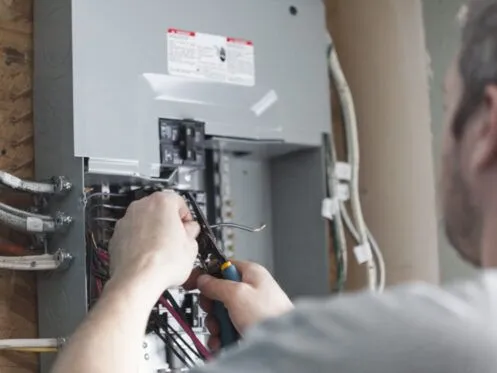

A circuit breaker that trips once may simply be responding to a temporary electrical overload. A breaker that keeps tripping is different. Repeated trips usually mean something on the circuit needs attention, whether that is excessive electrical demand, a faulty appliance, damaged wiring, a short circuit, a ground fault, or a problem inside the electrical panel itself.
The breaker is doing an important job when it shuts off. Circuit breakers are designed to interrupt electrical current when conditions become unsafe. Continually resetting one without finding out why it is tripping does not solve the underlying electrical problem.
If your circuit breaker keeps tripping, start by identifying what was running when the power went out. In some cases, reducing the electrical load may solve the immediate problem. If the breaker trips again, will not reset, feels unusually warm, or is accompanied by a burning smell, buzzing, sparks, or discolored electrical components, the circuit should be inspected by a qualified electrician.
Understanding what causes breakers to trip can help you determine what to do next.
Why Does My Circuit Breaker Keep Tripping?
Circuit breakers monitor the electrical current flowing through individual circuits in your home. When the current exceeds safe operating conditions, the breaker opens the circuit and cuts the power.
That interruption helps protect electrical wiring and connected equipment from overheating and other potentially dangerous conditions.
The most common causes of repeated breaker trips include:
- An overloaded circuit
- A short circuit
- A ground fault
- A faulty appliance
- Damaged or deteriorating wiring
- Loose electrical connections
- A defective circuit breaker
- Problems with outlets or switches
- Moisture reaching electrical components
- An electrical panel that no longer meets the home’s power demands
The circumstances surrounding the trip often provide clues about which problem you are dealing with.
What To Do When a Circuit Breaker Trips
When part of your house suddenly loses power, you can perform a few basic checks before calling for electrical repair.
Turn Off or Unplug Devices on the Circuit
Start by turning off lights and unplugging appliances or electronics in the affected area.
Pay particular attention to equipment that draws significant amounts of electricity. Space heaters, hair dryers, microwaves, portable air conditioners, countertop cooking appliances, shop equipment, and similar devices can place substantial demand on a circuit.
Removing the electrical load makes it easier to determine whether an overloaded circuit caused the trip.
Find the Tripped Breaker
Go to the electrical panel and look for a breaker that is positioned differently from the others. Depending on the breaker, it may move fully to the OFF position or stop somewhere between ON and OFF.
The breaker should usually be switched completely OFF before being returned to ON.
Do not repeatedly force a breaker to reset.
If it immediately trips again, leave it off. The circuit may have a fault that requires professional electrical troubleshooting.
Restore Devices Gradually
If the breaker remains on, reconnect electrical devices one at a time.
Suppose the breaker operates normally until you turn on a space heater. That could indicate the circuit cannot safely support the combined load.
If the breaker trips whenever one particular appliance is connected, the appliance itself may be contributing to the problem.
When no obvious pattern exists, or the breaker continues tripping with very little connected to the circuit, the electrical system should be inspected.
An Overloaded Circuit Is One of the Most Common Causes
Circuit overload occurs when connected devices demand more electrical current than the circuit is designed to handle.
Imagine plugging a space heater, television, gaming system, computer, and several other devices into outlets served by the same circuit. Each device may work perfectly well, but their combined electrical demand can exceed the circuit’s capacity.
The breaker trips before excessive current can cause the circuit wiring to overheat.
You may notice that the breaker trips when:
- Multiple appliances operate simultaneously
- A portable heater is turned on
- A vacuum cleaner starts
- Kitchen appliances are used together
- Power tools are connected
- Window air conditioners or other high-demand equipment operate
- Several devices share extension cords or power strips
Moving some equipment to another circuit can reduce the immediate load, but frequent overloads may indicate that the home’s electrical layout no longer matches how the space is being used.
Adding dedicated circuits or completing an appropriate electrical upgrade can provide a better long-term solution than constantly rearranging appliances.
A Short Circuit Can Cause Immediate Breaker Trips
A short circuit is more serious than a routine overload.
Under normal conditions, electricity follows a controlled path through the electrical system. A short circuit occurs when electricity finds an unintended low-resistance path, causing a sudden increase in current.
The circuit breaker responds by shutting the circuit down.
Possible causes include damaged wire insulation, loose connections, damaged appliances, faulty receptacles, deteriorated wiring, or wires contacting where they should not.
A short circuit may cause a breaker to trip immediately after you reset it.
Other warning signs can include:
- A burning or melted-plastic smell
- Black or brown discoloration around an outlet
- Buzzing or crackling
- Sparks
- Melted insulation
- A breaker that trips instantly
- An outlet or switch that becomes unusually hot
A suspected short circuit should be professionally diagnosed rather than repeatedly tested by resetting the breaker.
Ground Faults Can Also Trip Breakers
A ground fault occurs when electrical current leaves its intended path and flows toward ground.
Ground faults are particularly concerning where electricity and moisture can come together, which is why modern electrical systems use ground-fault circuit interrupter protection in specified locations.
You commonly encounter GFCI protection around areas such as kitchens, bathrooms, garages, basements, laundry areas, and outdoor spaces, depending on the installation and applicable electrical requirements.
Sometimes what appears to be a breaker problem is actually a tripped GFCI receptacle.
If several outlets stop working, look for a GFCI outlet on the same circuit. It may have TEST and RESET buttons on its face.
If the GFCI repeatedly trips after being reset, however, something may be causing a ground fault, and the problem deserves further investigation.
A Faulty Appliance May Be Causing the Breaker To Trip
The home’s wiring is not always the culprit.
An appliance with damaged internal wiring or another electrical defect can cause a breaker to trip whenever that appliance operates.
This can happen with almost anything that uses electricity, including:
- Refrigerators
- Microwaves
- Dishwashers
- Washing machines
- Dryers
- Space heaters
- Window air conditioners
- Dehumidifiers
- Vacuums
- Power tools
- Small kitchen appliances
Pay attention to timing.
If the same breaker trips every time a particular appliance starts, stop using that appliance until the cause has been determined.
This is especially important if you notice unusual heat, electrical odors, visible cord damage, sparks, or other signs of an electrical fault.
Your Electrical Wiring Could Be the Problem
Sometimes a tripping breaker is the symptom you notice while the actual problem is hidden behind the walls.
Electrical wiring can deteriorate or become damaged for many reasons. Connections can loosen. Insulation can deteriorate. Remodeling work can accidentally damage cables. Rodents can damage wiring. Older electrical systems may also contain components that are no longer appropriate for the way the home uses electricity today.
Potential wiring problems can produce more than breaker trips.
Watch for:
- Flickering or dimming lights
- Frequently tripped breakers
- Dead outlets
- Warm outlets or switches
- Burning odors
- Buzzing sounds
- Intermittent power
- Discoloration around electrical devices
When several of these symptoms occur together, a professional wiring inspection becomes particularly important.
Depending on what is found, the solution might involve repairing one connection, replacing a damaged section of wiring, installing a new circuit, or completing more extensive rewiring in an older property.
Could the Circuit Breaker Itself Be Bad?
Circuit breakers do not last forever.
Mechanical components can wear, connections can deteriorate, and a breaker can eventually stop operating correctly. A failing breaker might trip unnecessarily, fail to remain in the ON position, or show signs of overheating.
The breaker should not automatically be blamed simply because it keeps tripping, though.
Replacing the breaker without diagnosing the circuit could leave the actual cause untouched. An electrician can test the circuit, inspect the connections and determine whether the breaker itself is defective or is correctly responding to another problem.
When Frequent Breaker Trips Point to an Electrical Panel Problem
One tripping circuit does not necessarily mean you need a new electrical panel.
When breaker problems are widespread, however, the panel deserves closer attention.
Older homes were not necessarily designed for today’s electrical loads. Modern households may simultaneously power computers, televisions, kitchen equipment, HVAC systems, EV chargers, home offices, entertainment equipment and numerous rechargeable devices.
Electrical demand has changed dramatically.
Signs that your panel or electrical service may need professional evaluation include:
- Breakers frequently trip on multiple circuits
- The lights dim when the appliances start
- You hear buzzing or unusual noises at the panel
- The panel feels excessively warm
- You notice corrosion
- Breakers or panel components appear damaged
- The panel has no capacity for additional circuits
- You are planning major electrical additions
- Parts of the home regularly lose power
An electrician can perform load calculations and inspect the existing system before recommending repairs, additional circuits or an electrical panel upgrade.
Why Does My Breaker Keep Tripping With Nothing Plugged In?
This situation often confuses homeowners.
If you unplug everything you can find and the breaker still trips, the problem may exist somewhere else on the circuit.
Remember that a circuit can serve more than the obvious receptacles in one room. It may also supply lighting, hardwired equipment, outdoor electrical components, interconnected spaces, or devices you did not realize were connected.
A breaker that trips with apparently no load could indicate:
- Damaged wiring
- A short circuit
- A ground fault
- A loose connection
- Moisture intrusion
- A hardwired device malfunction
- A defective breaker
At this point, unplugging additional devices is unlikely to provide much useful information. Electrical testing is typically needed to locate the fault.
Why Does the Breaker Trip as Soon as I Reset It?
An immediate trip is different from a breaker that stays on for 20 minutes and then shuts off.
When a breaker instantly moves back to the tripped position, the circuit may have an active fault or a substantial load still connected.
Do not keep flipping it back on to see whether it will eventually hold.
Leave the breaker off and have the circuit checked.
Repeated resets can energize a faulty circuit over and over without addressing what caused the protective device to operate in the first place.
Why Does My Breaker Trip After a Few Minutes?
Timing can provide useful diagnostic information.
A breaker that trips after several minutes may be responding to an overload that develops as equipment runs. It can also indicate a problem associated with a particular appliance or electrical connection.
Consider what happens immediately before the trip.
Does it happen after the microwave has been running? When does a heater turn on? After multiple kitchen appliances start operating? When are power tools used in the garage?
Patterns like these can help an electrician narrow down the cause considerably faster.
Why Does My Breaker Keep Tripping at Night?
The breaker does not care what time it is, but your home’s electrical usage changes throughout the day.
At night, you may be operating equipment that is rarely used during daylight hours. Space heaters, bedroom electronics, exterior lighting, electric blankets, humidifiers, entertainment systems, and other devices can increase the load on particular circuits.
Outdoor lighting can create another clue. If a breaker begins tripping after rain, snow, or melting ice, moisture reaching an exterior fixture, receptacle, connection, or damaged wiring may be involved.
For Minnesota homes, changes in seasonal electrical demand are particularly relevant. Heating equipment and portable heaters can increase winter loads, while air-conditioning equipment and other appliances affect summer demand.
The underlying issue still needs to be identified rather than assuming the season itself is responsible.
What If the Breaker Keeps Tripping After a Storm?
Storms can introduce several electrical problems at once.
Power interruptions and voltage disturbances may affect electrical equipment, while wind-driven rain, snow, melting ice, or physical storm damage can introduce moisture around outdoor electrical components.
If breaker problems begin immediately after severe weather, pay attention to whether the affected circuit serves:
- Outdoor receptacles
- Exterior lighting
- Garages
- Sheds
- Pumps
- Outdoor equipment
- Basement areas
- Other locations that could have been exposed to moisture
Whole-home surge protection can help protect connected equipment against certain voltage surges, but surge protection and circuit breakers perform different jobs. One does not replace the other.
Should You Keep Resetting a Breaker That Trips?
No.
Resetting a breaker once after reducing the electrical load can help determine whether you experienced a simple overload.
Repeatedly resetting a breaker that continues to trip is another matter.
The breaker is reacting to electrical conditions on the circuit. Continuing to reset it does not repair damaged wiring, eliminate a ground fault, fix an appliance, or increase the circuit’s capacity.
Think of the trip as information rather than an inconvenience.
Something caused the breaker to open.
The goal should be finding that cause.
Signs You Should Stop Troubleshooting and Call an Electrician
Some electrical symptoms deserve professional attention immediately.
Stop using the affected circuit if you notice:
- Burning or electrical odors
- Smoke
- Sparks
- Melted outlets, switches, plugs, or wiring
- Black or brown marks around receptacles
- A hot electrical panel
- Buzzing or crackling from the panel
- A breaker that immediately trips after resetting
- Water near the panel or electrical equipment
- Multiple breakers are suddenly tripping
- Repeated power loss with no obvious cause
You should also schedule an electrical repair if breaker trips have become a recurring part of everyday life.
A functioning residential electrical system should not require homeowners to constantly visit the breaker panel.
How an Electrician Troubleshoots a Circuit That Keeps Tripping
Professional troubleshooting is more systematic than simply replacing the breaker.
The electrician first needs to determine whether the breaker is responding correctly to a problem elsewhere or whether the breaker itself has failed.
That process may involve evaluating the circuit load, examining the panel, testing electrical components, inspecting outlets and switches, checking connections, evaluating wiring, and isolating appliances or devices connected to the circuit.
The findings determine the repair.
For example, one home may simply need a damaged outlet replaced. Another may need a dedicated circuit for equipment that draws substantial power. An older property could require wiring repairs or a panel upgrade.
Accurate diagnosis matters because several electrical problems can create nearly identical symptoms.
Can Adding a New Circuit Solve Frequent Breaker Trips?
Sometimes.
If a circuit is repeatedly overloaded because too many high-demand devices legitimately need to operate in the same area, adding a properly designed circuit can distribute the electrical load more appropriately.
Kitchens, workshops, garages, home offices, finished basements, and remodeled spaces are common examples of places where electrical usage can change considerably over time.
Adding circuits may also be appropriate when installing equipment with specific electrical requirements.
The important distinction is between insufficient capacity and an electrical fault.
Adding a circuit does not repair damaged wiring or a short circuit. The reason for the existing breaker trips should be established first.
Older Homes Can Have Different Electrical Challenges
Older Twin Cities homes can present electrical conditions that are less common in newer construction.
The house may have been built when residents owned far fewer electrical devices. Previous owners may also have remodeled the property, added appliances, finished rooms, changed lighting, or modified circuits over several decades.
That history matters.
A home’s electrical system should evolve along with its electrical demand. Depending on the condition of the property, that could mean repairing individual circuits, replacing outdated outlets, upgrading the electrical panel, adding dedicated circuits, or rewiring portions of the home.
The appropriate solution depends on the system itself, not simply the age printed on the home’s property record.
Breaker Problems After Remodeling or Installing New Equipment
If breaker trips begin shortly after an electrical installation, remodel, or major appliance addition, the timing deserves attention.
Adding recessed lighting, outdoor lighting, a workshop, new kitchen equipment, a finished basement, or other electrical loads can change how circuits are used.
Sometimes an existing circuit simply cannot support the additional demand.
In other cases, the problem could involve the new equipment or installation.
Planning electrical capacity during renovations helps avoid these problems. A qualified electrician can determine what existing circuits can safely support and where dedicated circuits or panel improvements may be appropriate.
Do You Need a Panel Upgrade Because Your Breaker Keeps Tripping?
Not necessarily.
A panel replacement should be based on the condition and capacity of the electrical system rather than a single symptom.
If one circuit is overloaded because several high-demand appliances are plugged into it, the electrical panel may be perfectly functional.
On the other hand, frequent problems across multiple circuits, insufficient panel capacity, deteriorated components, or plans for significant additional electrical loads may make an upgrade appropriate.
This is why proper diagnosis comes before replacement.
The best repair is the one that addresses the actual electrical problem.
Preventing Circuit Breakers From Tripping Repeatedly
Not every electrical fault is preventable, but sensible electrical habits can reduce unnecessary overloads and make emerging problems easier to identify.
Avoid relying on extension cords and power strips as permanent solutions for inadequate outlet capacity. Be cautious about operating several high-wattage appliances on the same circuit. Replace damaged cords and electrical devices rather than continuing to use them.
Pay attention when your electrical system changes behavior, too.
A breaker that suddenly begins tripping after years of normal operation is telling you something has changed. The same is true when lights start flickering, an outlet becomes warm, or a switch begins making noise.
Electrical problems are generally easier to address when investigated early.
Circuit Breaker Repair in Forest Lake and the Twin Cities
When a circuit breaker keeps tripping and the cause is not obvious, professional troubleshooting can determine whether the problem originates with the electrical load, breaker, panel, outlets, wiring, or connected equipment.
Plugz Electric provides electrical services throughout Forest Lake and the Twin Cities Metro area, including electrical repairs, panel work, wiring and rewiring, outlet and switch services, surge protection, electrical upgrades, and indoor and outdoor lighting.
That range of services matters when diagnosing breaker problems because the breaker itself is only one part of the circuit. The actual repair may be located at the panel, somewhere along the wiring, at a receptacle, or with another electrical component.
If your breaker will not stay on, trips frequently, or you are noticing other signs of electrical trouble, having the system properly evaluated can identify the cause and provide a long-term solution instead of another temporary reset.
Give our team a call today to get started
Frequently Asked Questions About Circuit Breakers That Keep Tripping
Why does my circuit breaker keep tripping?
The most common reasons are circuit overloads, short circuits, ground faults, faulty appliances, damaged wiring, loose electrical connections, or a problem with the breaker itself. The timing and circumstances of the trip can help identify the likely cause.
Is it dangerous if a circuit breaker keeps tripping?
Repeated trips should not be ignored. The breaker is a protective device responding to electrical conditions on the circuit. Frequent trips can indicate excessive electrical load or an electrical fault that should be diagnosed.
How do I find out what is tripping my circuit breaker?
Turn off or unplug equipment on the affected circuit and reset the breaker once. Reconnect devices gradually. If one device consistently causes the trip, it may be contributing to the problem. If the breaker trips without a clear cause, professional electrical troubleshooting may be necessary.
Why won’t my circuit breaker stay on?
A breaker that immediately returns to the tripped position may be detecting a short circuit, ground fault, excessive load, or another electrical problem. The breaker itself could also be defective. Leave the circuit off if it will not reset normally.
Can a bad outlet cause a breaker to trip?
Yes. Damaged wiring, loose connections, internal faults, or moisture at a receptacle can contribute to electrical faults that cause a breaker to operate. Heat, discoloration, buzzing, or burning smells around an outlet should receive prompt attention.
Can a bad light switch trip a breaker?
It can. A damaged switch, loose connection, wiring fault, or incorrectly connected electrical component can create conditions that cause the circuit breaker to trip.
Why does my breaker trip when I plug something in?
If the breaker trips whenever a particular device is connected or switched on, the appliance may have an electrical fault or may push an already heavily loaded circuit beyond its capacity. Stop using the device until you know which situation applies.
Can too many things plugged in cause a breaker to trip?
Yes. When the combined electrical demand on a circuit exceeds its safe capacity, the breaker can trip because of an overload. High-wattage appliances are especially likely to contribute to this problem.
Should I replace a breaker that keeps tripping?
Not without determining why it is tripping. The breaker may be operating exactly as designed because there is a problem elsewhere on the circuit. Replacing it without diagnosing the cause could leave the real electrical issue unresolved.
How many times can you reset a tripped circuit breaker?
A breaker that trips repeatedly should not simply be reset over and over. After reducing the electrical load, one reset can help determine whether the problem was a temporary overload. If it trips again, investigate the cause rather than continuing to reset it.
Does a tripping breaker mean I need a new electrical panel?
Not always. A single overloaded circuit may require a much smaller solution. However, frequent trips across several circuits, an aging or damaged panel, inadequate electrical capacity, or significant new electrical demands can indicate that a panel upgrade should be evaluated.
When should I call an electrician for a tripping breaker?
Call an electrician when the breaker repeatedly trips, immediately trips after resetting, or cannot be associated with an obvious temporary overload. Burning smells, heat, buzzing, sparks, discoloration, moisture around electrical components, or multiple circuits losing power are additional reasons to have the electrical system inspected promptly.