
A summer storm rolls through Forest Lake. The lights blink, the internet drops, and a few seconds later the house comes back to life. The next morning, the refrigerator display is dark. The breaker is still on. If a voltage surge damaged the control board, the repair could depend on finding a part specific to that model.
That’s one reason homeowners install whole-house power surge protection. A surge protective device at the electrical service or an appropriate distribution panel limits brief voltage spikes before they can expose multiple circuits to the full transient. It helps protect hardwired equipment, major appliances, and electronics throughout the home, including equipment you could never plug into a surge strip.
The biggest benefits are broader coverage and a lower risk of several costly failures from one event. A panel-mounted device also gives you a foundation for adding protection where it matters most, such as a home office, a finished basement with its own panel, or a garage with an EV charger. What makes sense for your home depends on how power enters the building, where it’s distributed, and what you’d have the hardest time replacing.
What Happens During a Power Surge?
Your home’s electrical equipment is designed for a particular operating voltage. A power surge, often called a transient overvoltage, is a brief spike above that normal level. It can be over before you notice a change at the lights. Sensitive electronics can still be exposed to enough voltage to damage components on a circuit board.
A surge and an outage can happen around the same time. They describe different electrical conditions. An outage is a loss of power. A surge is a spike in voltage. Utility switching, faults on the distribution system, and nearby lightning can produce transients. Within a home, some motors and other inductive loads can produce switching transients as their circuits open or close. A normal appliance cycle, by itself, gives you no reason to assume equipment is being damaged. The National Institute of Standards and Technology’s guide to household surges explains where these transients come from and how they travel.
Damage Can Show Up in One Function While Everything Else Works
A surge can leave an appliance entirely dead, but it can also take out a single function. The garage door opener may still have power while the control board stops responding to the wall button. A television may turn on while an HDMI port no longer recognizes a device. If a refrigerator’s electronics are affected, the lights inside might still work even though the controls have stopped cooling the cabinet properly.
A transient can also stress components without causing an immediate failure. The timing of a breakdown alone rarely tells you what happened. A single appliance that fails after a storm could have a problem of its own. Several unrelated devices failing at once gives an electrician more reason to look for a common electrical event.
Persistent Voltage Problems Need Their Own Diagnosis
Lights that repeatedly get brighter in one room while dimming in another can point to an electrical fault, including a loose service neutral. Repeated breaker trips, intermittent power, or a burning smell also require prompt attention. Those symptoms call for diagnosis by a qualified electrician or the utility, depending on where the problem originates. A surge protective device is designed for brief transients. A wiring fault or sustained abnormal voltage needs a separate repair.
If you’re considering protection because of recurring symptoms, start with an evaluation through Plugz Electric’s electrical repair service. Bring a few details to the visit. Which rooms were affected? Did the lights brighten, dim, or go out entirely? Did several appliances fail at the same time? That information helps narrow down whether the issue is isolated to one circuit, tied to a piece of equipment, or present across the service.
How Does a Whole-House Surge Protector Work?
A whole-home surge protector is often called an SPD, short for surge protective device. During normal operation, it sits ready while your circuits power the home. When voltage rises enough to trigger the device, its protective components conduct transient current and limit the voltage that appears across the conductors they protect. The device acts for the duration of the transient and returns to its normal state if the event is within its capability.
Electricians call this action clamping. Some voltage can remain on the protected circuit during the event. The amount that reaches a particular appliance depends on the surge, the device, the wiring layout, and the route the transient takes. Protecting the electrical service provides a broad layer for downstream circuits. Additional protection close to sensitive equipment can address what remains on those circuits or enters by another route.
Where the Device Goes Matters
In one Forest Lake home, the electrical service equipment and branch circuit breakers may be in a single basement panel. Another house might have a service disconnect outside, a distribution panel inside, and a feeder serving a detached garage. The appropriate installation in each house depends on where the equipment sits and how those panels are supplied.
Connection length matters, too. When surge current rises quickly, the wiring between the panel and the device adds voltage during the event. Extra length and loops can reduce the protection an SPD delivers at the panel even when the product itself has strong ratings. The electrician should select a suitable mounting location and follow the manufacturer’s instructions for routing the connections. It’s one reason two installations using the same device can perform differently.
What Are the Benefits of Having Whole-House Power Surge Protection?
It Reaches Equipment That a Plug-In Protector Can’t Serve
Walk through your home and count how many expensive systems are wired directly into the electrical system. Start with the furnace or heat pump, then add the air conditioner, hardwired EV charger, built-in oven, and any integrated lighting controls. Some homes also have a well pump or a boiler with electronic zone controls.
Surge protection at the appropriate panel helps limit transients on circuits supplying that equipment. A qualified electrician can also identify equipment that would benefit from manufacturer-approved protection closer to the load. A heat pump with an outdoor inverter, for example, has expensive electronics and may be separated from the main panel by a long circuit. The layout and the manufacturer’s guidance help determine what protection makes sense there.
It Reduces the Chance That One Event Becomes Several Repairs
The cost of surge damage can extend beyond the two or three devices that first catch your attention. Imagine finding a dead refrigerator, a garage door opener that needs a board, and a router that keeps dropping its connection. Each problem has a different repair path. You may be trying to save groceries and find a replacement part while arranging a service call and getting your internet back.
Home surge protection helps reduce the risk of that kind of simultaneous damage. The case is especially strong when the affected systems would be hard to substitute for a few days. A spare television can wait in the basement. A furnace board that fails in January or a well pump controller that stops delivering water can disrupt the whole household.
It Helps Protect the Electronics Inside Ordinary Appliances
It’s easy to prioritize a computer or a television because the electronics are obvious. Modern washers, ranges, refrigerators, furnaces, and water heaters can also contain electronic controls. Variable-speed equipment may add inverter or motor-control components. A single damaged board can leave a mechanically sound appliance out of service until the correct part arrives.
When you compare the cost of installing whole-house surge protection with potential repair costs, think about the equipment your home relies on. Consider the age of each appliance, the likely availability of replacement parts, and the impact of going without it. A modest house with a well, sump pump, and modern furnace may have a stronger case for protection than its electronics budget suggests.
It Gives You a Foundation When You Add New Circuits
A kitchen remodel can add an induction range, a wall oven, lighting controls, and a new appliance circuit. A garage project might add a Level 2 EV charger and a feeder panel. Years later, a heat pump or electric water heater may become the largest investment connected to the system.
These projects are good opportunities to ask what surge protection is already in place and how the new equipment will be supplied. When Plugz Electric evaluates electrical panels for a renovation or charger installation, the panel’s condition and available capacity help determine the scope of the work. The service and feeder layout help determine where surge protection belongs. An SPD handles transients. The new appliance or charger still needs a circuit and service sized for the load.
Whole-House Surge Protection vs. Plug-In Surge Protectors
A panel-mounted SPD serves the electrical distribution system. A plug-in surge protector serves the equipment connected to it. In a home where a single panel feeds most circuits, the panel device provides the broad base. Dedicated point-of-use protection makes sense where sensitive electronics, additional connections, or an expensive setup justify another layer.
A home office is a good example. The panel SPD helps limit surges traveling through the electrical system. A listed plug-in surge protector at the desk can provide another layer for the monitor, workstation, and other compatible equipment. If you need time to save your work when the power goes out, a properly sized uninterruptible power supply can provide short-term battery backup. Choose a UPS with the protection and runtime you need and follow its instructions for connected equipment.
Check What Your Power Strip Actually Does
A row of outlets, a switch, and a glowing indicator can appear on both a basic power strip and a surge protector. Check the label and documentation for a surge protective device listing and for what the indicator means. On some units, one light shows power is available and another shows the status of the protection. A strip can continue to supply power after its surge protection has expired, depending on its design.
For cord-connected equipment, follow the instructions for the appliance and the protector. High-draw appliances are often designed to plug directly into a suitable wall receptacle. Connecting a refrigerator, space heater, or other heavy load through a general-purpose strip can create problems the surge protector was never designed to handle.
Account for Cable, Data, and Outdoor Wiring
A home theater can have power, coaxial cable, and network connections. A security setup may have wiring that runs to cameras outside. A detached garage may have a power feeder and separate communications wiring. A surge can enter over conductive paths other than the electrical service, and a panel SPD addresses the power conductors it is connected to.
If equipment has more than one conductive connection, ask about the grounding and bonding of incoming services and whether compatible protection is appropriate for those other lines. Consider the whole path. Protecting the outlet for a modem addresses one entry point. What happens at the coaxial connection depends on the cable installation and the applicable bonding and protection.
Choosing a Whole-Home Surge Protective Device
Type 1, Type 2, and Type 3 Describe Installation Locations
A Type 1 SPD is evaluated for permanent installation on the supply or load side of the service disconnect, as allowed by its listing. A Type 2 SPD is installed on the load side, such as at a suitable service or distribution panel. Type 3 products provide point-of-use protection, such as a listed plug-in protector used with sensitive electronics. The type tells an electrician where the device is designed to go. The individual product’s ratings and installation instructions determine how it fits the application.
For an existing home with a suitable panel, adding a Type 2 device can be a practical approach. Some products are integrated with compatible panel equipment. Others mount in a separate enclosure close to the panel. Where the service disconnect and the branch circuit panel are in different locations, the electrician should evaluate the available options using the actual service and feeder layout.
The Biggest Number on the Box Tells You Only Part of the Story
A surge current rating in kiloamps describes a device’s current-handling capability under the manufacturer’s specified conditions. It helps with comparison when the specifications are comparable. It does not tell you by itself how much voltage will get through to an appliance during a particular event.
The voltage protection rating, or VPR, gives a standardized measure of let-through voltage under UL 1449 test conditions. When the products and protection modes are comparable, a lower VPR indicates lower measured let-through voltage in that test. The nominal discharge current rating, shown as In, comes from a different test and should be read separately from an advertised maximum surge current. For the electrician, the practical question is whether the SPD is appropriately listed and rated for the electrical system, its location, and the job it needs to do.
Ask how you’ll check that the unit is operating, too. A visible status light is convenient in a frequently used basement. A device in a less accessible location may benefit from an audible indicator if that option is available. Find out what the warranty covers and what records you would need for a claim. Product replacement and connected-equipment coverage can have different terms.
Where Twin Cities Homes Can Benefit From Additional Protection
Older Houses With Renovated Electrical Systems
An older house may have a relatively new main panel, older branch wiring, and a smaller panel added when the basement was finished. The panel label can help identify the equipment, but it only tells part of the story. The electrician needs to see how the panels are connected, whether they have compatible space for an SPD, and whether the grounding and bonding are in suitable condition.
An older panel can sometimes accept a retrofit. If there are signs of deterioration or existing wiring problems, the condition of the system should guide the scope of the project. During wiring or rewiring work, decisions about panel location and new circuit routes can also make it easier to plan the protection as part of the same project.
Homes With an EV Charger or a Detached Garage
A hardwired EV charger has power electronics and is often installed some distance from the home’s service equipment. If it’s supplied from a garage panel, the electrician should look at the feeder and the location of that panel as part of the surge protection plan. Depending on the layout, code, and equipment instructions, the garage may need its own SPD. An outdoor charging installation adds a separate question about enclosure ratings and exposure.
Bring up surge protection when you plan home EV charging installation, especially if the project includes a long circuit or a new feeder. It’s easier to assess the mounting options and the equipment requirements while the electrician is already mapping out the installation.
Homes That Rely on a Sump Pump, Well Pump, or Electronic HVAC Controls
If you rely on a sump pump, a surge during a thunderstorm can put the pump’s controls at risk at the same time the system is most needed. A power outage creates a separate problem because the pump needs electricity to run. A surge protector and a compatible backup system solve those two problems in different ways. If your property relies on a well pump, its controller is another item to bring up during the site visit.
The same reasoning applies to a furnace, boiler, or heat pump. Panel-level surge protection can help protect the circuit supplying it. If the power goes out, the unit will still need a compatible source of backup power to operate. Ask the electrician to review the system’s electrical requirements before building a protection plan around it.
What to Expect From Professional Surge Protector Installation
The Electrician Reviews the Service Before Choosing a Location
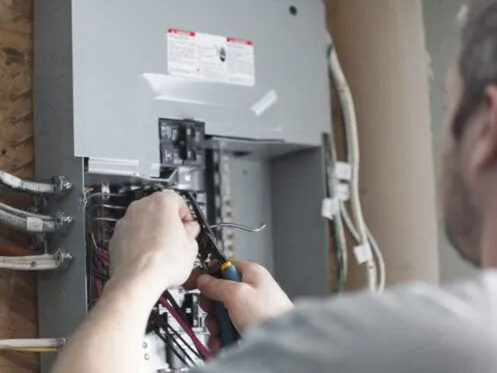
A site visit should establish where the service disconnect is, which panel feeds which circuits, and whether there are feeder panels in the house or garage. The electrician checks the electrical equipment, the available mounting space, and the grounding and bonding. If the main panel already has an SPD, ask for its model and whether the indicator shows normal operation. You may already have part of the protection you need.
Ask the electrician to point out equipment they’d consider protecting separately. An office computer is easy to identify. The control board in the outdoor heat pump, the panel in an addition, or the controller feeding the outdoor lighting may be less obvious. A walkthrough helps put those decisions in the context of your actual home.
Minnesota’s Electrical Code Can Affect What the Job Requires
Minnesota uses the 2026 National Electrical Code for electrical permits filed on or after August 17, 2026. The Minnesota Department of Labor and Industry addresses dwelling-unit surge protection under NEC Sections 230.67 and 215.18, including installation and replacement scenarios involving service and feeder-supplied equipment. A new dwelling service or a service equipment replacement can trigger surge protection requirements. Where a house has separate service and distribution equipment, an installer must also check the rules that apply to the downstream panel.
Ask where the device will be installed and whether any feeder-supplied equipment needs additional protection under the requirements for your project. That conversation is especially important when service equipment is outside and the main distribution panel is well inside the house. The Minnesota Department of Labor and Industry’s electrical code guidanceprovides the applicable code edition and state inspection resources.
The Quote Should Make the Scope Clear
An installation on a suitable existing panel is a different job from adding protection during a service replacement or correcting a panel issue uncovered during inspection. Ask the contractor to spell out the device, installation location, labor, and any permit or inspection arrangements. If the proposal includes a second SPD, grounding or bonding work, or a panel repair, the contractor should explain why it’s part of the job.
Once the work is complete, have the electrician show you the device’s status indicator and explain what a changed indicator means for that model. Keep the model number and installation paperwork with your panel records. After significant electrical disturbances, checking an externally visible indicator is a simple way to see whether the device still reports normal operation.
Is Whole-House Surge Protection Worth It?
It generally makes sense if several essential or expensive systems share the same electrical service. Consider what the home would be like for three days without the furnace, refrigerator, or well. Then think about the electronics you added in the past five years. If fixing even one piece of equipment would mean a substantial bill and a long wait for parts, a panel-level SPD is worth pricing.
The strongest case often comes during an electrical project that already involves the panel. If you’re replacing service equipment, remodeling the kitchen, finishing the basement, or running power to a garage, include surge protection in the planning conversation. The electrician can evaluate whether the job creates a code requirement and estimate the cost while the rest of the electrical work is being scoped.
Based in Forest Lake, Plugz Electric installs whole-house surge protection in the Twin Cities metro. If you’re planning a panel upgrade or want to protect equipment on your existing system, schedule an electrical evaluation. Tell us which equipment you’d most want to keep in service and whether your home has an outdoor disconnect, a basement panel, or a separate garage panel. Those details help us assess where surge protection will be most effective.
Frequently Asked Questions About Whole-House Power Surge Protection
Does a whole-house surge protector protect every outlet?
It helps limit transient voltage on the circuits served by the protected equipment, including receptacle circuits. The protection a device receives at a particular outlet depends on the wiring layout and how the surge enters. A listed plug-in protector can add protection at sensitive equipment, and additional panels may need their own devices depending on the installation.
Will whole-house surge protection protect against lightning?
A properly installed SPD can help limit surges caused by nearby lightning that couples into power lines or wiring. A direct strike can deliver energy through several paths and exceed the capability of residential surge protection. A property with significant lightning exposure may benefit from evaluating a building lightning protection system along with power and communications surge protection.
Does a surge protector help when power comes back after an outage?
It can help limit a brief transient caused by switching or other events associated with restoring service. If the problem is a continued loss of power, a UPS, battery system, or generator provides backup within its capacity. If the restored voltage remains too high or otherwise abnormal, the condition calls for diagnosis by the utility or an electrician.
How much does it cost to install a whole-house surge protector?
The price depends on the device, the condition and layout of the electrical equipment, local permit or inspection costs where applicable, and the amount of labor involved. Ask for the installed price and what it includes. A quote for one device on a compatible panel will differ from a quote that includes correcting existing electrical issues or adding protection at a second panel.
Can an electrician install a whole-home surge protector on an older breaker panel?
Often, yes. A qualified electrician can check the panel model, condition, available space, and grounding and bonding. Those findings determine which listed retrofit options will work and whether a panel repair or replacement should be addressed as part of the project.
How long does a whole-house surge protector last?
Service life varies with the device and the number and severity of the surges it experiences. Follow the manufacturer’s inspection and replacement instructions. If the status indicator shows a loss of protection after a storm or utility event, contact an electrician to assess the device even if the lights and outlets still work.
Will a circuit breaker protect appliances from a power surge?
A standard circuit breaker is designed to interrupt excessive current on a circuit. A surge protective device limits brief voltage spikes. A transient can stress electronic components without causing a standard breaker to trip, which is why finding all the breakers on after an event tells you little about whether a surge occurred.
Is whole-house surge protection required in Minnesota?
Minnesota’s adopted electrical code requires surge protection for qualifying dwelling-unit installations, including new services and replacement service equipment. Feeder-supplied distribution equipment can also fall under surge protection requirements. The permit date, project scope, and placement of the service and feeder panels determine how those requirements apply to the job.
Can I install a whole-house surge protector myself?
Have a qualified electrician install the panel device. Service equipment can contain energized parts even when the main breaker is off. The electrician can select a listed device for your system, verify the installation location and compatibility, and address any permit or inspection requirements that apply.