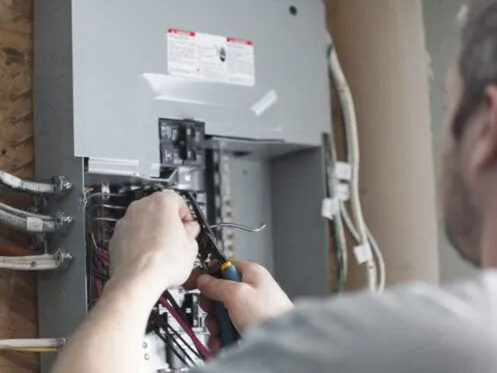

Replacing an outdated electrical panel is one of the most important electrical upgrades you can make to your home. Your electrical panel distributes electricity throughout the house, protects individual circuits from excessive current, and helps keep your electrical system operating safely.
But how much does it cost to replace an electrical panel, and what should homeowners expect to pay?
The average electrical panel replacement costs approximately $1,000 to $3,000 for many standard residential installations. More involved projects, including upgrading from 100-amp to 200-amp service, replacing outdated wiring, or relocating the panel, can cost $3,000 to $5,000 or more. If you want an exact estimate, we encourage you to give us a call at (612) 295-1595. Electrical panel installs can vary and these are only meant to be estimates.
The final price depends on the panel’s amperage, the condition of your existing electrical system, labor requirements, permits, and whether additional electrical work is necessary.
For homeowners in Forest Lake, Minneapolis, St. Paul, and the surrounding Twin Cities, understanding these costs can make it easier to budget for a panel replacement and determine whether a simple replacement or a complete electrical service upgrade makes more sense.
What Is the Average Cost to Replace an Electrical Panel?
Electrical panel replacement prices vary considerably because not every home needs the same work. Replacing an existing breaker panel with a similar model is generally less expensive than increasing the home’s electrical capacity.
The following table provides estimated national installation costs for common residential electrical panel projects.
| Electrical Panel Project | Estimated Cost |
| Replace a 100-amp electrical panel | 800–1,500 |
| Replace a 150-amp electrical panel | 1,300–2,000 |
| Replace a 200-amp electrical panel | 1,300–3,000 |
| Upgrade from 100 amps to 200 amps | 1,500–4,000 |
| Install or upgrade to 400-amp service | 2,000–6,000+ |
| Replace an outdated fuse box | 1,500–3,500 |
| Install an electrical subpanel | 500–1,500 |
| Complex panel replacement with service upgrades | 3,000–7,000+ |
These figures are planning estimates based on national residential electrical installation costs. Actual prices in Minnesota depend on the scope of work, local labor rates, permit requirements, and utility coordination.
A straightforward replacement might only require installing a new breaker box, transferring existing circuits, and completing the required electrical inspection. An older home may need additional grounding, new service entrance conductors, updated circuit breakers, or other improvements.
That difference explains why two homeowners with similarly sized houses can receive very different electrical panel replacement estimates.
Electrical Panel Replacement Cost by Amperage
The amperage of your electrical panel determines how much electrical current the equipment is rated to handle. Common residential service sizes include 100, 150, 200, and 400 amps.
Choosing the appropriate capacity matters because modern homes often have more electrical equipment than homes built several decades ago.
How Much Does It Cost to Replace a 100-Amp Electrical Panel?
Replacing a 100-amp electrical panel generally costs between $800 and $1,500 when the existing electrical service can remain in place.
A 100-amp panel may provide sufficient capacity for a smaller home with modest electrical demands. However, it may be less suitable for a household with several large electric appliances, central air conditioning, or an electric vehicle charger.
Before replacing an older 100-amp panel with another 100-amp model, an electrician should evaluate the home’s current and anticipated electrical load.
If you plan to install new appliances, remodel your kitchen, or add an EV charging station, upgrading to 200-amp service may be a better long-term investment.
How Much Does a 200-Amp Electrical Panel Replacement Cost?
A typical 200-amp electrical panel replacement costs approximately $1,300 to $3,000, although projects requiring substantial service work can exceed that range.
A 200-amp electrical service is common in modern single-family homes because it can accommodate a wide range of household electrical demands.
These may include central heating and cooling equipment, electric water heaters, kitchen appliances, laundry equipment, and dedicated circuits for larger electrical loads.
However, installing a 200-amp panel does not automatically increase the electrical capacity available to your home.
The service entrance conductors, meter equipment, main disconnect, and utility connection must also be appropriately rated.
An electrician will determine whether the existing infrastructure supports the replacement or whether a complete service upgrade is required.
How Much Does It Cost to Upgrade From 100 Amps to 200 Amps?
Upgrading an electrical panel from 100 amps to 200 amps often costs between $1,500 and $4,000 for relatively straightforward projects. More extensive service upgrades can exceed $5,000.
The additional expense comes from work that may be required beyond installing the panel itself.
For example, an electrical contractor may need to replace the meter socket, install larger service conductors, update grounding and bonding, or coordinate changes with the electric utility.
A 200-amp service upgrade may be worth considering when homeowners are planning major electrical improvements, including:
- Installing a Level 2 electric vehicle charging station.
- Replacing gas appliances with electric models.
- Adding a heat pump or other major HVAC equipment.
- Finishing a basement or constructing a home addition.
- Installing new kitchen appliances or dedicated circuits.
- Expanding electrical capacity for a workshop or garage.
Not every project requires an amperage increase. A professional electrical load calculation can determine whether your current service has enough available capacity.
How Much Does a 400-Amp Electrical Panel Upgrade Cost?
A 400-amp electrical service upgrade can cost approximately $2,000 to $6,000 or more, depending on the equipment and installation requirements.
Complex projects involving new utility infrastructure, larger service conductors, or multiple distribution panels may cost considerably more.
Higher-capacity electrical services are typically considered for large homes with substantial electrical demands, multiple HVAC systems, extensive electric heating, or other high-load equipment.
Some 400-amp residential services use equipment with a nominal 320-amp continuous rating, so equipment specifications and service design should be evaluated carefully.
For most average-sized homes, a properly designed 200-amp service is sufficient. A larger service should be based on an electrical load calculation rather than home size alone.
What Factors Affect Electrical Panel Replacement Costs?
The price of a new electrical panel is only one part of the overall project. Installation complexity, existing wiring conditions, and local electrical requirements can significantly influence the final bill.
1. Electrical Panel Size and Capacity
Larger electrical panels generally cost more because they require equipment rated for higher electrical loads.
The number of available circuit spaces also affects pricing.
For example, a 200-amp panel with 40 circuit spaces provides more room for individual circuits than a smaller panel with fewer spaces.
Having additional circuit capacity can be useful if you anticipate installing new outlets, appliances, indoor lighting, or other electrical equipment.
2. Labor and Installation Complexity
Professional labor is a significant part of electrical panel replacement costs.
An electrician must disconnect and secure the electrical supply, remove the existing panel, install the replacement equipment, reconnect circuits, and verify that the installation operates correctly.
Labor requirements increase when the existing wiring is damaged, the panel is difficult to access, or additional service equipment must be replaced.
An uncomplicated replacement may take several hours, while a more involved upgrade can require a full day or longer, particularly when utility scheduling or inspections are involved.
3. Electrical Permits and Inspections
Electrical panel replacement generally requires a permit and inspection under applicable Minnesota electrical requirements.
Permit fees vary by jurisdiction and project scope. Homeowners may pay roughly $50 to $300 or more in permit-related costs, depending on the work being performed.
A licensed electrical contractor can identify the applicable permit requirements and arrange the necessary inspections.
These inspections help verify that the new panel, grounding system, circuit protection, and electrical connections meet applicable safety standards.
4. Condition of Existing Electrical Wiring
Older electrical wiring can complicate a panel replacement.
An electrician may discover deteriorated insulation, improper connections, damaged conductors, or wiring that cannot be safely connected to the new equipment without corrective work.
Some homes may also need updates to grounding and bonding systems.
If the wiring problems extend beyond the electrical panel, additional electrical repairs or partial rewiring may be necessary.
A panel replacement does not automatically correct unsafe wiring elsewhere in the house.
5. Electrical Panel Location
Replacing a panel in its existing location is usually less expensive than moving it.
Relocating an electrical panel may require extending branch circuits, installing new conduit, modifying walls, and rerouting service conductors.
Accessibility and required working clearances also matter.
Electrical panels must have appropriate clearance for safe operation and maintenance. A panel located inside an unsuitable closet, behind fixed storage, or in another restricted area may need to be relocated.
6. Circuit Breaker Requirements
New circuit breakers can contribute significantly to the total installation cost.
Standard breakers generally cost less than specialized protective devices.
Depending on the circuits involved and applicable electrical codes, the installation may require arc-fault circuit interrupter (AFCI) protection, ground-fault circuit interrupter (GFCI) protection, or dual-function breakers.
AFCI protection helps reduce certain electrical fire risks associated with arcing faults. GFCI protection helps reduce the risk of electric shock from ground faults.
An electrician will determine which types of circuit protection are required for the installation.
7. Meter Socket and Service Entrance Upgrades
The electrical meter socket and service entrance equipment connect your home’s electrical system to the utility supply.
When increasing electrical service capacity, these components may need to be replaced.
For example, upgrading from 100-amp to 200-amp service may require larger service conductors and compatible meter equipment.
Depending on the property, the project could also involve modifications to an overhead service mast or underground electrical service.
This work can add hundreds or thousands of dollars to the total project.
Signs You Need to Replace Your Electrical Panel
Electrical panels are designed to operate reliably for many years, but they do not last indefinitely.
Age, corrosion, improper installation, electrical damage, and changing household power demands can all create reasons to consider replacement.
Several warning signs deserve particular attention.
Circuit Breakers Trip Frequently
A circuit breaker is designed to interrupt electrical current when it detects certain unsafe conditions.
An occasional trip may result from an overloaded circuit or a problem with a connected appliance.
However, repeated breaker trips can indicate overloaded wiring, a faulty breaker, a short circuit, or another electrical problem.
If several circuits are experiencing recurring issues, the electrical panel may need professional evaluation.
Replacing the panel is not always the solution. Sometimes an electrical repair or installation of a dedicated circuit resolves the problem.
The Electrical Panel Is Hot or Smells Like Burning
An electrical panel should not produce a burning smell, smoke, or unusual heat.
These symptoms can indicate loose connections, overheating components, or electrical arcing.
If you notice smoke, visible sparking, or a burning odor coming from the panel, treat the situation as an urgent electrical hazard. Do not remove the panel cover or attempt repairs yourself.
A qualified electrician should inspect the equipment before it is returned to normal operation.
You Have an Outdated Fuse Box
Some older Twin Cities homes still have fuse boxes instead of modern circuit breaker panels.
A properly maintained fuse system can provide overcurrent protection, but older equipment may lack sufficient circuit capacity for modern electrical demands.
Fuse systems can also present problems when incorrect replacement fuses are installed.
Converting an outdated fuse box to a modern circuit breaker panel can provide more convenient circuit management and create opportunities for other electrical improvements.
Your Home Has an Older or Problematic Panel
Electrical panels can remain in service for decades, but age alone does not determine whether replacement is necessary.
A panel that is 25 to 40 years old deserves closer evaluation if it shows signs of wear, corrosion, recurring electrical problems, or insufficient capacity.
Certain older Federal Pacific Electric Stab-Lok and Zinsco panel designs have documented safety concerns and warrant evaluation by a qualified electrician.
A professional inspection can determine whether replacement is appropriate based on the specific equipment and its condition.
Your Lights Flicker or Dim Unexpectedly
Occasional light dimming when a large appliance starts may be related to temporary voltage changes.
However, persistent flickering, unexplained dimming, or noticeable changes in brightness throughout the home can indicate loose electrical connections, circuit problems, or service-related issues.
These symptoms should not automatically be blamed on the electrical panel.
A qualified electrician can perform electrical troubleshooting to identify whether the problem originates in a branch circuit, the panel, the service connection, or the utility supply.
You Are Planning Major Electrical Improvements
A home renovation is a practical time to evaluate the electrical panel.
Adding a new kitchen, finishing a basement, installing outdoor lighting, or expanding a garage may increase the number of electrical circuits your home needs.
Likewise, installing a dedicated EV charging circuit can place additional demand on the electrical system.
An electrician can assess the existing panel before construction begins and determine whether a replacement, subpanel, or service upgrade is necessary.
Electrical Panel Repair vs. Replacement: Which Is More Cost-Effective?
Not every electrical problem requires a new panel. In some situations, repairing an existing component is the more practical and affordable option.
For example, a single malfunctioning circuit breaker may be replaced without changing the entire electrical panel, provided the panel is in good condition and an appropriate replacement breaker is available.
However, repairing individual components may not make financial sense when the panel has widespread deterioration or serious safety concerns.
| Electrical Problem | Potential Solution |
| One faulty circuit breaker | Replace the breaker |
| Loose or damaged connection | Professional electrical repair |
| Frequent trips on one overloaded circuit | Evaluate load and add a dedicated circuit if needed |
| Corrosion or overheating inside the panel | Evaluate for panel replacement |
| Insufficient circuit spaces | Consider a subpanel or larger panel |
| Electrical service lacks adequate capacity | Service upgrade |
| Obsolete panel with known safety concerns | Evaluate for replacement |
An electrician should inspect the existing equipment before recommending a complete replacement.
If your electrical panel is relatively new and the problem is isolated, a repair may restore safe operation without the expense of a larger project.
On the other hand, repeated repairs to deteriorating equipment can become more expensive than replacing it.
How Much Does Electrical Panel Replacement Cost in Minnesota?
For homeowners in Minnesota, electrical panel replacement costs depend on the home’s age, service configuration, and local installation requirements.
A basic panel replacement in the Twin Cities may fall within the national range of approximately $1,000 to $3,000. However, older homes requiring substantial electrical service improvements may have higher project costs.
Properties throughout Minneapolis, St. Paul, Forest Lake, and nearby communities can present different installation challenges.
Older Homes May Require Additional Electrical Work
Many established Twin Cities neighborhoods have homes built long before today’s electrical demands became common.
These properties may have older service equipment, limited circuit capacity, or wiring that needs attention.
Replacing an electrical panel in an older home may involve updating grounding and bonding connections, replacing deteriorated service conductors, or correcting unsafe wiring conditions.
In some cases, a partial or complete home rewiring project may be appropriate.
Minnesota Electrical Code Requirements
Electrical panel installations in Minnesota must comply with the applicable electrical code and inspection requirements.
Depending on the project, this may involve updated circuit protection, grounding and bonding, surge protection, and service disconnect equipment.
Whole-home surge protection is particularly worth discussing during a panel replacement. Modern electrical codes include surge protection requirements for qualifying residential service installations and replacements.
A surge protective device helps reduce damage from certain transient voltage surges affecting appliances, electronics, and other connected equipment.
Utility Coordination Can Affect the Project
Some panel replacements require coordination with the electric utility to disconnect and restore electrical service.
A project that involves replacing the meter socket, changing service capacity, or modifying service conductors may require additional scheduling.
Homeowners should ask whether utility coordination, permits, and inspections are included in the electrical contractor’s estimate.
Is Replacing an Electrical Panel Worth the Cost?
Replacing an electrical panel can be a worthwhile investment when the existing equipment is unsafe, deteriorating, or unable to support the home’s electrical needs.
The value comes primarily from improved electrical safety, dependable circuit protection, and the ability to accommodate future electrical improvements.
Improved Electrical Safety
A properly installed electrical panel provides appropriate overcurrent protection and helps protect the home’s electrical distribution system.
Replacing damaged or obsolete equipment can address hazards associated with deteriorated connections, overheating components, and unreliable circuit protection.
The new panel must also be installed with correctly sized breakers, compatible components, and appropriate grounding and bonding.
More Capacity for Modern Appliances
Modern households often use substantially more electrical equipment than they did several decades ago.
Central air conditioning, electric ranges, clothes dryers, heat pumps, and EV chargers can place considerable demands on a home’s electrical system.
An appropriately sized electrical service helps accommodate those loads.
However, increasing electrical capacity does not directly reduce electricity consumption or guarantee lower utility bills.
Better Preparation for Home Improvements
Replacing an outdated electrical panel can make future remodeling projects easier to plan.
For example, homeowners who intend to add recessed lighting, install outdoor outlets, upgrade kitchen appliances, or finish a basement may benefit from a panel with sufficient circuit spaces.
Planning these improvements together can help avoid unnecessary repeat electrical work.
Potential Benefits When Selling a Home
An outdated or visibly damaged electrical panel can raise concerns during a home inspection.
Certain obsolete panel types may also create questions for buyers or insurance providers.
Replacing problematic equipment can eliminate a known issue before listing the property.
While a new electrical panel does not guarantee an increase in property value, it may make the home’s electrical system more appealing to prospective buyers.
How Long Does It Take to Replace an Electrical Panel?
A straightforward residential electrical panel replacement often takes approximately four to eight hours of on-site work.
More complicated projects can take a full day or longer.
The timeline depends on whether the electrician is replacing the existing panel with a similar model or upgrading the entire electrical service.
We encourage you to read this guide our audience recommended: How Long Does It Take To Replace An Electrical Panel
What Happens During Electrical Panel Replacement?
The process generally begins with an assessment of the existing electrical system.
The electrician identifies the home’s electrical service capacity, evaluates the panel’s condition, and determines which components need replacement.
Once the project is approved and the necessary permits and utility arrangements are in place, installation can begin.
The existing equipment is disconnected safely, and the old panel is removed.
The electrician then installs the new equipment, connects the branch circuits, verifies grounding and bonding, and performs electrical testing.
The work is completed with the applicable inspection and approval process.
Will My Power Be Off During Installation?
Yes. Replacing the main electrical panel generally requires a temporary interruption of electrical service.
The outage may last several hours, depending on the installation.
Homeowners should plan accordingly, especially if they have refrigerators, freezers, internet equipment, or other devices that depend on continuous electricity.
Your electrical contractor can explain the expected outage duration before work begins.
Can You Replace an Electrical Panel Yourself?
Electrical panel replacement is not an appropriate do-it-yourself project for most homeowners.
The work involves high-current electrical equipment, utility connections, and components that can remain energized even when the main breaker is switched off.
Improper installation can result in severe electrical shock, fire, equipment damage, or unsafe circuit protection.
Panel replacement also involves electrical code requirements, permits, and inspections.
Hiring a properly licensed electrical contractor helps ensure that the equipment is correctly sized, installed, tested, and inspected.
How to Save Money on Electrical Panel Replacement
Although electrical panel replacement is a significant home improvement expense, there are ways to manage costs without compromising safety.
Plugz Electric is currently running a special for electrical panels, check out their Specials.
Have the Existing Panel Inspected First
A professional inspection can determine whether the entire panel needs replacement.
Sometimes a faulty breaker, damaged connection, or overloaded branch circuit can be repaired without installing a new panel.
Understanding the actual cause of the problem helps prevent unnecessary expenses.
Plan Future Electrical Upgrades Together
If you are considering an EV charger, kitchen renovation, or new electrical circuits, discuss those plans before replacing the panel.
An electrician can evaluate your expected electrical demand and recommend equipment that accommodates future improvements.
Coordinating compatible projects may reduce duplicated labor and scheduling expenses.
Keep the Panel in Its Existing Location
Moving an electrical panel can add substantial installation costs.
When the existing location meets applicable code requirements and provides adequate access, replacing the panel in place is often more economical.
Compare Detailed Electrical Estimates
When reviewing electrical panel replacement quotes, compare more than the final price.
A detailed estimate should identify the panel capacity, equipment being installed, necessary service upgrades, permit responsibilities, and other included work.
Make sure each contractor is quoting a comparable scope.
A lower estimate may not include meter replacement, grounding improvements, specialized breakers, or utility-related work.
Ask About Available Specials and Financing
Some electrical contractors offer promotional discounts or financing options for larger electrical projects.
These options can help homeowners manage the initial expense of a necessary panel replacement.
What Should Be Included in an Electrical Panel Replacement Estimate?
Before hiring an electrical contractor, request a written estimate that explains the work being performed.
A complete estimate should address the major components of the installation and identify any potential additional expenses.
Important items to review include:
- The amperage and type of replacement electrical panel.
- The number and type of circuit breakers included.
- Whether the project involves a panel replacement or a complete service upgrade.
- Any required meter socket or service conductor replacement.
- Grounding, bonding, and surge protection requirements.
- Electrical permit and inspection responsibilities.
- Utility disconnect and reconnection arrangements.
- Removal and disposal of the existing equipment.
- Warranty coverage for equipment and workmanship.
- Any exclusions, such as drywall repairs or unrelated wiring problems.
A clearly defined scope makes it easier to compare estimates and understand what you are paying for.
Electrical Panel Replacement and Other Home Electrical Upgrades
Replacing an electrical panel is often connected to other home electrical improvements.
If the existing panel is outdated or nearing capacity, it makes sense to evaluate the rest of the electrical system before deciding on a replacement.
Electrical Wiring and Rewiring
A new electrical panel cannot compensate for damaged or improperly installed wiring.
If an electrician discovers deteriorated conductors, unsafe connections, or outdated wiring methods, additional repairs may be needed.
For older homes, electrical rewiring can help address existing hazards while preparing the electrical system for modern appliances and lighting.
Outlet Installation and Dedicated Circuits
Adding outlets can improve convenience, particularly in kitchens, garages, workshops, and finished basements.
However, new outlets must be connected to circuits with appropriate capacity and protection.
Some appliances require dedicated circuits rather than sharing existing branch circuits.
A panel replacement provides an opportunity to evaluate available circuit spaces and plan these installations.
Whole-Home Surge Protection
Whole-home surge protection is commonly considered during electrical panel replacement.
A properly selected surge protective device can help protect connected equipment from certain electrical surges.
This can be particularly valuable in homes with expensive electronics, HVAC equipment, and smart home technology.
Indoor and Outdoor Lighting
Installing recessed lighting, landscape lighting, exterior security lights, ceiling fans, or additional ceiling fixtures may require new wiring and circuit planning.
When homeowners are already upgrading an electrical panel, it can be practical to discuss future indoor and outdoor lighting improvements.
EV Charging Station Installation
Electric vehicle charging is an increasingly important consideration when evaluating residential electrical capacity.
A Level 2 EV charger typically uses a dedicated 240-volt circuit, although its current requirements depend on the equipment and charging configuration.
Some homes can support an EV charger without upgrading the electrical service. Others may need load management equipment or additional capacity.
A professional load calculation helps determine the most appropriate solution.
Schedule Electrical Panel Replacement With Plugz Electric in Forest Lake, MN
If your electrical panel is outdated, frequently trips breakers, or no longer meets your household’s electrical needs, Plugz Electric can help you evaluate your options.
Based in Forest Lake, Plugz Electric provides residential electrical services throughout the Twin Cities metro area, including electrical panel replacement, electrical repairs, wiring and rewiring, outlet installation, surge protection, lighting, and EV charging stations.
Whether you need to replace an aging breaker box, upgrade your electrical capacity, or investigate recurring electrical problems, the team can assess your existing system and recommend an appropriate solution.
A professional evaluation can also help determine whether a repair, subpanel installation, or complete electrical service upgrade is the most practical choice for your home.
Contact Plugz Electric at 612-295-1595 to discuss your electrical panel replacement needs and request an estimate.
You can also visit the Plugz Electric electrical panel services page to learn more about available services in Forest Lake and the surrounding Twin Cities.
Frequently Asked Questions About Electrical Panel Replacement Costs
How Much Does It Cost to Replace an Electrical Panel in 2026?
Most standard residential electrical panel replacements cost approximately $1,000 to $3,000. Larger electrical service upgrades, panel relocations, and installations requiring new wiring or meter equipment can cost $3,000 to $5,000 or more. The final price depends on amperage, labor, permits, and existing electrical conditions.
How Much Does It Cost to Replace a 200-Amp Electrical Panel?
Replacing a 200-amp electrical panel typically costs between $1,300 and $3,000 for a straightforward installation. If the project requires upgrading service conductors, replacing the meter socket, or making other electrical improvements, the cost can be considerably higher.
How Much Does It Cost to Upgrade an Electrical Panel From 100 to 200 Amps?
A 100-amp to 200-amp electrical service upgrade commonly costs between $1,500 and $4,000, with more complex installations exceeding $5,000. The price depends on whether the existing service entrance equipment and utility connection can support the increased capacity.
How Much Does It Cost to Replace an Electrical Panel in Minnesota?
Electrical panel replacement in Minnesota may cost approximately $1,000 to $3,000 for a standard project. Homes requiring service upgrades, updated grounding, additional wiring, or meter equipment may have higher costs. An on-site assessment provides the most accurate estimate.
Is It Worth Upgrading to a 200-Amp Electrical Panel?
Upgrading to 200-amp service can be worthwhile if your existing electrical capacity is insufficient for current or planned household loads. It may be particularly useful when installing an EV charger, adding major electric appliances, or renovating an older home. However, a load calculation should determine whether the upgrade is necessary.
How Do I Know if My Electrical Panel Needs to Be Replaced?
Common warning signs include recurring breaker trips, corrosion, overheating, burning odors, damaged equipment, and insufficient electrical capacity. Certain older panel types may also warrant replacement. A licensed electrician can determine whether the problem requires repair or complete replacement.
Can I Replace Just the Electrical Panel Without Rewiring My House?
Yes. In many homes, the electrical panel can be replaced without rewiring the entire house. Existing branch circuits may be reused when their conductors are in suitable condition and can be connected safely. Damaged or noncompliant wiring may require additional corrective work.
Does Homeowners Insurance Cover Electrical Panel Replacement?
Homeowners insurance may cover electrical panel damage caused by a covered event, such as certain fires or storms. However, routine deterioration, age-related replacement, and upgrades for additional electrical capacity are generally not covered. Coverage depends on the policy and circumstances of the damage.
How Long Does an Electrical Panel Last?
Many residential electrical panels remain in service for 25 to 40 years or longer, depending on their condition, installation quality, environment, and maintenance. There is no universal expiration date. Corrosion, damaged components, overheating, or known equipment defects may justify replacement regardless of age.
Can an Electrical Panel Be Replaced in One Day?
Many straightforward electrical panel replacements can be completed in one working day. More complicated projects involving service entrance modifications, panel relocation, or extensive wiring repairs may require additional time. Utility scheduling and inspection requirements can also affect the overall timeline.
Will a New Electrical Panel Lower My Electric Bill?
Replacing an electrical panel generally does not reduce electricity consumption or automatically lower utility bills. Its primary benefits are improved electrical safety, reliable circuit protection, and adequate electrical capacity. Energy savings usually come from more efficient appliances, lighting, and other electrical equipment.
Is a 200-Amp Panel Enough for a 2,000-Square-Foot House?
A 200-amp electrical service is often sufficient for a 2,000-square-foot home, but square footage alone cannot determine the required service capacity. The number and type of appliances, heating systems, EV chargers, and other electrical loads must be considered. An electrical load calculation provides a more reliable answer.
Do I Need a Permit to Replace an Electrical Panel?
Electrical panel replacement generally requires an electrical permit and inspection in Minnesota. The exact requirements depend on the jurisdiction and project scope. A licensed electrical contractor can coordinate the appropriate permitting and inspection process.
What Is the Difference Between an Electrical Panel Replacement and an Electrical Panel Upgrade?
An electrical panel replacement involves installing new panel equipment, often while maintaining the existing service amperage.
An electrical panel upgrade may involve increasing the home’s electrical service capacity, such as moving from 100 amps to 200 amps. That can require additional changes to service conductors, meter equipment, grounding, and utility connections.
Is It Cheaper to Replace a Circuit Breaker or the Entire Electrical Panel?
Replacing an individual circuit breaker is usually significantly less expensive than replacing the entire panel. However, a breaker replacement is only appropriate when the underlying problem is isolated and the existing panel remains safe and serviceable. Widespread deterioration or damaged bus connections may require complete replacement.
Should I Replace My Electrical Panel Before Installing an EV Charger?
Not necessarily. Some homes have sufficient available electrical capacity for a Level 2 EV charger without replacing the panel. Others may benefit from load management or an electrical service upgrade. An electrician can evaluate the existing electrical load and determine which option is appropriate.
How Can I Get an Accurate Electrical Panel Replacement Estimate?
The most reliable way to determine the cost is to schedule an inspection with a licensed electrical contractor. The electrician can evaluate the existing panel, service capacity, wiring condition, and installation requirements before preparing a detailed estimate.
Homeowners in Forest Lake and the Twin Cities can contact Plugz Electric at 612-295-1595 or visit plugzelectric.com to request electrical panel replacement services.