
You flip a light switch, and nothing happens. Sometimes the problem is as simple as a burned-out light bulb. Other times, a light switch not working can point to a faulty switch, loose electrical connection, tripped breaker, damaged wiring, or another problem within the electrical circuit. In such cases, professional electrical repairs may be required to solve the problem.
The tricky part is that several electrical problems can produce the same symptom: a light that will not turn on.
Before assuming the switch itself has failed, it helps to understand how the switch, fixture, wiring, and circuit work together. A little basic troubleshooting can rule out simple problems. If the switch is buzzing, warm, sparking, discolored, or repeatedly losing power, however, the issue deserves more attention.
Here is what can cause a light switch to stop working, what you can safely check, and when it makes sense to have an electrician diagnose the problem.
Why Is My Light Switch Not Working?
A standard light switch is relatively simple. When you turn it on, the switch closes an electrical circuit and allows current to reach the light fixture. Turn it off, and the circuit opens, interrupting the flow of electricity.
If the light does not respond, something has interrupted that process.
Common causes include:
- A burned-out or improperly installed light bulb
- A tripped circuit breaker
- A tripped GFCI device is affecting the circuit
- A failed light switch
- Loose wiring at the switch
- A loose connection at the light fixture
- A defective dimmer or smart switch
- Damaged or deteriorated electrical wiring
- A problem with the light fixture itself
- Loss of power somewhere along the branch circuit
In older homes, the problem may also be related to aging electrical components or previous electrical work.
That is why replacing the switch without diagnosing the circuit does not always solve the problem.
Start With the Light Bulb
It sounds obvious, but the bulb should usually be the first thing you check.
A bulb can fail suddenly without showing obvious damage. LED bulbs can also fail internally, even though the bulb itself looks perfectly normal.
Turn the switch off and allow the bulb to cool before checking it. Make sure it is properly seated in the socket. If you have a compatible bulb that you know works, try it in the fixture.
If the replacement bulb works, you have probably found the problem.
If it does not, the issue may be elsewhere.
For fixtures containing multiple bulbs, pay attention to whether every bulb stopped working simultaneously. Several bulbs failing at the same moment is less likely than a problem affecting power to the fixture.
Check the Circuit Breaker
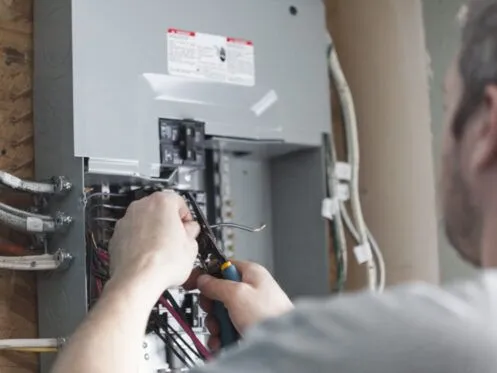
The next place to look is your electrical panel.
Find the breaker controlling the affected room or lighting circuit. A tripped breaker may sit between the fully ON and OFF positions rather than appearing completely off.
If a breaker has tripped, the important question is why.
A breaker can trip because of an overload, short circuit, ground fault, wiring problem, or malfunctioning electrical device.
If the breaker resets normally and the problem does not return, the interruption may have been temporary. If it trips again, repeatedly resetting it is not a solution.
Repeated breaker trips indicate that something on the circuit needs to be investigated.
Check for a Tripped GFCI
One of the more confusing electrical problems occurs when a light, outlet, or other device stops working because of a GFCI located somewhere else.
Ground-fault circuit interrupters are commonly found in kitchens, bathrooms, garages, basements, laundry areas, and outdoor locations. Depending on how the circuit was wired, a GFCI receptacle can provide protection to additional electrical devices downstream.
That means the device causing your confusion may not be located next to the GFCI.
If a light switch stopped working unexpectedly, check nearby GFCI receptacles for a tripped condition. Resetting the appropriate GFCI may restore power.
If the GFCI immediately trips again, there may be a fault that needs professional troubleshooting.
The Light Switch Itself May Have Failed
Light switches do not last forever.
Every time you flip a traditional switch, internal contacts mechanically open or close the circuit. Years of operation can eventually wear those components.
A worn switch may behave differently before completely failing.
You might notice:
- The switch feels loose
- The toggle no longer clicks firmly
- The light works intermittently
- You have to move the switch several times before the light responds
- The light briefly flickers when the switch is moved
- The switch stops controlling the fixture altogether
A switch that feels mechanically different from how it used to can be a strong clue that the device itself is failing.
Replacing a worn switch is generally straightforward for a qualified electrician, but it is still important to verify that the switch is actually the source of the problem.
Loose Wiring Can Cause a Light Switch to Stop Working
A switch can be perfectly functional while the electrical connection behind it is not.
Electrical wires connect the switch to the branch circuit and the lighting load. If one of those connections loosens, the circuit may become intermittent or stop working entirely.
Loose electrical connections deserve attention because they can create more than an inconvenience.
Electrical resistance at a poor connection can generate heat. In some situations, a deteriorating connection can also contribute to arcing.
Possible signs include a light that cuts in and out, flickering when the switch is operated, crackling or buzzing noises, or a switch plate that becomes unusually warm.
A dead switch accompanied by any of these symptoms should not simply be ignored.
The Problem Could Be at the Light Fixture
The switch is only one part of the lighting circuit.
Power may successfully travel through the switch but fail to reach the bulb correctly because of a problem inside the fixture.
Possible fixture problems include:
- A damaged bulb socket
- Loose fixture wiring
- A failed LED driver
- Internal fixture damage
- Overheating
- Deteriorated connections
- A defective integrated LED component
This distinction has become particularly important as integrated LED fixtures have become more common.
With a traditional fixture, replacing the bulb may restore the light. An integrated LED fixture contains electronic components that can fail independently. In that situation, the switch may continue operating correctly while the fixture itself needs repair or replacement.
Why Is My Light Switch Not Working, but the Outlet Has Power?
This situation often confuses homeowners.
The outlet and light switch may be in the same room without being controlled by the same part of the electrical circuit. A functioning outlet, therefore, does not necessarily prove that power is reaching the switch or fixture correctly.
Another possibility is that the switch controls a receptacle rather than an overhead fixture.
Some homes have switched outlets designed for lamps. One half of the receptacle may remain continuously powered while the other half is controlled by the wall switch.
If you recently moved into a home and cannot determine what a particular wall switch does, test nearby receptacles with a lamp. You may discover that the switch was never intended to operate the ceiling light.
Why Is My Light Switch Not Working After Changing the Bulb?
If a new bulb does not solve the problem, first verify that the replacement bulb is compatible with the fixture.
This matters especially with dimmers and LED lighting.
Not every LED bulb is dimmable, and not every older dimmer works properly with modern LED lamps. Incompatible combinations can produce flickering, buzzing, limited dimming range, or failure to illuminate.
If the bulb is correct, the next possibilities include the switch, fixture, circuit breaker, wiring, or another electrical connection.
A bulb replacement can also coincide with an unrelated failure. The fact that the light stopped working around the time you changed the bulb does not necessarily mean the new bulb caused the problem.
Why Is My Light Switch Not Working After a Power Outage?
Power outages and restoration events can sometimes reveal problems that were not obvious beforehand.
Start by checking the electrical panel for a tripped breaker and checking applicable GFCI devices.
If other lights and outlets have returned to normal, but one lighting circuit remains dead, the problem may be isolated to that circuit.
A power disturbance may also affect electronic lighting equipment, including certain LED drivers, smart switches, dimmers, and lighting controls.
If multiple circuits or sections of the home remain without power after utility service has been restored, the problem may extend beyond an individual switch.
Why Is My Dimmer Switch Not Working?
Dimmer switches add another layer of electronics to the lighting circuit.
When a conventional toggle switch fails, the cause may be mechanical wear or a bad electrical connection. A dimmer can experience those problems as well, but it can also have compatibility or load-related issues.
Common dimmer problems include:
- Incompatible LED bulbs
- An outdated dimmer designed for incandescent lighting
- Incorrect minimum or maximum load
- Internal electronic failure
- Loose wiring
- Improper installation
- Overheating
- An incompatible fixture
You may notice that the lights flicker at certain brightness levels, refuse to dim fully, buzz, or fail to turn on.
Matching the dimmer to the lighting technology and electrical load is important for reliable performance.
Why Is My Smart Light Switch Not Working?
Smart switches can fail for reasons that have little to do with the physical switch mechanism.
Depending on the product and installation, a smart switch may depend on electrical power, a neutral connection, Wi-Fi, Bluetooth, a hub, software, or a combination of these systems.
If a smart light switch is not working, the problem could involve:
- Loss of circuit power
- Wi-Fi connectivity
- A failed smart switch
- Incorrect wiring
- A loose neutral connection
- An app or configuration issue
- An incompatible lighting load
- A tripped breaker
- A firmware or device communication problem
A useful distinction is whether the switch can still control the light manually.
If manual operation works but app control does not, the problem may be related to connectivity or configuration. If neither manual nor remote operation works, an electrical or hardware issue becomes more likely.
Why Does My Light Switch Work Sometimes?
An intermittent light switch can be more concerning than one that simply stops working.
Suppose the light turns on sometimes but not others. You tap the wall plate, move the switch slightly, or flip it several times, and suddenly the light works again.
That behavior can indicate a worn switch or loose electrical connection.
Intermittent electrical connections should not be treated as harmless quirks. A connection that repeatedly makes and breaks can create heat or electrical arcing.
Have the switch and associated wiring inspected rather than continuing to manipulate it until the light comes on.
Why Is My Light Switch Buzzing?
A buzzing sound deserves attention, particularly from a standard toggle switch.
Some dimmers can produce a faint hum depending on their design and the lighting load. Loud buzzing, crackling, popping, or a new sound that was not previously present is different.
Potential causes include loose electrical connections, an overloaded or defective device, arcing, an incompatible dimmer, or a failing switch.
If a switch suddenly begins making electrical noises, discontinue using it until the cause is determined.
Why Is My Light Switch Hot?
A standard on/off light switch generally should not feel hot.
Certain electronic switches and dimmers can generate some warmth during normal operation, but excessive heat should still be investigated.
A hot switch can indicate:
- A loose electrical connection
- Excessive electrical load
- An improperly rated switch
- A failing device
- Wiring problems
- Internal resistance generating heat
Pay particular attention to heat accompanied by discoloration, a burning smell, buzzing, crackling, or melted plastic.
Those are warning signs of a potentially unsafe electrical condition.
Why Did My Light Switch Spark?
Visible sparking from a wall switch is another warning sign.
Electrical arcing occurs when current travels across a gap rather than following its intended conductive path. Arcing can generate substantial heat and damage switches, wiring, insulation, and nearby materials.
If you see repeated or significant sparks coming from a switch, stop using it.
A professional electrician can inspect the switch, electrical box, conductors, connections, and circuit to determine what caused the arcing.
Simply replacing the wall plate obviously will not correct a problem happening behind it.
What If Multiple Light Switches Stop Working?
One dead switch often points toward a localized problem. Several switches or lights failing simultaneously can suggest something farther upstream.
Check whether the affected devices share a common circuit.
For example, imagine that the ceiling lights and several outlets in one section of the house suddenly stop working at the same time. It would be unlikely that every device independently failed at once.
Possible causes include:
- A tripped breaker
- A tripped GFCI upstream
- A loose connection
- A damaged branch circuit
- A wiring failure
- A panel or breaker problem
- A utility-related power issue
The pattern of the outage can provide useful diagnostic information.
Tell your electrician exactly which lights, switches, outlets, and appliances stopped working and which ones remain operational. That information can help narrow down the affected circuit.
A Light Switch Stopped Working After Remodeling
If the problem began immediately after remodeling, drilling, hanging cabinets, installing shelving, or other construction work, mention that when scheduling electrical service.
Construction activity can sometimes affect hidden electrical wiring.
A screw or fastener can damage a cable inside a wall. Electrical connections may have been altered when fixtures were moved. New equipment may also place additional demand on an existing circuit.
Remodeling is also a common time to discover that an older electrical system needs updating.
New indoor lighting, kitchen appliances, bathroom fixtures, additional outlets, EV charging equipment, or other electrical installations can change the demands placed on the home’s wiring and electrical panel.
Could Old Wiring Be Causing the Problem?
Yes.
Older homes throughout Forest Lake and the Twin Cities may contain electrical components installed decades ago. Age alone does not prove that wiring is unsafe, but insulation, connections, switches, receptacles, and other components can deteriorate over time.
The concern increases when a dead light switch appears alongside other electrical symptoms, such as:
- Frequent breaker trips
- Flickering lights throughout the home
- Discolored switches or outlets
- Buzzing
- Burning odors
- Loose receptacles
- Warm wall plates
- Repeated electrical failures
At that point, diagnosing only the individual switch may not tell the whole story.
An electrician can evaluate whether the failure is isolated or whether portions of the home’s wiring should be repaired or replaced.
When Is a Dead Light Switch an Electrical Emergency?
A switch that simply stops controlling a light is not automatically an emergency.
The situation changes when there are signs of overheating, arcing, shock, or electrical damage.
Stop using the affected switch and seek prompt electrical service if you notice:
- Smoke
- A burning or melting smell
- Visible sparks
- Crackling or popping
- Significant heat
- Scorch marks or discoloration
- Melted plastic
- Electrical shocks
- Repeated breaker trips
- Power loss affecting multiple areas of the home
If there is an active electrical fire, leave the property and contact emergency services.
The important distinction is not merely whether the light works. It is whether the failure is accompanied by evidence that electrical energy is going somewhere it should not.
Should You Replace a Light Switch Yourself?
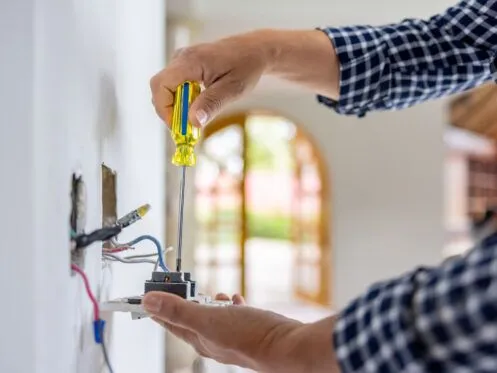
Replacing a switch can look deceptively simple. Remove the wall plate, disconnect a few wires, connect the new switch, and reinstall everything.
The reality depends heavily on what is inside the electrical box.
You may encounter multiple circuits, three-way or four-way switching, neutral conductors, grounding issues, older wiring methods, unusual previous repairs, smart-switch requirements, or conductors that are difficult to identify visually.
More importantly, a nonworking switch has not necessarily failed.
If the actual problem is a damaged conductor, loose connection, defective fixture, or circuit problem, installing a new switch will not address the underlying cause.
Professional troubleshooting can determine why the switch stopped working before parts are replaced unnecessarily.
How an Electrician Troubleshoots a Light Switch That Is Not Working
Electrical troubleshooting is a process of isolating the failure.
An electrician may start by confirming the symptoms and identifying which devices are affected. From there, the circuit can be evaluated systematically.
Depending on the situation, troubleshooting may include examining:
- The switch
- The electrical box
- Wiring connections
- The light fixture
- The branch circuit
- Circuit breakers
- GFCI or AFCI protection
- Grounding
- Other switches controlling the same fixture
- Nearby receptacles
- The electrical panel
The goal is to determine where power is present, where it is absent, and why.
That matters because the repair should address the cause rather than merely the most visible symptom.
Repairing vs. Upgrading Your Light Switch
If the switch itself has failed, replacement also creates an opportunity to consider whether a different control would work better.
Today’s options go well beyond traditional toggle switches.
Depending on the fixture and electrical system, homeowners may consider:
Dimmer Switches
Dimmers provide greater control over light levels and can help create different lighting environments within the same room.
Compatibility is important, particularly when using LED fixtures or bulbs.
Smart Switches
Smart switches can provide app-based controls, scheduling, automation, voice integration, and remote access depending on the system.
They can be particularly useful for outdoor lighting, entryways, frequently used living spaces, or homeowners building a broader smart-home system.
Occupancy and Vacancy Sensors
Sensor-controlled switches can automatically manage lighting based on whether a space is occupied.
They are often useful in laundry rooms, closets, garages, utility areas, bathrooms, and other spaces where lights are easily left on.
Three-Way and Four-Way Switching
If you want to control the same light from multiple locations, the switching configuration can sometimes be changed or expanded.
This is common for stairways, hallways, large rooms, and spaces with multiple entrances.
An electrical repair can therefore be an opportunity to improve how the lighting functions rather than simply replacing the old switch with an identical device.
Your Switch, Lighting, Wiring, and Electrical Panel Work Together
One reason electrical troubleshooting requires a system-level view is that household electrical components do not operate independently.
The electrical panel distributes electricity into branch circuits. Wiring carries that electricity through the home. Switches control loads. Fixtures use the power. Breakers and other protective devices respond when certain abnormal electrical conditions occur.
A symptom at the switch may originate somewhere else in that chain.
This is particularly relevant if your home has several electrical issues occurring at the same time.
For example, a homeowner experiencing a dead switch, frequent breaker trips, flickering lights, and warm outlets probably needs more than a new $10 wall switch. Those symptoms justify evaluating the circuit and possibly the broader electrical system.
Depending on what is found, the appropriate work could involve an electrical repair, switch replacement, new wiring, partial rewiring, lighting repair, outlet replacement, or panel work.
Preventing Future Light Switch Problems
Switches are used constantly, so eventual wear is normal. Other failures can sometimes be caught earlier.
Pay attention when a switch begins behaving differently.
Do not ignore a switch that suddenly feels loose, requires several attempts to operate, produces noise, causes lights to flicker, or becomes warmer than usual.
Electrical problems rarely improve through continued use.
It is also worth having your electrical system evaluated when making significant upgrades to your home. Adding extensive indoor or outdoor lighting, remodeling rooms, installing new circuits, upgrading a panel, or adding an EV charger can change how electricity is distributed and used throughout the property.
Planning those improvements as part of the overall electrical system helps avoid overloaded circuits and piecemeal electrical work later.
Light Switch Repair in Forest Lake and the Twin Cities
When a light switch is not working, finding the actual cause is more important than guessing which component needs replacement.
Plugz Electric provides light switch repair and installation in Forest Lake and throughout the Twin Cities Metro Area. The company’s electricians troubleshoot standard switches, dimmers, smart switches, lighting circuits, and related electrical problems.
Plugz Electric also provides electrical repairs, wiring, and whole-home rewiring, outlet repair and installation, electrical panel replacement, surge protection, indoor and outdoor lighting, ceiling fan installation, electrical upgrades, and EV charging station installation.
Call us today at 612-295-1595 for a free estimate – we’re available 24/7.
That broader electrical experience can be especially valuable when a seemingly simple light switch problem turns out to involve the wiring, fixture, breaker, panel, or another part of the circuit.
If your switch has stopped working, works intermittently, feels hot, buzzes, sparks, or causes the lights to flicker, have the problem diagnosed rather than waiting for it to become more disruptive.
Frequently Asked Questions About a Light Switch Not Working
Why would a light switch suddenly stop working?
A light switch can suddenly stop working because the bulb failed, the circuit breaker tripped, a GFCI tripped, the switch wore out, a connection became loose, the fixture failed, or power was interrupted elsewhere on the circuit. If replacing the bulb and checking the breaker do not solve the problem, electrical troubleshooting may be needed.
How can I tell if a light switch is bad?
Common signs of a bad light switch include inconsistent operation, a loose or unusual feel when flipping the switch, flickering when the switch is moved, failure to control the light, buzzing, or visible damage. Heat, sparks, burning odors, or discoloration require more immediate attention.
Why is my light switch not working but the breaker isn’t tripped?
A breaker does not need to trip for a switch to stop working. The switch itself could have failed, a connection may be loose, the fixture could be defective, a GFCI upstream could have tripped, or there may be a wiring problem elsewhere on the circuit.
Can a light switch go bad without warning?
Yes. Some switches fail abruptly. Others show warning signs first, such as intermittent operation, flickering, looseness, buzzing, or needing to be flipped several times before the light responds.
Why does my light switch have power but the light doesn’t work?
If electrical power reaches the switch but the light does not operate, the problem could involve the switch output, wiring between the switch and fixture, fixture connections, bulb socket, LED driver, or the fixture itself. Testing is usually required to identify where the circuit is interrupted.
Can a bad light switch cause a fire?
A defective switch, loose connection, damaged wiring, or electrical arcing can create excessive heat and potentially contribute to a fire hazard. A switch that is unusually hot, smoking, sparking, crackling, discolored, or producing a burning smell should not continue to be used.
Why does my light flicker when I flip the switch?
A brief or recurring flicker can be caused by a loose bulb, failing switch, loose electrical connection, fixture problem, incompatible dimmer, or another issue on the circuit. Persistent flickering should be investigated, especially when accompanied by buzzing, heat, or other electrical symptoms.
Why won’t my light turn on even after I changed the bulb?
If a known-good bulb does not work, check the circuit breaker and applicable GFCI devices. The switch, fixture, wiring, dimmer, or another circuit connection may be responsible. With integrated LED fixtures, an internal LED driver can also fail even though the wall switch remains functional.
Why is my light switch not working after a power outage?
A breaker or GFCI may have tripped during the outage or when power was restored. Electronic dimmers, smart switches, and LED components can also be affected by power disturbances. If only part of the home remains without power after utility service returns, the affected circuit should be evaluated.
Is a buzzing light switch dangerous?
A faint sound from some dimmers can occur under certain conditions, but loud buzzing, crackling, popping, or a new electrical noise should not be ignored. It may indicate a loose connection, incompatible dimmer, failing switch, or electrical arcing.
Should a light switch feel warm?
Some electronic switches and dimmers can generate a degree of warmth during operation. A conventional switch should not become noticeably hot, and excessive heat from any switch deserves investigation. Heat accompanied by a burning smell, discoloration, buzzing, or melted material is particularly concerning.
Can loose wiring cause a light switch to stop working?
Yes. Loose connections can interrupt power to the switch or fixture and may cause intermittent operation, flickering, buzzing, or complete loss of lighting. Loose electrical connections can also generate heat, so the underlying wiring should be corrected rather than simply working around the problem.
Do I need an electrician if my light switch stops working?
Not necessarily if the problem turns out to be a burned-out bulb or a clearly identified temporary interruption. If the bulb is good and the circuit still does not operate, or if you notice repeated failures, breaker trips, buzzing, heat, sparks, burning odors, or intermittent power, an electrician should diagnose the problem.
Can an electrician replace a regular switch with a smart switch or dimmer?
Yes. An electrician can determine whether the existing wiring and lighting are compatible with the desired smart switch or dimmer and install the appropriate device. Some smart switches require a neutral conductor or have specific load and wiring requirements, so compatibility should be verified before installation.
Who repairs light switches in Forest Lake, MN?
Plugz Electric provides switch repair and installation in Forest Lake and serves homeowners throughout the Twin Cities Metro Area. The company also handles electrical repairs, wiring and rewiring, outlets, panels, surge protection, indoor and outdoor lighting, electrical upgrades, and EV charging installations.