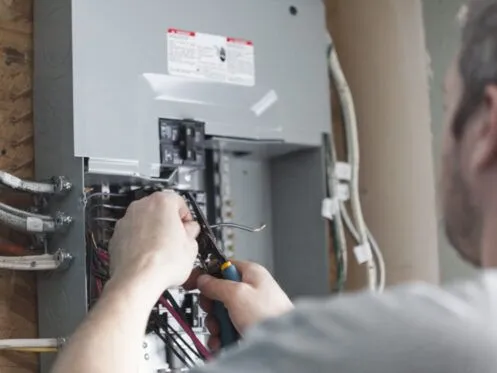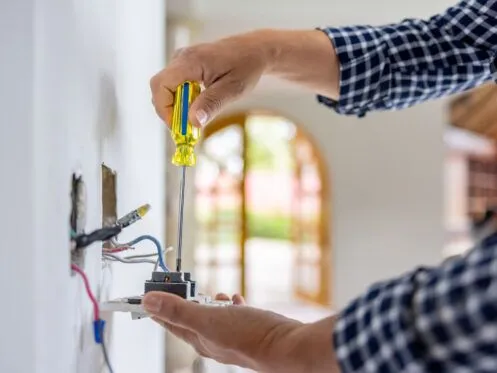

A quiet electrical outlet rarely gets your attention. A buzzing, humming, crackling, or popping outlet should.
If you are wondering, “Why is my outlet buzzing and making sounds?”, the noise usually indicates that electricity is not moving through the receptacle or its connections as cleanly as it should. The cause could be a worn outlet, loose wiring, a poor electrical connection, an overloaded circuit, or another problem within the electrical system.
Some electrical sounds are subtle. You might only hear a faint buzz when an appliance is plugged in. Others are unmistakable—a sharp crackle, intermittent popping, or buzzing accompanied by heat or a burning smell.
The important point is that a standard wall outlet should generally operate silently. An unexplained noise deserves attention, particularly when it develops suddenly or becomes more noticeable over time.
Why Is My Electrical Outlet Buzzing?
Electricity in a residential alternating-current system changes direction many times each second. Electrical equipment can sometimes produce a faint hum as a normal consequence of operation, particularly equipment containing transformers, motors, or electronic components.
A basic wall receptacle is different. There are a few reasons for the outlet itself to produce an audible sound during normal operation.
When buzzing originates at the receptacle, it can indicate a connection that is loose, deteriorated, overloaded, or otherwise unable to carry current properly. In some situations, the sound people identify as “buzzing” is actually tiny instances of electrical arcing.
That distinction matters. An outlet that merely seems annoying can potentially be showing an early symptom of a more serious electrical repair.
Common Reasons an Outlet Makes a Buzzing Sound
There is no single cause behind every noisy electrical outlet. An electrician typically considers the sound itself, when it occurs, what is connected to the circuit, the condition of the receptacle, and the wiring behind it.
Loose Electrical Connections
Loose connections are among the first problems to consider when an outlet starts buzzing.
The wires supplying a receptacle need secure electrical contact. If a terminal connection becomes loose, current may encounter increased resistance or an unstable path through the connection. The problem can generate heat and, under certain conditions, arcing.
Connections can loosen or deteriorate for several reasons, including age, previous electrical work, damaged components, or repeated heating and cooling.
A loose connection may cause more than noise. Other symptoms can include:
- Intermittent power
- Flickering lights elsewhere on the circuit
- A warm outlet or cover plate
- Discoloration around the receptacle
- A burning or hot-plastic odor
- Crackling or popping sounds
The connection causing the problem is not necessarily visible from the front of the outlet. It may be inside the electrical box, which is one reason removing the cover and guessing at the problem is not a good troubleshooting strategy.
A Worn or Damaged Electrical Outlet
Receptacles do not last forever.
Every time you insert and remove a plug, the internal contacts experience some wear. Eventually, those contacts may no longer grip a plug firmly. Damage can also occur from overheating, physical impact, improper installation, or years of heavy use.
One easy-to-recognize warning sign is a plug that feels unusually loose.
If a plug practically falls out of the receptacle or needs to be positioned a certain way to maintain power, the outlet may need replacement. A deteriorated receptacle can create unreliable electrical contact, which may contribute to heat, arcing, and unusual sounds.
Plugz Electric provides electrical outlet installation and service for homeowners in Forest Lake and the Twin Cities Metro area. Replacing a damaged receptacle also allows an electrician to inspect the wiring and connections inside the box rather than simply addressing the visible component.
Electrical Arcing
Arcing is one of the more concerning explanations for a buzzing or crackling outlet.
Electrical current is supposed to travel through continuous conductive connections. When there is a gap or damaged connection, electricity can sometimes jump between conductive points. That discharge is known as an arc.
You may hear it as buzzing, sizzling, snapping, or crackling.
Arcing can produce considerable heat and damage receptacles, wiring insulation, terminals, and surrounding electrical components. It is especially concerning when the sound occurs alongside a burning odor, visible discoloration, sparks, or heat.
An Overloaded Circuit
Sometimes the outlet is where you notice the symptom, but the underlying problem involves the circuit.
Electrical circuits are designed to carry a particular load. Connecting multiple high-demand devices to the same circuit can place more demand on it than intended.
Space heaters, portable air conditioners, kitchen appliances, hair dryers, and other high-wattage devices can place substantial loads on residential circuits.
An overloaded circuit often reveals itself through a tripped breaker. You may also notice dimming or flickering lights when equipment starts.
Repeated breaker trips should not simply be treated as an inconvenience. Plugz Electric provides electrical panel services in Forest Lake for problems involving panels and circuits, including situations where electrical demand has outgrown an existing system.
Problems With the Wiring Behind the Outlet
A perfectly normal-looking receptacle can have damaged or deteriorated wiring behind it.
The wiring inside walls and electrical boxes is largely hidden, so homeowners usually discover problems through symptoms rather than direct observation. Buzzing outlets, intermittent power, flickering lights, hot receptacles, burning odors, and repeated circuit breaker trips can all provide clues.
Older homes deserve particular attention because electrical systems may have been altered repeatedly over the decades. Additions, renovations, previous repairs, and changing electrical demands can leave a system with a mixture of old and newer components.
When the problem extends beyond one receptacle, electrical wiring and rewiring services may be necessary to correct damaged or outdated portions of the system. Plugz Electric specifically identifies shorts, flickering lights, and fire hazards among the concerns associated with outdated or damaged wiring.
A Problem With the Plug or Connected Device
Before assuming the outlet itself is making the noise, pay attention to where the sound originates.
Chargers, power adapters, dimmers, LED drivers, appliances, and other electronic devices can produce audible humming or buzzing. A power adapter plugged into a perfectly functional receptacle may be the actual source of the sound.
That does not mean every buzzing charger is harmless. A device that becomes excessively hot, smells burned, sparks, or produces unusual crackling should not continue to be used.
If the sound disappears when the device is unplugged and the receptacle shows no other symptoms, the connected equipment becomes a more likely suspect. If multiple devices produce the same noise from one particular receptacle, the outlet or circuit warrants closer attention.
Improper or Aging Electrical Work
Not every electrical problem develops naturally with age. Sometimes the issue traces back to how a component was installed.
Poor connections, damaged conductors, incorrect replacement parts, or modifications made during previous renovations can remain unnoticed until electrical demand changes or a connection deteriorates.
This is why diagnosing a noisy outlet involves more than installing a new receptacle. A qualified electrician can evaluate the outlet, wiring connections, grounding, circuit, and other relevant components to identify what is actually producing the symptom.
What Different Outlet Sounds Can Mean
“Buzzing” is often used to describe several distinctly different electrical noises. The type of sound can provide useful information.
A Low, Steady Buzz or Hum
A continuous low hum may be related to the connected device, a loose connection, or another electrical component on the circuit.
First, determine whether the noise is actually coming from the wall receptacle rather than a charger or appliance. If the receptacle continues buzzing without an obvious device-related explanation, it should be inspected.
Crackling or Sizzling
Crackling and sizzling are more concerning than a mild hum.
Those sounds can indicate an unstable connection or electrical arcing. Heat may already be developing at the problem area even if the cover plate does not yet look damaged.
Do not continue using a receptacle that is making persistent sizzling or crackling noises.
Popping Sounds
Occasional popping from an outlet is not normal.
A pop can accompany arcing, a short circuit, or failure of an electrical component. If a popping sound is followed by a tripped breaker, loss of power, sparks, smoke, or a burning odor, treat the situation as an electrical problem rather than simply resetting the breaker and continuing to use the outlet.
Buzzing Only When Something Is Plugged In
This pattern can help narrow the possibilities.
If the same device buzzes in several outlets, the device or its power supply may be responsible. If different devices cause buzzing at one specific outlet, the receptacle or its wiring becomes more suspicious.
High electrical demand can also expose an existing weak connection. An outlet might appear normal while charging a phone, but start producing symptoms when a higher-load appliance is connected.
That does not mean the appliance necessarily caused the electrical problem. It may simply have made an existing weakness easier to detect.
Is a Buzzing Outlet Dangerous?
It can be.
The noise itself is not what makes the outlet dangerous. The concern is the electrical condition producing that noise.
A loose connection, damaged receptacle, overheating terminal, or electrical arc can create temperatures high enough to damage wiring insulation and surrounding materials. An electrical fault can also expose people to shock.
Plugz Electric lists buzzing, hot outlets or switch plates, sparking, burning odors, and frequent breaker trips among signs that a home may need professional electrical repair.
The risk becomes more significant when buzzing appears with another warning sign.
Warning Signs That Need Immediate Attention
A noisy outlet becomes substantially more concerning when you notice:
- A burning or melting-plastic smell
- Smoke
- Visible sparks
- Scorch marks or brown discoloration
- A receptacle or wall plate that feels unusually hot
- Melted or deformed plastic
- Repeated circuit breaker trips
- Flickering lights when the outlet is used
- Power cutting in and out
- Crackling, snapping, or sizzling
- A plug that is loose in the receptacle
If you see smoke or evidence of an active electrical fire, leave the affected area and contact emergency services as appropriate.
For other serious symptoms, stop using the receptacle and have the electrical problem evaluated rather than repeatedly testing it with different appliances.
What Should I Do If My Outlet Is Buzzing?
Your priority should be reducing the possibility of further overheating or electrical damage.
Stop Using the Outlet
Unplug connected equipment if it can be done safely.
Do not keep plugging devices into the receptacle to see whether the noise happens again. Repeatedly energizing a potentially damaged connection provides little useful information and can make an existing problem worse.
Check for Heat, Smoke, or Burning Odors
Without dismantling the outlet, look for obvious signs of trouble.
Discoloration, melted plastic, smoke, or a burning smell can indicate that overheating has already occurred.
Avoid touching a receptacle that appears burned, melted, or actively damaged.
Turn Off the Circuit When Necessary
If the outlet is crackling, overheating, sparking, or smells burned, shutting off power to the affected circuit at the electrical panel can prevent the receptacle from remaining energized while you arrange service.
If you cannot confidently identify the correct circuit or safely access the electrical panel, do not experiment with the electrical system.
Have the Outlet Properly Diagnosed
An electrician can determine whether the problem is limited to the receptacle or originates somewhere else on the circuit.
Depending on what is found, the repair could involve:
- Replacing a worn receptacle
- Correcting loose terminal connections
- Repairing damaged wiring
- Correcting grounding problems
- Replacing damaged electrical components
- Addressing circuit loading
- Repairing or upgrading a panel
- Rewiring part of the circuit
That diagnostic step is important. Replacing the outlet alone does not solve a damaged conductor, overloaded circuit, or upstream connection problem.
Why Does My Outlet Buzz but the Breaker Does Not Trip?
This is an important misconception about circuit breakers.
A breaker does not detect every type of electrical problem.
Standard circuit breakers are primarily designed to protect conductors from excessive current. A deteriorated or loose connection can sometimes generate localized heat or arcing without drawing enough current to trip a conventional breaker immediately.
In other words, a breaker staying on does not prove that a buzzing outlet is safe.
The same principle applies to other warning signs. An outlet can overheat, become discolored, or develop poor electrical contact while the circuit remains energized.
Why Is My Outlet Buzzing After I Plug Something In?
When buzzing begins only after connecting a device, there are several possibilities.
The device itself may be making the noise. This is relatively common with some electronic power supplies and chargers.
The device may also be drawing enough current to expose a weak connection in the outlet. A worn receptacle may struggle to maintain reliable contact with the plug blades, or a connection behind the receptacle may begin showing symptoms under load.
Pay particular attention if the buzzing appears when using high-wattage equipment.
If the plug or receptacle becomes hot, power cuts in and out, or you see discoloration, discontinue use and have the circuit inspected.
Why Does My Outlet Make a Crackling Sound?
Crackling should receive more attention than a simple low hum because it can be associated with arcing.
Electricity should not have to jump across loose or damaged connections inside a receptacle. When it does, the resulting discharge can create heat and an audible crackle or snap.
You may also notice the sound when inserting or moving a plug. If changing the plug’s position makes the power cut in and out, that is another indication that the connection is unreliable.
A receptacle in that condition should be replaced or repaired rather than continuing to be used.
Can an Outlet Buzz Because It Is Overloaded?
Yes, although circuit overload and receptacle problems are not the same thing.
An overloaded circuit occurs when electrical demand exceeds what the circuit is designed to carry. A high load can also reveal weak connections that were less noticeable under lighter demand.
For example, suppose a bedroom circuit seems perfectly normal with lamps and phone chargers connected. Adding a portable heater creates considerably more demand. If a receptacle has a deteriorated connection, that higher current can make heat, buzzing, or other symptoms more apparent.
This is one reason adding outlets does not automatically increase the amount of electricity a circuit can safely provide. The available circuit capacity still matters.
If your home’s electrical needs have grown substantially, an electrician can determine whether you need outlet repairs, additional circuits, wiring changes, or an electrical panel upgrade rather than simply adding more receptacles.
Does a Buzzing GFCI Outlet Mean Something Different?
Ground-fault circuit interrupter (GFCI) receptacles contain additional electrical components compared with standard receptacles. They are commonly used in areas where electrical equipment may be exposed to moisture.
A GFCI that repeatedly trips, will not reset, feels hot, or produces an unusual, persistent sound may be damaged or may be responding to a problem on the circuit.
Repeatedly pressing the reset button is not a repair.
If a GFCI will not reset, the cause could involve the receptacle itself, connected equipment, downstream wiring, moisture, or an actual ground fault. Proper testing can distinguish between these possibilities.
Why Older Homes May Experience More Outlet Problems
Age alone does not make an electrical system unsafe, but decades of use and modification can create more opportunities for problems.
An older Twin Cities home may have experienced multiple remodels, appliance upgrades, outlet replacements, additions, or changes in electrical demand. Connections can deteriorate, receptacles can wear out, and wiring that once served the household adequately may no longer match how the home is used today.
Modern households place substantial demand on electrical systems. Televisions, computers, kitchen equipment, portable heaters, air conditioners, chargers, entertainment systems, and smart-home equipment can all operate simultaneously.
When problems appear in several parts of a house rather than one isolated receptacle, a broader electrical evaluation may make more sense than repairing outlets individually.
Plugz Electric offers residential and commercial electrical services that include electrical repairs, panel replacement, wiring and whole-home rewiring, outlet repair and installation, surge protection, switches, and indoor and outdoor lighting.
When a Buzzing Outlet Points to a Larger Electrical Problem
One noisy outlet can be an isolated failure. Multiple electrical symptoms suggest looking deeper.
For example, suppose you notice a buzzing kitchen receptacle, lights occasionally dim elsewhere in the home, and the same breaker has recently tripped several times. Replacing only the noisy receptacle may not address the entire issue.
An electrician may need to examine the circuit, electrical panel, connections, and load.
Broader warning signs include:
- Several outlets are becoming warm
- Multiple receptacles are losing power
- Frequent breaker trips
- Lights dimming when the appliances start
- Flickering throughout the house
- Burning odors with no obvious source
- Evidence of previous overheating
- Older or damaged wiring
- Insufficient circuits for the current electrical demand
Electrical troubleshooting works best when the system is considered as a whole. The outlet is sometimes the failed component, but it can also be where a larger problem first becomes noticeable.
Should You Replace a Buzzing Outlet Yourself?
Changing a receptacle may look straightforward, but diagnosing why it is buzzing is the more important part of the repair.
If the actual problem is a damaged wire, loose connection elsewhere in the circuit, incorrect wiring, overloaded circuit, or panel issue, installing a new outlet does not necessarily correct it.
There is also the risk of working on energized conductors or incorrectly reconnecting the receptacle.
Professional electrical troubleshooting allows the repair to address the cause rather than simply replacing the component making the noise.
How an Electrician Troubleshoots a Buzzing Outlet
Electrical diagnosis is a process of narrowing down where the abnormal condition begins.
An electrician may evaluate the receptacle itself, inspect accessible connections, assess the condition of the wiring, verify proper installation, and determine whether circuit loading or another electrical component is contributing to the problem.
The exact repair depends on what the inspection reveals.
A badly worn outlet may simply need replacement. Heat-damaged conductors may require wiring repair. Repeated problems throughout a circuit may justify more extensive electrical work. A home with insufficient capacity may need additional circuits or panel improvements.
This is why two homes with the same “buzzing outlet” symptom can ultimately require very different repairs.
Preventing Electrical Outlet Problems
Not every outlet failure is preventable, but good electrical habits can reduce unnecessary stress on receptacles and circuits.
Avoid forcing damaged plugs into outlets or continuing to use receptacles that no longer hold plugs securely. High-wattage appliances should be used according to their electrical requirements rather than grouped indiscriminately on extension cords or power strips.
Pay attention to early symptoms as well. A receptacle that occasionally loses power or feels unusually warm is giving you useful information before it progresses to obvious buzzing, arcing, or visible damage.
During remodeling, electrical upgrades, or major appliance installations, consider whether the existing circuits can support the new demand. Adding circuits or upgrading wiring at the appropriate stage is generally preferable to discovering capacity problems after everything is installed.
Electrical Outlet Repair in Forest Lake and the Twin Cities
A buzzing receptacle is exactly the kind of electrical symptom that is easy to postpone because the lights are still on and the outlet still appears to work. That does not mean the underlying connection is healthy.
Plugz Electric is based in Forest Lake and serves homeowners throughout the Twin Cities Metro area. Its residential electrical services include outlet repair and replacement, electrical troubleshooting, panel work, wiring and rewiring, surge protection, switches, EV charging, and indoor and outdoor lighting.
If an outlet is buzzing, crackling, overheating, sparking, or repeatedly losing power, Plugz Electric can inspect the electrical system and determine whether you are dealing with a failed receptacle or a larger wiring or circuit problem.
If you need help with your outlets or any electrical repairs, reach out to our team by calling (612) 295-1595 or contact us online here.
Frequently Asked Questions About Buzzing Electrical Outlets
Is it normal for an electrical outlet to buzz?
A standard wall receptacle should generally operate silently. Buzzing can indicate a loose connection, worn receptacle, wiring problem, arcing, or an issue involving the connected device. Persistent noise from the outlet itself should be investigated.
Why is my outlet making a buzzing noise when nothing is plugged in?
Buzzing from an empty receptacle is more concerning because a connected charger or appliance can largely be ruled out as the source. The sound could originate from a loose connection, damaged receptacle, wiring issue, or another component on the circuit.
Can a buzzing outlet cause a fire?
Conditions associated with buzzing outlets—particularly loose connections, electrical arcing, and overheating—can increase fire risk. Buzzing accompanied by heat, discoloration, smoke, sparks, or a burning smell warrants prompt attention.
Why is my outlet buzzing and getting hot?
A hot, buzzing outlet can indicate excessive resistance, a loose connection, damaged contacts, overloading, or another electrical fault. Stop using the receptacle and have the cause evaluated.
Why does my outlet buzz when I plug in a charger?
The charger itself may produce a faint electronic hum, particularly if it contains a power converter. However, if different chargers or devices cause the same outlet to buzz, or the receptacle becomes hot or crackles, the outlet or circuit should be inspected.
Why does my electrical outlet make a crackling noise?
Crackling can indicate electrical arcing or an unstable connection. Because arcing can generate significant heat, a crackling receptacle should not continue to be used as though the sound were normal.
Should I turn off the breaker if an outlet is buzzing?
If an outlet is actively crackling, sparking, overheating, smoking, or producing a burning smell, shutting off the affected circuit can prevent it from remaining energized while the problem is addressed. If you cannot safely identify or operate the appropriate breaker, avoid handling the electrical system.
Can a bad outlet cause a breaker to trip?
Yes. Certain outlet failures, short circuits, ground faults, or connected-device problems can result in breaker operation. However, a damaged outlet does not always trip the breaker, so the absence of a trip should not be treated as proof that the receptacle is safe.
How do I know if the outlet or appliance is causing the buzzing?
Pay attention to where the sound originates and whether it follows a particular device. If one device makes the same noise in multiple receptacles, the device becomes a likely source. If several different devices cause buzzing at one outlet, the receptacle or circuit deserves closer inspection.
Does a buzzing outlet need to be replaced?
Sometimes, but not always. A worn or damaged receptacle may need replacement, while other cases involve loose wiring, circuit problems, or another electrical component. The underlying cause should be identified before assuming that replacing the receptacle alone will solve the problem.
Who should I call for a buzzing outlet in the Twin Cities?
A licensed electrician can inspect the receptacle and determine whether the problem involves the outlet, wiring, circuit, or electrical panel. Plugz Electric provides electrical repair services from its Forest Lake base to customers throughout the Twin Cities Metro area, including troubleshooting for symptoms such as buzzing, sparking, hot outlets, flickering lights, and frequent breaker trips.