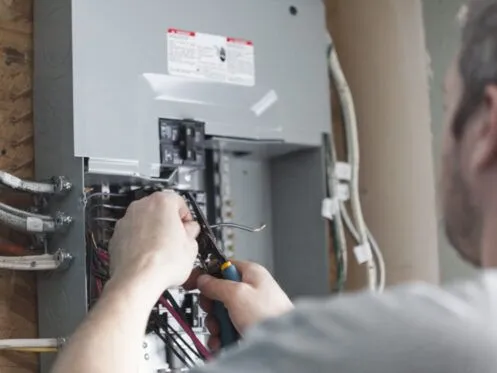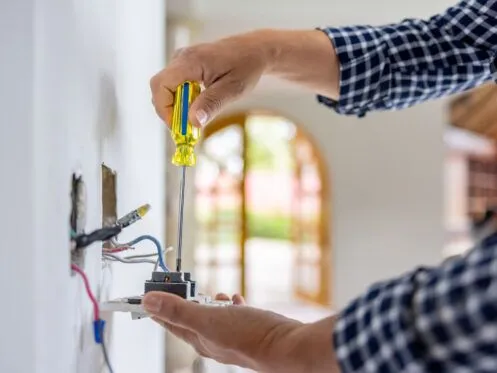

Electrical repair costs in the Twin Cities can range from less than $200 for a straightforward switch or outlet problem to several thousand dollars when the repair involves an electrical panel, extensive wiring, or multiple circuits. For many common residential electrical service calls, homeowners can expect to spend somewhere between a few hundred dollars and $1,000, although the actual price depends heavily on what the electrician discovers during troubleshooting. For commercial electrical services, costs can vary from a few hundred to multi thousands of dollars.
The electrical repair costs you’re going to pay depends on exactly what type of electrical problems you have. Electrical problems are not always as simple as they appear.
A dead outlet could be a failed receptacle that takes relatively little time to replace. It could also be the first visible symptom of a loose connection, damaged wiring, a tripped GFCI elsewhere in the circuit, or a problem inside the electrical panel. Until the circuit is tested, there is no reliable way to know which repair is required.
Current Minneapolis-area cost data puts a typical electrician service project at roughly $395, with reported costs commonly ranging from about $172 to $619. More complicated repairs and upgrades can run considerably higher.
For homeowners in Minneapolis, St. Paul, Forest Lake, and communities throughout the Twin Cities Metro, understanding what affects electrical repair costs makes it much easier to evaluate an estimate and decide when a repair should become a larger electrical upgrade.
Average Electrical Repair Costs in the Twin Cities
There is no single flat price that applies to every electrical repair. Still, typical project ranges provide a useful starting point when budgeting.
Approximate Twin Cities-area costs for common electrical projects include:
- Electrician service or minor repair: roughly $170–$620 for many common projects
- Outlet installation: approximately $140–$310 for a typical single outlet, depending on the outlet and installation
- Outlet repair: often $60–$250 for a standard receptacle repair
- Light switch replacement: approximately $80–$190
- Ceiling fan electrical work: approximately $130–$330
- Electrical panel or breaker-box work: approximately $470–$1,700 for many projects, with complete panel replacements potentially costing more
- Whole-house rewiring: several thousand dollars in many homes, with cost increasing substantially with square footage and accessibility
- Emergency electrical service: potentially significantly more than a scheduled service call
These figures are useful for budgeting rather than as fixed prices. A professional electrician needs to evaluate the actual electrical system before determining what work is necessary.
Two houses on the same street can have the same symptom and require entirely different repairs.
What Determines the Cost of an Electrical Repair?
Electrical contractors consider more than the price of a replacement part. Labor, troubleshooting, accessibility, existing wiring, permits, and the overall condition of the electrical system can all influence the final price.
The Type of Electrical Problem
A simple component replacement is usually less expensive than a problem that requires extensive troubleshooting.
Replacing a worn light switch, for example, is generally straightforward once the electrician confirms that the switch itself has failed. Intermittent power loss affecting several rooms is different. The electrician may need to trace circuits and test multiple connections before locating the underlying fault.
Troubleshooting time is part of the repair.
Labor and Service Call Costs
Current Minneapolis cost data places electrician labor in a broad range of roughly $45 to $150 per hour, depending on the electrician’s qualifications, the nature of the project, and how the contractor structures its pricing.
Hourly rates do not necessarily tell homeowners what a project will ultimately cost, however.
Electrical companies may use hourly labor, service-call charges, diagnostic fees, minimum charges, flat-rate pricing, or a combination of these approaches. A contractor may also quote a complete project price after determining what needs to be repaired.
This is why comparing electricians solely by their advertised hourly rate can be misleading.
Accessibility
Electrical wiring hidden behind a finished basement ceiling is more difficult to reach than wiring exposed in an unfinished utility room.
The same principle applies throughout a house.
Electrical repairs can become more labor-intensive when electricians have to work around:
- Finished walls and ceilings
- Attics with limited access
- Tight crawl spaces
- Built-in cabinetry
- Insulation
- Finished basements
- Older construction
- Exterior walls
- Long wire runs between the panel and repair location
A relatively inexpensive electrical component can therefore be part of a much more involved repair.
Age of the Home
The Twin Cities has an enormous variety of housing stock, from century-old Minneapolis and St. Paul homes to relatively new suburban construction.
Older homes can introduce complications that are difficult to predict before inspection.
An electrician might encounter outdated wiring methods, deteriorated insulation, insufficient grounding, undersized electrical service, older panels, previous DIY modifications, or electrical work completed under standards that have since changed.
Sometimes the original problem can be repaired independently. In other situations, correcting it properly requires additional electrical work.
Materials and Electrical Components
Material costs vary substantially.
Replacing a basic residential switch is different from installing a GFCI receptacle, AFCI protection, dedicated circuit, new breaker, surge protective device, or electrical panel.
Wire length and gauge also matter. A repair requiring a few feet of cable will naturally cost less in materials and labor than running a new circuit from one side of a house to the other.
Permits and Inspections
Certain electrical projects require permits and inspections, which become another part of the project cost.
Minnesota’s electrical permitting system can involve either the state or the local authority having jurisdiction, depending on where the property is located. Homeowners and contractors must determine whether electrical permitting and inspection are handled by the Minnesota Department of Labor and Industry or the applicable municipality.
Permit and inspection costs therefore vary by project and jurisdiction.
Minnesota also adopted the 2026 National Electrical Code effective August 17, 2026. Electrical permits filed on or after that date are subject to the 2026 NEC.
How Much Does It Cost to Repair an Electrical Outlet?
A standard outlet repair may cost roughly $60 to $250, while installing a new outlet in the Minneapolis area commonly falls around $140 to $310. The price can increase when the electrician needs to install new wiring or address problems elsewhere in the circuit.
Outlet repairs become more complicated when there is:
- Burned or melted wiring
- Loose wiring inside the electrical box
- No equipment grounding
- A damaged electrical box
- A failed GFCI
- Circuit overload
- Improper previous wiring
- Moisture exposure
- Damage extending beyond the receptacle
A receptacle that feels warm, smells burned, sparks, or shows discoloration deserves prompt attention. In those situations, simply replacing the visible outlet without determining why it failed could leave the underlying electrical problem unresolved.
Plugz Electric provides both outlet repair and installation, allowing homeowners to have the receptacle and the circuit supplying it evaluated together.
How Much Does Electrical Panel Repair Cost?
Electrical panel projects have one of the widest cost ranges because “panel repair” can describe anything from replacing a defective breaker to replacing the entire panel.
Twin Cities-area data puts many breaker-box projects around $470 to $1,700. Minneapolis electrical box replacement data, meanwhile, shows an average around $1,330 with a broader reported range of approximately $637 to $2,098.
A complete service or panel upgrade can exceed those figures depending on amperage, utility requirements, meter equipment, grounding, permits, and associated wiring.
When Is Panel Replacement Better Than Repair?
Not every electrical panel problem requires replacement.
If the panel itself remains in good condition and the issue is limited to a replaceable component, repair may be appropriate. Replacement becomes more likely when the panel is obsolete, damaged, severely corroded, improperly modified, physically compromised, or inadequate for the home’s electrical demand.
A panel upgrade can also make sense when homeowners are planning other high-demand improvements, such as EV charging, electric appliances, additions, or major remodeling.
Plugz Electric provides electrical panel repair, replacement, and electrical upgrades for homeowners throughout its Twin Cities service area.
How Much Does Home Rewiring Cost in the Twin Cities?
Rewiring is considerably different from repairing an isolated circuit.
Current Minneapolis estimates place residential rewiring around $2 to $4 per square foot, although the final price varies according to the house, wiring conditions, accessibility, and project scope.
A relatively accessible house with unfinished areas may be easier to rewire than a similarly sized property with plaster walls, finished ceilings, limited attic access, and multiple previous renovations.
Why Rewiring Costs Vary So Much
The electrician may need to replace far more than cable.
A comprehensive rewiring project can involve:
- New branch circuits
- New electrical boxes
- Receptacle replacements
- New switches
- Grounding improvements
- AFCI or GFCI protection where required
- Panel modifications
- Dedicated appliance circuits
- Smoke or carbon monoxide alarm wiring
- Permit and inspection coordination
Older Twin Cities homes can also reveal electrical conditions that were not visible before work began.
That is why whole-home rewiring should be evaluated as a complete electrical system project rather than priced as simply “new wire.”
What Does It Cost to Repair a Circuit Breaker That Keeps Tripping?
A tripping breaker does not automatically mean the breaker is defective.
Circuit breakers are designed to interrupt power under certain unsafe electrical conditions. A breaker that repeatedly trips could indicate an overloaded circuit, short circuit, ground fault, defective appliance, damaged wiring, or an actual breaker problem.
If the breaker itself has failed, replacement may be relatively straightforward. If it is responding to a fault elsewhere in the circuit, the electrician must identify and repair that problem first.
That diagnostic work affects the price.
Repeatedly resetting a breaker without determining why it trips is not a repair. If the breaker continues to open after loads have been reduced, professional troubleshooting is the safer approach.
What Does It Cost to Repair Flickering Lights?
Flickering lights are another electrical symptom with no universal repair price.
Sometimes the problem is as simple as a loose bulb, incompatible dimmer, or failing light fixture. Other cases involve loose connections, overloaded circuits, damaged wiring, or panel-related problems.
The scope of the flickering offers an important clue.
One flickering fixture tends to point toward a localized problem. Lights flickering across several rooms or throughout the house can suggest an issue farther upstream in the electrical system.
An electrician may need to inspect the fixture, switch, circuit connections, panel, and potentially the electrical service before determining the correct repair.
Does Emergency Electrical Repair Cost More?
Usually, yes.
Emergency and after-hours electrical service often costs more than scheduled work because an electrician has to respond outside normal scheduling and may need to rearrange existing service calls.
Some Minneapolis-area estimates put emergency electrician labor around $95 to $190 per hour, although actual pricing varies by company and circumstances.
There are situations where waiting for a cheaper appointment is not sensible.
Problems requiring prompt attention can include:
- Smoke coming from electrical equipment
- Burning electrical odors
- Sparking outlets or switches
- A hot electrical panel
- Melted receptacles
- Visible arcing
- Electrical equipment exposed to water
- Sudden widespread electrical failure
- Repeated breaker trips accompanied by heat or burning smells
The immediate concern in these situations is determining whether the circuit can remain safely energized.
Why Older Twin Cities Homes Can Cost More to Repair
Older houses are part of what gives Minneapolis and St. Paul neighborhoods their character, but decades of electrical modifications can make troubleshooting challenging.
A house may have started with one wiring system and received additions over several generations. A 1920s home could have original components alongside electrical work from the 1950s, 1980s, 2000s, and a recent kitchen remodel.
Each renovation can leave clues behind.
An electrician opening a box might discover:
- Old or deteriorated conductors
- Ungrounded circuits
- Improper splices
- Overfilled electrical boxes
- Abandoned wiring
- Mismatched electrical components
- Circuits serving more loads than expected
- Previous homeowner modifications
That does not mean every older house needs to be completely rewired. It means electrical repair estimates sometimes change once concealed conditions become visible.
Repair or Upgrade: Which Makes More Financial Sense?
The cheapest immediate repair is not necessarily the least expensive long-term option.
Suppose a homeowner has one failing outlet in an otherwise modern electrical system. Replacing that outlet makes sense.
Now consider an older house where several outlets are failing, breakers trip regularly, lights dim when appliances start, and the electrical panel is already crowded. Paying for repeated isolated repairs may postpone a larger electrical upgrade without addressing the overall problem.
A professional evaluation should answer two separate questions:
- What needs to be repaired now?
- Is there a broader electrical issue likely to cause additional problems?
Homeowners can then decide whether targeted repair or a larger upgrade makes better financial sense.
Can You Reduce the Cost of Electrical Repairs?
There are practical ways to control costs without cutting corners on electrical safety.
Combine Smaller Electrical Projects
If you have several non-urgent electrical issues, consider addressing them during the same scheduled visit.
For example, you might need a loose outlet repaired, a switch replaced, a ceiling fan installed, and an outdoor light inspected. Combining those projects may be more efficient than scheduling four separate visits.
Explain the Symptoms Clearly
Before the electrician arrives, make note of what happens and when.
Useful information includes which breaker trips, what appliances were running, whether the problem is intermittent, when it started, whether you smell anything unusual, and which rooms lose power.
Good information can help an electrician narrow down the problem more efficiently.
Keep the Work Area Accessible
Clear furniture, storage boxes, shelving, and other obstacles away from the panel and affected electrical components whenever practical.
Accessibility can make troubleshooting and repair more efficient.
Address Problems Before They Spread
Electrical problems rarely become cheaper because they were ignored.
A loose connection can generate heat. Damaged wiring can worsen. A deteriorating receptacle can eventually damage conductors or the electrical box around it.
Prompt repair may prevent a localized issue from turning into a larger project.
Why Electrical Repair Estimates Can Be So Different
Homeowners sometimes receive two electrical estimates that appear surprisingly far apart.
Price alone does not tell the entire story.
One estimate might include only the immediate component replacement. Another may include diagnostic work, code-required corrections, permits, upgraded materials, additional circuit work, or a longer workmanship guarantee.
Before comparing totals, compare the actual scope.
Ask:
- What exactly is being repaired?
- Are materials included?
- Is troubleshooting included?
- Does the project require a permit?
- Are permit and inspection fees included?
- Is additional wiring necessary?
- Will any drywall or finish repair be required afterward?
- Is the work guaranteed?
- What happens if additional damage is discovered?
A detailed estimate makes it easier to compare contractors on equivalent work.
If you need an electrical repair estimate, be sure to reach out to our team by calling (612) 295-1595 or click on the BOOKING button at the top of the page.
Why Professional Electrical Repair Matters
Electricity is unforgiving of shortcuts.
Electrical repair requires more than making a device work again. The repair must provide secure connections, proper conductor sizing, suitable overcurrent protection, grounding and bonding where applicable, correct equipment, and compliance with current electrical requirements.
That is particularly important when the visible symptom does not reveal the source of the problem.
A buzzing outlet, for instance, is not repaired simply because the buzzing stops after someone moves a wire. The connection needs to be evaluated to determine why it was loose or arcing and whether heat damaged surrounding components.
Minnesota regulates electrical contractors and electricians, and electrical installations are subject to applicable permitting, inspection, and electrical code requirements.
Electrical Repair Services From Plugz Electric
Plugz Electric is based in Forest Lake and serves residential and commercial customers throughout the Twin Cities Metro area, including communities in Washington, Anoka, Ramsey, Hennepin, Dakota, and Chisago counties.
The company’s electrical services cover both everyday repairs and larger electrical improvements, including:
- Electrical troubleshooting and repairs
- Electrical panel repair and replacement
- Electrical upgrades
- Wiring and whole-home rewiring
- Outlet repair and installation
- Light switch repair and installation
- Surge protection
- Indoor lighting
- Outdoor lighting
- Ceiling fan installation
- EV charging stations
- Electrical work for remodeling projects
That range is useful because many electrical problems overlap. An outlet problem can turn out to be a wiring problem, while repeated circuit issues may point toward a panel or capacity concern.
Having the entire electrical system evaluated makes it possible to repair the source of the problem rather than repeatedly treating the symptoms.
Get an Electrical Repair Estimate in the Twin Cities
So, how much does electrical repair cost in the Twin Cities? For relatively small repairs, homeowners may spend a few hundred dollars. Outlet and switch work commonly falls toward the lower end of the spectrum, while panel work, new circuits, extensive troubleshooting, and rewiring can push the cost into the thousands.
The most important factor is the actual condition of the electrical system.
If you’re dealing with flickering lights, dead outlets, frequent breaker trips, buzzing, sparking, hot switch plates, burning odors, damaged wiring, or another electrical problem, Plugz Electric can inspect the issue and determine what needs to be repaired.
Based in Forest Lake and serving the broader Twin Cities Metro, Plugz Electric handles everything from individual electrical repairs to panel replacements, wiring and rewiring, surge protection, EV charger installs, indoor lighting, and outdoor lighting projects.
Frequently Asked Questions About Electrical Repair Costs in the Twin Cities
How much does an electrician cost in the Twin Cities?
Minneapolis-area data generally places electrician labor somewhere around $45 to $150 per hour, depending on the electrician, project complexity, and pricing structure. Many electrical companies also have minimum service charges or diagnostic fees, so a short repair does not necessarily equal one hour of labor.
What is the average electrical repair cost in Minneapolis?
Current local cost data puts the average electrician project in Minneapolis at approximately $395, with many projects falling between roughly $172 and $619. Simple repairs may cost less, while panel, wiring, and extensive troubleshooting projects can cost substantially more.
How much does it cost to replace an electrical outlet in Minnesota?
A straightforward outlet project in the Minneapolis area commonly costs around $140 to $310, although simple repairs may cost less. GFCI outlets, outdoor receptacles, new circuits, damaged wiring, difficult access, and electrical box repairs can increase the price.
How much does electrical panel replacement cost in the Twin Cities?
Minneapolis-area electrical box replacement costs average around $1,330, with reported projects commonly ranging from approximately $637 to $2,098. Complete service upgrades and complicated panel projects can cost more depending on amperage, utility work, grounding, permitting, and other required improvements.
How much does it cost to rewire a house in Minneapolis?
Current Minneapolis estimates put whole-house rewiring at approximately $2 to $4 per square foot. House size, age, wall construction, wiring accessibility, electrical panel condition, number of circuits, and required electrical upgrades can significantly change the final price.
Why does an electrician charge a service-call fee?
A service call covers more than the minutes spent physically replacing a component. The contractor has travel time, diagnostic work, vehicle and equipment expenses, licensing, insurance, employee costs, and business overhead associated with sending a qualified electrician to the property. Some companies incorporate these expenses into a flat-rate repair price instead.
Do electrical repairs require a permit in Minnesota?
Some do. Permit requirements depend on the type of electrical work and the authority having jurisdiction. Depending on the property location, electrical permits and inspections may be administered by the Minnesota Department of Labor and Industry or a local municipality.
Is it cheaper to repair or replace an electrical panel?
Repair is generally less expensive when the problem is isolated to a replaceable breaker or another serviceable component and the existing panel remains safe and adequate. Replacement may offer better long-term value when the panel is obsolete, damaged, undersized, heavily modified, or no longer suitable for the home’s electrical demand.
Should I replace several outlets at the same time?
It can make sense, particularly when multiple outlets are the same age or show similar wear. Bundling several small electrical projects into one service visit can also be more efficient than scheduling separate appointments.
How much more does emergency electrical repair cost?
Emergency electrical service can cost substantially more than a scheduled appointment. Minneapolis-area estimates indicate emergency labor can reach approximately $95 to $190 per hour. Actual rates depend on the contractor, timing, and nature of the emergency.
What electrical problems should be repaired immediately?
Sparking, burning odors, smoke, unusually hot outlets or switches, melted components, visible arcing, repeated breaker trips, and a hot or buzzing electrical panel should receive prompt attention. These symptoms can indicate damaged connections, wiring faults, or excessive heat within the electrical system.
Can Plugz Electric repair electrical problems outside Forest Lake?
Yes. Plugz Electric is headquartered in Forest Lake and serves the broader Twin Cities Metro area. Its published service area includes communities across Washington, Anoka, Ramsey, Hennepin, Dakota, and Chisago counties, including Minneapolis, St. Paul, Woodbury, Stillwater, Blaine, Roseville, Maple Grove, Bloomington, Edina, and numerous surrounding communities.