
Electrical problems rarely announce exactly how serious they are. A light may flicker once and never do it again. A breaker might trip because too many appliances are running at the same time. Those situations do not always require immediate attention.
Other warning signs are different. The smell of burning plastic, heat coming from an electrical panel, repeated arcing, or water reaching energized electrical equipment can indicate a problem that should not wait until regular business hours.
Knowing when to call an emergency electrician comes down to recognizing conditions that create an immediate risk of electrical shock, fire, equipment damage, or a larger electrical failure. When those conditions exist, continuing to use the affected circuit can make matters worse.
For homeowners in Forest Lake and throughout the Twin Cities Metro Area, Minnesota weather adds another dimension. Severe thunderstorms, lightning, heavy snow, ice, and extended cold can all contribute to outages, surges, moisture intrusion, and electrical failures.
Here are the warning signs that deserve immediate attention and what you should do when they occur.
What Is Considered an Electrical Emergency?
An electrical emergency is a problem with a home’s electrical system that presents an immediate or potentially escalating safety hazard.
Not every electrical repair is an emergency. A single nonworking outlet, for example, can often be inspected during a scheduled service appointment if there are no other warning signs. The same outlet becomes much more concerning if it is hot, blackened, sparking, buzzing, or producing a burning smell.
Common electrical emergencies include:
- Smoke, sparks, or burning odors from electrical components
- A hot or discolored electrical panel
- Electrical equipment exposed to water
- Persistent arcing or sparking
- Repeated breaker trips accompanied by heat, odors, or unusual sounds
- Partial power loss that cannot be explained by a utility outage
- Electrical shocks from appliances, switches, fixtures, or outlets
- Damaged service equipment or electrical lines
- An electrical fire
- Power problems affecting essential heating or other critical equipment during dangerous weather
The important distinction is risk. If an electrical problem could reasonably cause a fire, shock someone, damage the home’s electrical system, or rapidly become more severe, it should be treated as urgent.
1. You Smell Something Burning, but Cannot Find the Source
A persistent burning smell is one of the clearest reasons to call a 24-hour electrician.
Electrical overheating does not always produce visible flames. Wire insulation, receptacles, switches, circuit breakers, and electrical connections can overheat behind walls or inside enclosures.
You might notice an odor resembling:
- Burning plastic
- Hot rubber
- Melted insulation
- An unusual metallic or “electrical” smell
If the odor becomes stronger around an outlet, switch, light fixture, appliance connection, or electrical panel, stop using that equipment.
Overheating can result from loose connections, damaged wiring, overloaded circuits, failing electrical components, or arcing. Because much of a home’s wiring is concealed, the absence of visible smoke does not necessarily mean the situation is safe.
A burning electrical odor that persists or returns should be investigated promptly.
2. An Outlet or Switch Is Smoking
Smoke from a receptacle, switch, light fixture, panel, or other electrical device should always be treated as an emergency.
Do not unplug equipment from a smoking receptacle or remove the outlet cover to investigate. If you can safely shut off power to the affected circuit without approaching smoke, fire, water, or damaged electrical equipment, do so.
If there is an active fire, leave the property and call 911.
Once the immediate fire risk has been addressed, an electrician needs to determine why the component overheated. Simply replacing the visibly damaged outlet may not solve the underlying problem if the wiring or connections behind it were also damaged.
3. You See Sparks or Electrical Arcing
A tiny, momentary spark can occasionally occur when a plug makes contact with an energized receptacle. Large sparks, repeated sparking, flashes, or visible electrical arcing are different.
Arcing occurs when electrical current jumps across a gap between conductors. It can generate extremely high temperatures and ignite nearby combustible materials.
Call an emergency electrician if you notice sparking from:
- Electrical outlets
- Switches
- The electrical panel
- Wiring
- Light fixtures
- Junction boxes
- Appliance connections
- Service equipment
Repeated sparks should never be treated as a normal quirk of an older electrical system.
If a receptacle or switch is visibly damaged, discontinue its use until it has been inspected and repaired.
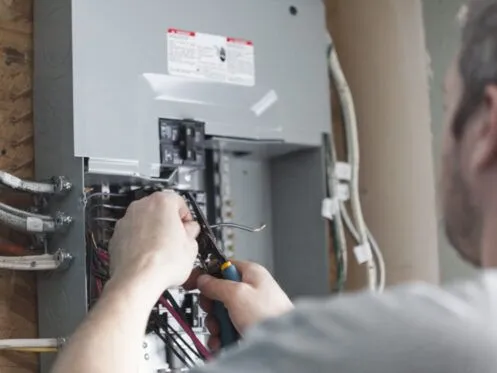
4. Your Electrical Panel Is Hot, Buzzing, or Smells Burned
Your electrical panel is the distribution point for the circuits throughout your home. Problems inside it can therefore affect far more than one outlet or room.
A panel that is noticeably hot or producing unusual buzzing, crackling, popping, or burning odors deserves immediate attention.
Potential causes include loose electrical connections, damaged breakers, overloaded circuits, deteriorating components, or internal arcing.
Other panel warning signs include:
- Scorch marks
- Melted components
- Rust or significant corrosion
- Breakers that will not stay reset
- Crackling sounds
- Visible sparks
- Smoke
- Repeated power fluctuations
Do not remove the panel cover to investigate. Even when individual breakers are switched off, portions of the service equipment can remain energized.
Older or overloaded panels can also struggle with the electrical demands of a modern household. When panel problems become recurring rather than isolated, an electrical panel replacement or upgrade may be the appropriate long-term solution.
5. Your Circuit Breaker Keeps Tripping
Circuit breakers are designed to interrupt power when electrical conditions become unsafe. A breaker that trips is therefore doing an important job.
One trip does not automatically mean you need emergency electrical service. You may simply have overloaded the circuit by operating several high-demand devices simultaneously.
Repeated trips are another matter.
If the same breaker trips again shortly after being reset, stop resetting it. Repeatedly forcing a problematic circuit back into service does not repair whatever caused the breaker to operate.
Frequent breaker trips can point to:
- Circuit overloads
- Short circuits
- Ground faults
- Damaged wiring
- Failing appliances
- Loose connections
- Defective breakers
- Problems within the electrical panel
The situation becomes more urgent when breaker trips occur alongside burning odors, heat, buzzing, sparks, smoke, or visible damage.
6. You Hear Buzzing or Crackling From Outlets or Wiring
A properly functioning residential electrical system should operate quietly.
Buzzing, sizzling, crackling, or popping noises coming from electrical equipment can indicate a loose connection or electrical arcing.
Pay particular attention to sounds coming from:
- Outlets
- Switches
- Walls
- Ceiling fixtures
- Junction boxes
- Breaker panels
A loose electrical connection can create resistance and heat. Arcing can further damage the connection and surrounding materials.
Do not remove covers or open electrical boxes to find the source. A licensed electrician can troubleshoot the circuit and determine whether the problem involves a device, connection, wiring, breaker, or another component.
7. An Outlet, Switch, or Wall Plate Feels Hot
Electrical components can sometimes feel slightly warm under certain operating conditions, but an outlet or standard wall switch should not become unusually hot.
Heat is particularly concerning when accompanied by:
- Discoloration
- A burning odor
- Buzzing
- Crackling
- Melted plastic
- Loose plugs
- Intermittent power
Heat can indicate excessive electrical resistance, a loose connection, an overloaded circuit, or deteriorating wiring.
Stop using the affected outlet or switch and have it inspected. If the device is extremely hot, smoking, sparking, or producing a burning smell, treat it as an electrical emergency.
8. Someone Receives an Electrical Shock
A noticeable shock from an appliance, light switch, outlet, fixture, faucet, or other object should never be considered normal.
The electrical system may have a grounding fault, damaged wiring, improper bonding, a defective appliance, or another condition that is energizing something that should not carry current.
Do not continue touching the object to see whether the shock happens again.
If someone has suffered a significant electrical shock, obtain appropriate emergency medical assistance. The electrical source should also be investigated before the equipment or circuit is used again.
Even a recurring mild “tingle” can signal an electrical fault requiring professional attention.
9. Water Is Near Your Electrical System
Water and energized electrical equipment are a dangerous combination.
Flooding, burst pipes, roof leaks, sump pump failures, storm damage, and melting snow can allow moisture to reach outlets, wiring, appliances, panels, or other electrical components.
If standing water is near energized equipment, do not enter the area simply to reach the electrical panel.
Electrical hazards may exist even when you cannot see sparks or damaged wires.
An electrician may need to inspect affected:
- Breakers
- Panels
- Receptacles
- Switches
- Junction boxes
- Wiring
- Appliances
- Electrical connections
Equipment that has been submerged or significantly exposed to water may require replacement rather than simply being dried and placed back into service.
10. You Lose Power to Only Part of the House
When the entire neighborhood goes dark during a storm, the electric utility is usually the first place to check.
When only part of your house loses power, however, the problem may be inside your electrical system.
For example, you might discover that half the home has power while several rooms unexpectedly do not. If no obvious breaker or GFCI explains the outage, an electrician may need to troubleshoot the problem.
Partial outages can involve circuit failures, damaged breakers, panel problems, loose service connections, or other electrical faults.
Be especially cautious if lights suddenly become unusually bright in one part of the home and dim in another. Abnormal voltage conditions can damage appliances and electronics and should receive prompt professional attention.
11. Lights Suddenly Flicker Throughout the House
One flickering bulb often points to a loose bulb or fixture problem.
Multiple lights flickering throughout the home are more significant.
Whole-house or multi-room flickering can indicate problems involving the electrical panel, service connection, overloaded circuits, loose wiring, or incoming electrical supply.
Watch for patterns.
Do lights dim when a large appliance starts? Do several rooms flicker simultaneously? Is the problem becoming more frequent? Are you also hearing buzzing or noticing a burning smell?
Those details can help an electrician narrow down the cause.
Plugz Electric specifically identifies flickering lights, burning odors, unusual noises, and frequent breaker trips among the signs that a home’s electrical system may require professional repair.
12. You Notice Scorch Marks or Discoloration Around an Outlet
Brown marks, blackening, melting, or other heat damage around an outlet or switch indicate that excessive heat has already occurred.
The cause could be a loose connection, worn receptacle, overloaded device, damaged wiring, or electrical arcing.
Replacing the faceplate will not fix the problem.
The receptacle and the wiring behind it need to be inspected. Plugz Electric notes that worn, loose, and non-grounded outlets can create shock and electrical fire risks.
Until the cause is identified, do not use the affected receptacle.
13. Your Outlets Suddenly Stop Working
A dead outlet does not always constitute an emergency. A tripped GFCI or breaker may explain the problem.
However, several outlets suddenly failing at once can indicate a circuit or wiring problem.
The situation deserves faster attention when outlets stop working along with:
- Flickering lights
- Repeated breaker trips
- Burning smells
- Heat
- Buzzing
- Scorching
- Recent water intrusion
If multiple electrical symptoms appear together, avoid treating each one as an unrelated nuisance. They may all trace back to the same underlying fault.
14. Your Home Has Storm or Lightning Damage
Twin Cities homeowners are familiar with severe weather. Thunderstorms, lightning, high winds, snow, and ice can all affect residential electrical systems.
After significant storm activity, look for unusual electrical behavior such as flickering lights, damaged outdoor equipment, tripped breakers, failed electronics, burning smells, or partial outages.
Lightning and utility disturbances can also produce power surges. A major surge can damage appliances immediately, while smaller repeated surges can contribute to premature equipment failure.
Whole-home surge protection provides another layer of defense for appliances and electronics. Plugz Electric offers surge protection as part of its residential electrical services in the Twin Cities Metro Area.
If you suspect your service equipment or wiring was physically damaged during a storm, avoid touching it and arrange for a professional inspection.
15. You See a Fallen or Damaged Electrical Service Line
Never approach a fallen power line.
Keep people and pets away from the area and contact the appropriate utility or emergency services.
Damage can also occur where electrical service enters the home. High winds, falling branches, ice, or other storm-related forces may damage service equipment.
Do not attempt to move wires, branches, meters, or damaged electrical equipment yourself. Treat any downed conductor as energized.
Once the utility side has been made safe, an electrician may be required to repair customer-owned service equipment before power can be restored.
16. An Appliance Causes Sparks, Shocks, or Immediate Breaker Trips
When one appliance repeatedly causes a breaker to trip, the appliance itself may be defective. The problem can also involve the receptacle, branch circuit, or electrical load.
Stop using the appliance rather than repeatedly resetting the breaker.
Large appliances can place substantial demands on residential circuits. Problems involving ranges, dryers, HVAC equipment, refrigerators, freezers, or other high-load equipment may require checking both the appliance and the electrical supply serving it.
If the plug, cord, receptacle, or wall becomes hot or discolored, discontinue use immediately.
17. You Have Electrical Problems After Remodeling or DIY Work
Electrical trouble that begins immediately after renovation work deserves attention.
A screw or nail can damage hidden wiring. A circuit may have been overloaded by new equipment. Connections may have been altered. New lighting, switches, receptacles, or appliances may also reveal weaknesses in an older electrical system.
Warning signs after remodeling include:
- New breaker trips
- Flickering lights
- Dead receptacles
- Buzzing switches
- Warm wall plates
- Burning smells
- Unexpected shocks
Do not assume these symptoms are simply part of “breaking in” new electrical equipment.
Plugz Electric handles electrical repairs and installations as well as wiring and rewiring, panel work, outlets, switches, indoor and outdoor lighting, and electrical services related to remodels.
18. Old or Damaged Wiring Starts Showing Warning Signs
Older wiring is not automatically an emergency. Damaged wiring can be.
Aging electrical systems may become increasingly problematic as household electrical demand grows. Today’s homes contain far more electronics, appliances, chargers, entertainment equipment, HVAC technology, and other electrical loads than homes from previous generations were designed around.
Warning signs can include:
- Frequent breaker trips
- Persistent flickering
- Discolored outlets
- Loose receptacles
- Burning smells
- Buzzing
- Dead circuits
- Visible wiring damage
Plugz Electric notes that outdated or damaged wiring can contribute to shorts, flickering lights, and fire hazards.
If an electrician finds deterioration throughout the system rather than at one isolated location, whole-home rewiring may provide a safer long-term solution than repeatedly repairing individual symptoms.
What Should You Do During an Electrical Emergency?
Your priority should be avoiding contact with the hazard.
If there is an active electrical fire, leave the home and call 911. Do not remain inside trying to troubleshoot the electrical system.
For other electrical emergencies, a few basic principles can prevent the situation from becoming worse:
- Stop using equipment associated with the problem.
- Keep people and pets away from damaged electrical components.
- Never touch electrical equipment while standing in water.
- Do not repeatedly reset a breaker that keeps tripping.
- Do not open an electrical panel or remove electrical covers to investigate internal components.
- Stay away from fallen or damaged electrical lines.
- If power can be shut off safely without approaching the hazard, disconnecting the affected circuit can prevent continued use until an electrician arrives.
- Call a qualified electrician when you cannot identify the problem or there are signs of heat, arcing, smoke, electrical shock, or equipment damage.
The objective is not to diagnose the entire electrical system yourself. It is to recognize when something is unsafe, stop using it, and prevent unnecessary exposure until the problem can be professionally evaluated.
When Can an Electrical Repair Wait Until Normal Business Hours?
Knowing when not to request emergency electrical service can be useful, too.
A routine appointment may be appropriate for problems such as a single dead outlet, an old light fixture you want replaced, a planned panel upgrade, adding new receptacles, installing indoor lights, outdoor lights, or upgrading surge protection when there are no immediate safety concerns.
For example, a light switch that simply stops operating is different from a switch that is crackling and hot. An outlet you want replaced because it is outdated is different from one that is smoking.
The condition surrounding the failure determines the urgency.
When you are uncertain, describe exactly what you are seeing, hearing, and smelling when you call. An electrical professional can use those details to determine how quickly the issue needs attention.
Why Electrical Problems Should Not Be Ignored
One of the challenges with electrical failures is that the visible symptom can be far removed from the actual cause.
A flickering light might originate at the fixture, somewhere along the branch circuit, inside the panel, or farther upstream. A hot outlet might have a damaged receptacle, but it could also involve a loose connection inside the electrical box.
That is why electrical troubleshooting matters.
A professional electrician can evaluate the circuit, connections, breakers, grounding, wiring, panel, and electrical load rather than merely replacing the component where the symptom appeared.
Correcting the underlying fault helps prevent recurring outages, equipment damage, shocks, and fire hazards.
Emergency Electrical Problems in Minnesota Winters
Electrical failures can become especially disruptive during a Minnesota winter.
A power problem that might be inconvenient during mild weather can become much more serious when temperatures are dangerously low. Loss of electricity may affect heating equipment, sump pumps, refrigeration, lighting, communications, and other essential systems.
Snow and ice introduce additional complications. Moisture around outdoor electrical equipment creates hazards, while severe weather can damage service lines and contribute to utility interruptions.
If a breaker trips during a blizzard, for example, resetting it repeatedly without knowing why it is tripping is not the answer. Plugz Electric advises homeowners to prioritize safe power and stable heat during severe winter conditions and provides 24/7 assistance for urgent electrical problems.
Preventing Electrical Emergencies Before They Happen
Not every electrical emergency is preventable, particularly when severe weather or external utility damage is involved. Many household electrical problems, however, produce warning signs before a complete failure occurs.
Pay attention when breakers begin tripping more frequently, lights start flickering, receptacles become loose, or electrical equipment starts making unfamiliar sounds.
Preventive improvements may include repairing damaged wiring, replacing worn outlets and switches, upgrading an inadequate electrical panel, correcting overloaded circuits, and installing whole-home surge protection.
Older homes can also benefit from an electrical evaluation when significant remodeling, new appliances, an EV charger, additional lighting, or other high-demand equipment is being added.
The goal is not simply to provide enough power for everything to turn on. The electrical system needs to distribute that power safely and reliably.
Electrical Repair, Panels, Wiring, Outlets, and Lighting Are Connected
Residential electrical systems function as a network. Problems in one area can reveal deficiencies elsewhere.
An outlet that overheats could be caused by the receptacle itself or the wiring feeding it. Frequent breaker trips could indicate an overloaded branch circuit or a panel issue. Flickering indoor lighting could trace back to a fixture, switch, connection, circuit, panel, or electrical service.
For that reason, professional troubleshooting may lead to different solutions depending on what the electrician finds.
Plugz Electric provides electrical repairs, panel replacements and upgrades, wiring and rewiring, outlet and switch services, surge protection, and indoor and outdoor lighting services throughout Forest Lake and the Twin Cities Metro Area.
Addressing electrical issues as part of the complete system helps solve the cause rather than repeatedly treating the symptom.
Call Plugz Electric for 24/7 Electrical Service in the Twin Cities Metro Area
When electrical problems involve smoke, burning odors, sparks, electrical shocks, water exposure, abnormal panel behavior, or unexplained power failures, waiting can allow a dangerous condition to become worse.
Plugz Electric serves Forest Lake and communities throughout the Twin Cities Metro Area with residential and commercial electrical services. The company provides electrical repair, panel services, wiring and rewiring, outlets, switches, surge protection, indoor lighting, outdoor lighting, and other electrical installations and upgrades. Plugz Electric lists 24/7 availability for customers who need electrical assistance outside normal business hours.
Whether the problem turns out to be a damaged outlet, overloaded circuit, failing breaker, wiring fault, or panel issue, identifying the cause is the first step toward restoring safe, reliable power.
When something about your electrical system looks, smells, sounds, or feels unsafe, do not keep using it and hope the problem disappears. Have it checked.
If you need electrical services for your home or business, give our team a call today at 612-295-1595 or reach us through our online form by clicking here.
Frequently Asked Questions About Emergency Electricians
What qualifies as an electrical emergency?
An electrical problem generally requires emergency attention when there is an immediate risk of fire, electrical shock, serious equipment damage, or escalating system failure. Smoke, burning smells, repeated arcing, hot electrical components, water around energized equipment, and significant unexplained power problems are common examples.
When should I call an emergency electrician?
Call an emergency electrician when you notice signs such as burning electrical odors, smoke, large or repeated sparks, electrical shocks, a hot or buzzing panel, water contacting electrical equipment, or unexplained electrical failures accompanied by other warning signs. If there is an active fire, call 911 first.
Is a tripped breaker an electrical emergency?
Not necessarily. A breaker can trip because a circuit is temporarily overloaded. If it trips repeatedly, will not reset, becomes hot, or is accompanied by buzzing, sparks, smoke, or a burning smell, stop resetting it and contact an electrician.
Is a burning smell an electrical emergency?
A persistent burning smell that appears to come from wiring, outlets, switches, fixtures, appliances, or an electrical panel should be taken seriously. Electrical components can overheat behind walls and inside boxes before smoke or flames become visible.
Should I call an electrician if my outlet is sparking?
A large spark, repeated sparking, visible arcing, heat, smoke, discoloration, or a burning odor from an outlet warrants professional attention. Stop using the receptacle until the cause has been identified.
Why is my electrical panel buzzing?
Unusual buzzing, crackling, sizzling, or popping can indicate loose connections, arcing, a failing breaker, or another panel problem. If the sound is new or accompanied by heat, odors, flickering, or breaker problems, have the panel inspected promptly.
What should I do if water reaches an electrical outlet or panel?
Stay away from the affected electrical equipment. Do not enter standing water to reach a breaker or panel. An electrician should evaluate electrical components that have been significantly exposed to water before they are returned to service.
Should I keep resetting a breaker that keeps tripping?
No. A breaker that repeatedly trips is responding to an electrical condition that needs to be identified. Continually resetting it can re-energize a circuit with an unresolved overload, short circuit, ground fault, wiring problem, or defective appliance.
Are flickering lights an electrical emergency?
One flickering bulb may simply involve the bulb or fixture. Flickering throughout multiple rooms can indicate a broader electrical problem. If whole-house flickering is severe, recurring, or accompanied by buzzing, heat, burning odors, or abnormal voltage behavior, contact an electrician promptly.
What is the difference between an emergency electrical repair and a routine repair?
Emergency electrical repairs address conditions presenting an immediate safety or system risk, such as smoke, arcing, shock hazards, or overheating. Routine repairs address problems that can generally be isolated and safely left unused until a scheduled appointment, such as replacing an old fixture or repairing a single nonworking outlet with no additional warning signs.
Can an electrician repair wiring after an electrical emergency?
Yes. Depending on the cause and extent of damage, repairs may involve replacing damaged wiring, outlets, switches, breakers, junctions, or other electrical components. More extensive deterioration may require partial or whole-home rewiring.
Can an old electrical panel cause emergency electrical problems?
An aging, damaged, or overloaded panel can contribute to recurring breaker trips, outages, unusual sounds, overheating, and other electrical problems. If an electrician determines that the existing panel can no longer safely support the home’s electrical demands, panel replacement or an electrical upgrade may be recommended.
Does whole-home surge protection help during storms?
Whole-home surge protection is designed to reduce the risk of voltage surges damaging connected electrical equipment and electronics. It can be particularly valuable in areas that experience thunderstorms, lightning, utility disturbances, and other events capable of producing power surges.
Does Plugz Electric offer 24/7 electrical service?
Yes. Plugz Electric states that it is available 24/7 and serves Forest Lake and the broader Twin Cities Metro Area. Its electrical services include repairs, electrical panels, wiring and rewiring, outlets, switches, surge protection, indoor and outdoor lighting, and other residential electrical work.