
When your air conditioner suddenly shuts off and the circuit breaker trips, it’s more than an inconvenience. Your electrical system is telling you something isn’t working correctly. The problem could be as simple as restricted airflow or as serious as a failing compressor, damaged wiring, or an overloaded electrical circuit.
An AC that trips the breaker once may have experienced a temporary electrical issue. However, if your air conditioner keeps tripping the breaker every time it starts or after running for several minutes, there’s likely an underlying problem that needs attention.
Circuit breakers are designed to protect your home’s electrical system from excessive current and certain electrical faults. Repeatedly resetting a tripped breaker without identifying the cause can expose your wiring and equipment to additional damage.
Understanding why your AC trips the breaker can help you recognize warning signs, determine which problems require professional attention, and avoid unnecessary repairs.
Why Does My AC Keep Tripping the Breaker?
Your air conditioner trips the circuit breaker when the breaker detects an electrical condition that requires it to interrupt power. Most often, this involves excessive current caused by an overload, short circuit, ground fault, or malfunctioning electrical component.
Air conditioning systems use substantial electricity, particularly when the compressor starts. The compressor circulates refrigerant through the cooling system, while fans move air across the indoor and outdoor coils.
During startup, the compressor briefly draws more current than it does during normal operation. The electrical circuit and breaker must accommodate this expected starting current while still protecting the equipment and wiring.
When something interferes with normal operation, electrical demand can increase beyond acceptable limits.
Common reasons an AC trips the breaker include:
- Dirty air filters or restricted airflow
- Clogged condenser coils
- Faulty compressor motors
- Weak or failed capacitors
- Damaged electrical wiring
- Short circuits or ground faults
- Overloaded electrical circuits
- Defective circuit breakers
- Loose electrical connections
- Failing condenser fan motors
Some of these problems originate inside the air conditioning equipment. Others involve the home’s electrical panel, circuit wiring, or power supply.
Identifying which part of the system is responsible is essential because replacing an HVAC component won’t fix defective household wiring, and installing a new breaker won’t correct a failing compressor.
10 Common Reasons Your AC Trips the Circuit Breaker
1. Dirty Air Filters Restrict Airflow
A clogged air filter is one of the easiest air conditioning problems to identify.
As dust, pet hair, and other airborne particles accumulate, the filter restricts airflow through the indoor cooling system.
Reduced airflow can cause the evaporator coil to become excessively cold and eventually freeze. Ice buildup further restricts airflow, reducing cooling performance and placing additional strain on the system.
A dirty filter doesn’t automatically cause a circuit breaker to trip. However, severe airflow restrictions and the equipment problems that follow can contribute to abnormal operating conditions.
Signs of a clogged air filter include weak airflow, reduced cooling performance, ice around refrigerant lines, and longer cooling cycles.
Check the filter regularly and replace it according to the manufacturer’s recommendations. If the system has frozen, turn off cooling and allow the equipment to thaw before arranging further service.
If the breaker continues tripping after the airflow problem is corrected, the system needs additional troubleshooting.
2. Dirty Condenser Coils Cause the AC to Overheat
The outdoor condenser unit releases heat collected from inside your home.
Its coils must remain relatively clean so heat can transfer efficiently into the surrounding air.
Over time, grass clippings, pollen, dirt, cottonwood debris, and other materials can accumulate around the condenser.
When the coils become heavily obstructed, the air conditioner may struggle to release heat. This increases operating pressure and can raise compressor electrical demand.
In severe cases, the compressor may overheat or draw excessive current, potentially causing the breaker to trip.
This problem is particularly relevant during Minnesota summers, when outdoor units can collect substantial amounts of cottonwood and other airborne debris.
Keep vegetation and loose debris away from the outdoor unit. Professional condenser cleaning may be necessary when buildup affects the coils.
A condenser that repeatedly overheats should be inspected before continued operation.
3. A Faulty AC Compressor Draws Too Much Electricity
The compressor is one of the most electrically demanding components in a central air conditioning system.
Its job is to circulate refrigerant by compressing refrigerant vapor, allowing the cooling cycle to function.
As compressors age, internal mechanical wear, motor deterioration, and other defects can increase electrical demand.
A compressor that struggles to start may draw unusually high current. If the current exceeds what the circuit breaker can tolerate for the applicable duration, the breaker will open.
A more serious problem occurs when compressor motor windings develop an electrical fault.
Warning signs include:
- A loud humming sound before the breaker trips
- The outdoor unit attempting to start but shutting down
- A breaker that trips immediately when cooling begins
- Unusual noises from the condenser
- Repeated compressor overheating
A compressor that is mechanically locked or has damaged windings may require major repair or replacement.
However, compressor failure shouldn’t be assumed simply because the AC trips the breaker. A technician should first evaluate the starting components, electrical supply, motor current, and related equipment.
4. A Bad Capacitor Prevents the Air Conditioner From Starting
Many residential air conditioning systems use capacitors to help operate the compressor and fan motors.
A failed or weakened capacitor can prevent a motor from starting properly.
When the motor receives power but cannot start, it may draw excessive current. This can cause overheating, activate internal motor protection, or trip the circuit breaker.
A common symptom is an outdoor AC unit that hums but doesn’t start.
Other signs include delayed startup, a condenser fan that fails to spin, and repeated shutdowns.
Capacitors can retain a dangerous electrical charge even after the equipment is disconnected from power.
Testing or replacing these components should be handled by a qualified professional.
5. Your AC Circuit Is Overloaded
An overloaded circuit occurs when connected electrical equipment draws more current than the circuit can safely carry.
Central air conditioning condensers typically require dedicated electrical circuits because of their significant power requirements.
If an air conditioner shares a circuit with equipment that should be supplied separately, the combined electrical load may exceed the circuit’s capacity.
This issue can also occur with window air conditioners and portable cooling units connected to general-purpose household circuits.
For example, a window AC unit operating on the same circuit as a microwave or another high-demand appliance may contribute to an overload.
Common signs include a breaker that trips when multiple appliances operate simultaneously or when additional equipment is switched on.
The correct solution may involve installing a dedicated circuit, redistributing electrical loads, or correcting an improperly configured installation.
Simply replacing the breaker with a higher-amperage model is not a safe solution. Breaker sizing must match the wiring, equipment requirements, and applicable electrical codes.
6. Damaged Electrical Wiring Causes a Short Circuit
Electrical wiring connects the air conditioning equipment to your home’s electrical system.
Over time, wiring can deteriorate because of age, moisture exposure, vibration, physical damage, or improper installation.
Outdoor air conditioning equipment is particularly vulnerable to environmental conditions.
Damaged insulation may allow energized conductors to contact other conductors or grounded metal components.
A short circuit can produce a sudden increase in electrical current, causing the breaker to trip almost immediately.
Possible warning signs include burning odors, visible wire damage, scorch marks, or a breaker that trips as soon as the air conditioner receives power.
These conditions require prompt professional attention.
Plugz Electric provides electrical wiring and rewiring services for homeowners throughout Forest Lake and the Twin Cities Metro area.
When damaged wiring is responsible for repeated AC breaker trips, repairing or replacing the affected conductors can restore proper circuit protection and help prevent additional electrical failures.
7. A Worn-Out Circuit Breaker Trips Repeatedly
Circuit breakers can deteriorate over time.
Their internal components experience mechanical movement, heat, and electrical stress throughout their service life.
Eventually, a defective breaker may trip under conditions that wouldn’t normally require it to open.
However, frequent breaker trips do not automatically mean the breaker is faulty.
In many cases, the breaker is operating correctly and responding to an actual electrical problem.
An electrician can inspect the breaker, verify the circuit load, evaluate its connections, and determine whether replacement is appropriate.
If the breaker is defective, it must be replaced with a properly rated, compatible device approved for the electrical panel.
Installing an incompatible breaker or increasing its amperage without evaluating the circuit can create serious safety problems.
8. Loose Electrical Connections Create Excessive Heat
Loose electrical connections can develop inside an electrical panel, disconnect switch, junction box, or air conditioning equipment.
Connections may loosen because of improper installation, vibration, thermal expansion, or deterioration.
A loose connection increases electrical resistance at the affected point.
As current passes through that connection, excessive heat can develop.
In some cases, the resulting voltage drop or intermittent power supply affects motor operation. Severe connection problems may also produce arcing and damage nearby components.
Loose connections don’t always cause an immediate breaker trip, which makes them particularly concerning.
Signs can include intermittent AC operation, buzzing sounds, unusual odors, discoloration around electrical components, or visible heat damage.
An electrician can inspect and repair defective connections using the appropriate testing equipment and manufacturer-specified procedures.
9. A Failing Condenser Fan Motor Causes Electrical Problems
The outdoor condenser fan moves air across the condenser coil to remove heat from the refrigerant.
When the fan motor begins failing, the system may struggle to maintain normal operating conditions.
Worn bearings, damaged motor windings, electrical faults, or a defective capacitor can prevent the fan from operating correctly.
If the condenser fan stops while the compressor continues running, refrigerant pressure and compressor temperature can rise.
A motor with an electrical fault may also draw excessive current directly.
Watch for a fan that doesn’t start, rotates unusually slowly, makes grinding noises, or stops unexpectedly.
These symptoms warrant professional HVAC service before the system experiences additional damage.
10. Ground Faults or Moisture Affect the AC Electrical Circuit
Outdoor air conditioning equipment is exposed to rain, humidity, melting snow, and seasonal temperature changes.
Although outdoor electrical components are designed for their intended environments, damaged enclosures, deteriorated seals, or improper installations can allow moisture to reach electrical connections.
Moisture may contribute to corrosion, insulation failure, or ground faults.
A ground fault occurs when electrical current flows along an unintended path to ground.
Depending on the fault characteristics and installed protection, this can cause a circuit breaker or ground-fault protective device to trip.
In Minnesota, seasonal moisture exposure and freeze-thaw conditions make outdoor electrical inspections especially important.
A professional electrician can evaluate the outdoor disconnect, wiring connections, grounding, and related components to determine whether moisture or deterioration is affecting the circuit.
What to Do When Your AC Trips the Breaker
When your air conditioner trips a circuit breaker, the first priority is determining whether the problem presents an immediate electrical hazard.
Repeatedly restoring power without identifying the cause can damage equipment or allow a dangerous electrical condition to continue.
Step 1: Turn Off the Air Conditioner
Set your thermostat to the OFF position.
This prevents the thermostat from immediately calling for cooling if power is restored.
If the air conditioner has stopped unexpectedly, avoid repeatedly adjusting the thermostat to force the system to restart.
Step 2: Look for Obvious Warning Signs
Before considering a breaker reset, check for conditions that suggest an electrical hazard.
These include burning smells, smoke, buzzing from the electrical panel, visible scorching, or water around electrical equipment.
If you notice any of these signs, leave the affected circuit off and contact a qualified electrician.
Do not touch wet electrical equipment or attempt to open the electrical panel.
Step 3: Identify Which Breaker Tripped
Look at the labels on your electrical panel to identify the circuit supplying the air conditioner.
Central air conditioning systems may have separate circuits for the outdoor condenser and indoor air handler or furnace.
A breaker that has tripped may sit between its ON and OFF positions, depending on its design.
If the breaker is clearly labeled and there are no signs of damage, a single reset may be reasonable when the trip appears isolated and the equipment manufacturer’s instructions permit it.
However, if the breaker trips again, leave it off.
Do not continue resetting it to see whether the air conditioner will eventually operate.
Step 4: Check the Air Filter and Outdoor Unit
With the cooling system turned off, inspect the accessible air filter and look for obvious debris blocking airflow around the outdoor condenser.
Replacing a dirty filter or clearing loose vegetation may correct an airflow problem.
Avoid removing equipment panels, reaching into the condenser, or handling electrical components.
Even when the thermostat is off, parts of the air conditioning system may remain energized.
Step 5: Schedule Professional Troubleshooting if the Problem Returns
If the breaker trips again, the underlying cause needs to be identified.
An HVAC technician may need to evaluate the compressor, fan motors, capacitors, and refrigeration system.
An electrician may need to inspect the breaker, circuit wiring, electrical panel, disconnect, and connections.
In some situations, both trades are needed to diagnose the problem completely.
The goal is to determine why the protective device operated rather than simply restore power temporarily.
Why Does My AC Breaker Trip Immediately When I Turn It On?
The timing of a breaker trip can provide valuable information about the type of electrical problem.
If the breaker trips immediately when the thermostat calls for cooling, the issue may involve the compressor starting circuit, a short circuit, a ground fault, or another electrical defect.
A compressor with damaged windings may cause an immediate trip. So can damaged wiring or a failed motor component.
A defective capacitor may prevent the compressor from starting, causing sustained high starting current.
The specific cause depends on how the equipment behaves before the breaker opens.
For example, a loud hum followed by a trip may suggest that a motor is attempting to start unsuccessfully.
A breaker that trips instantly without any noticeable equipment operation may indicate a different electrical fault.
These symptoms help narrow the investigation, but electrical measurements are needed for an accurate diagnosis.
Why Does My AC Trip the Breaker After Running for a Few Minutes?
An air conditioner that runs for several minutes before tripping may be experiencing a problem that develops as the equipment operates.
Heat buildup and sustained electrical demand are common factors.
Possible causes include a dirty condenser coil, failing fan motor, overheating compressor, loose electrical connection, or circuit overload.
A breaker can also trip because of a sustained overcurrent condition that doesn’t trigger its instantaneous protection.
For example, a compressor may start normally but draw excessive current as operating temperatures or pressures increase.
A technician can compare actual running current against equipment specifications while evaluating the condition of the system.
An electrician can determine whether the breaker and circuit are properly rated and whether voltage or connection problems are contributing to the trip.
Why Does the AC Breaker Trip During Hot Weather?
Air conditioners work harder during periods of extreme heat because they must remove more heat from the home while operating in higher outdoor temperatures.
During a Twin Cities heat wave, an air conditioning system may run for extended periods.
Higher outdoor temperatures also make it more difficult for the condenser to release heat efficiently.
If the condenser coils are dirty, the fan is malfunctioning, or the compressor is deteriorating, these demanding conditions can expose an existing problem.
However, a properly functioning air conditioner on a correctly installed electrical circuit should not routinely trip its breaker simply because the weather is hot.
Repeated trips during high temperatures indicate that the equipment or electrical supply needs evaluation.
Can a Bad Electrical Panel Cause an AC Breaker to Trip?
Yes. Problems inside an electrical panel can contribute to repeated air conditioner breaker trips.
An electrical panel distributes power to individual circuits and houses the protective devices that respond to overloads and electrical faults.
If the panel contains deteriorated connections, damaged bus components, incompatible breakers, or other defects, electrical reliability can suffer.
Older homes may also have electrical systems that have undergone multiple modifications as new equipment was installed.
However, an older panel is not automatically inadequate for an air conditioner.
The condition of the panel, available capacity, equipment requirements, and circuit configuration all matter.
Signs Your Electrical Panel Needs Professional Attention
An electrician should evaluate the panel if you notice:
- Frequent breaker trips affecting multiple circuits
- Burning smells or buzzing sounds near the panel
- Visible discoloration or corrosion
- Breakers that won’t remain in the ON position
- Evidence of overheating
- Intermittent power problems
- Electrical issues following major equipment installations
Some problems can be corrected through targeted repairs. Others may require replacing damaged components or upgrading the electrical panel.
Plugz Electric offers electrical panel repair and replacement in Forest Lake for homeowners who experience repeated breaker trips, deteriorating electrical equipment, or changing household power requirements.
A professional assessment can determine whether the existing panel is suitable for the home’s electrical needs.
Does My Air Conditioner Need a Dedicated Circuit?
Most central air conditioning condensers require a dedicated branch circuit designed for the equipment’s electrical specifications.
A dedicated circuit supplies the intended equipment without unrelated household appliances adding to its electrical load.
This helps prevent overloads and allows the circuit protection to be selected according to the air conditioner’s requirements.
Understanding AC Breaker Size and Electrical Requirements
Air conditioning equipment typically has an electrical nameplate that lists important installation information.
Two values are particularly relevant:
Minimum Circuit Ampacity (MCA): This establishes the minimum required ampacity of the branch-circuit conductors supplying the equipment.
Maximum Overcurrent Protection (MOCP): This specifies the maximum permitted rating or setting of the overcurrent protective device, subject to the manufacturer’s instructions.
These values are not interchangeable.
Air conditioning motors have startup characteristics that differ from ordinary resistive electrical loads. As a result, the permitted breaker rating may be higher than the circuit’s minimum conductor ampacity under applicable motor and air conditioning equipment rules.
An electrician must use the equipment nameplate, installation instructions, and applicable electrical code requirements when selecting wiring and overcurrent protection.
Installing a larger breaker without verifying these requirements can leave the circuit inadequately protected.
When a New AC Circuit May Be Necessary
A new dedicated circuit may be needed when installing central air conditioning in a home that previously used another cooling method.
It may also be necessary when replacing equipment with a model that has different electrical requirements.
Older wiring, damaged conductors, and improperly shared circuits can require additional electrical work.
A qualified electrician can determine whether the existing circuit can safely support the new equipment or whether new wiring is appropriate.
AC Trips Breaker but the Breaker Is Not Hot: What Does It Mean?
A circuit breaker doesn’t have to feel hot to trip.
Modern circuit breakers are designed to respond to specific electrical conditions, including excessive current and short circuits.
Some faults can cause a breaker to open before significant external heat develops.
In addition, the temperature of the breaker housing doesn’t necessarily reflect the condition of internal components or wiring connections.
A breaker that feels normal to the touch may still be responding to a serious electrical fault.
Never assume the circuit is safe simply because the breaker doesn’t appear hot.
If the AC repeatedly trips the breaker, the cause still needs to be investigated.
How Electricians Diagnose an AC Breaker That Keeps Tripping
Professional electrical troubleshooting involves evaluating the entire circuit rather than replacing parts based on assumptions.
The electrician’s objective is to determine whether the breaker is responding to an equipment problem, a wiring defect, or an issue with the electrical supply.
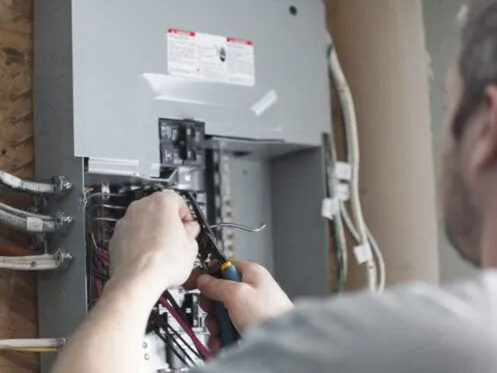
Inspecting the Circuit Breaker and Electrical Panel
The inspection may begin at the electrical panel.
An electrician can verify the breaker type and rating, examine accessible connections, and check for evidence of overheating or deterioration.
The technician also confirms whether the breaker is compatible with the panel and appropriate for the connected equipment.
If the panel contains damaged components, those defects must be addressed before the circuit is returned to service.
Measuring Voltage and Electrical Current
Electrical measurements provide information that visual inspections cannot.
A qualified professional may measure supply voltage and equipment current under controlled operating conditions.
These readings help identify abnormal voltage drops, excessive current draw, or problems affecting motor startup.
For example, a compressor that draws unusually high current during operation may require additional HVAC testing.
Voltage irregularities may also indicate wiring or connection problems.
Testing Wiring and Connections
Damaged conductors, loose terminals, and deteriorated insulation can cause intermittent electrical failures.
An electrician may inspect the wiring between the panel, outdoor disconnect, and air conditioning equipment.
Depending on the symptoms, appropriate testing may include continuity checks, insulation resistance testing, and evaluation of grounding and bonding.
Electrical testing must be performed using procedures appropriate for the equipment and circuit conditions.
Determining Whether the Problem Is Electrical or Mechanical
Not every breaker trip originates in the home’s wiring.
A failing compressor, defective capacitor, or malfunctioning fan motor may be responsible.
In these cases, an HVAC technician can evaluate the equipment’s mechanical and refrigeration components.
If the electrical supply and circuit protection are functioning correctly, replacing a household breaker would not solve the underlying HVAC problem.
Accurate diagnosis prevents unnecessary electrical repairs and helps ensure the correct component is serviced.
Can Repeated AC Breaker Trips Damage Your Air Conditioner?
Repeated electrical interruptions can contribute to additional equipment problems, particularly when the underlying fault remains unresolved.
A compressor that repeatedly attempts to start under abnormal conditions may experience overheating and increased mechanical or electrical stress.
Electrical faults can also damage contactors, wiring, motors, and other components.
However, the breaker itself is performing a protective function when it opens in response to excessive current.
The greater concern is repeatedly restoring power while the original problem persists.
Forcing the equipment through additional startup attempts can worsen an existing failure.
If the breaker trips more than once, discontinue operation until the cause has been identified.
How to Prevent Your AC From Tripping the Breaker
Preventing repeated air conditioner breaker trips involves maintaining both the cooling equipment and the electrical system supplying it.
Not every electrical failure is preventable, but regular inspections and proper maintenance can reduce the likelihood of unexpected problems.
Maintain Your Air Conditioning Equipment
Routine HVAC maintenance helps the system operate efficiently and reduces unnecessary strain on electrical components.
Replace air filters when needed, keep the outdoor unit clear of vegetation, and schedule professional cooling system maintenance.
A technician can inspect the condenser coils, fan motors, capacitors, and compressor operating conditions.
Identifying a deteriorating component early may prevent a more expensive breakdown.
Keep Electrical Wiring in Good Condition
Electrical wiring should remain properly installed, protected, and suitable for the equipment it supplies.
Older homes may have circuits that were modified over time without adequate consideration of modern electrical loads.
Damaged insulation, loose connections, and improper circuit configurations can create problems that become more noticeable when high-demand equipment operates.
Professional electrical inspections can identify conditions that require repairs or updated wiring.
Address Electrical Panel Problems Early
A breaker that trips repeatedly should never be treated as a normal part of air conditioner operation.
Electrical panels and circuit breakers must remain in good working condition to protect connected wiring and equipment.
If a panel shows signs of overheating, corrosion, physical damage, or recurring electrical faults, have it inspected.
An electrician can determine whether repairs, breaker replacement, or a larger panel upgrade is appropriate.
Consider Whole-Home Surge Protection
Power surges can affect air conditioning controls, electronic components, and other household equipment.
Lightning-related events, utility disturbances, and switching activity can create transient overvoltages.
Whole-home surge protection helps limit certain damaging voltage spikes before they reach connected equipment.
Although a surge protector won’t correct an overloaded circuit, failing compressor, or defective breaker, it can be a valuable part of a broader electrical protection strategy.
Plugz Electric provides whole-home surge protection installation for Forest Lake and Twin Cities homeowners who want additional protection for their electrical systems and appliances.
Plan Electrical Upgrades Before Installing New Equipment
Replacing an older air conditioner with a newer system may change the electrical requirements of the installation.
Before installing new equipment, verify that the existing circuit, disconnect, conductors, and protective devices meet the manufacturer’s specifications.
The same planning is important when adding other substantial electrical loads, such as an EV charging station or new household appliances.
Evaluating electrical capacity before installation can help prevent overloads and avoid unnecessary modifications later.
When Should You Call an Electrician for an AC Breaker Problem?
Some air conditioning problems require an HVAC technician, while others involve electrical conditions that should be evaluated by a licensed electrician.
Contact an electrician when the symptoms suggest a problem with the breaker, electrical panel, wiring, disconnect, or circuit configuration.
Electrical warning signs include:
- A breaker that trips repeatedly
- Burning odors near electrical equipment
- Buzzing or crackling sounds from the panel
- Damaged or discolored electrical connections
- Visible wiring deterioration
- Breakers that won’t reset
- Power problems affecting multiple circuits
- An air conditioner connected to an improperly configured circuit
A breaker that trips while the air conditioner is disconnected may also indicate a problem elsewhere on the circuit, although testing is needed to establish the cause.
If the equipment has a failing compressor, capacitor, or refrigerant-related problem, an HVAC technician will generally handle that repair.
When the source is uncertain, electrical troubleshooting can help determine whether the household power supply is contributing to the failure.
Electrical Repairs for AC Breaker Problems in Forest Lake and the Twin Cities
A repeatedly tripping air conditioner breaker can reveal problems that extend beyond the cooling equipment.
The circuit may have damaged wiring, deteriorated connections, an incorrectly sized breaker, or an electrical panel that requires attention.
These conditions should be evaluated before the air conditioner is returned to regular operation.
Plugz Electric is a Forest Lake-based electrical company serving residential and commercial customers throughout the Twin Cities Metro area.
The company provides professional electrical repair services, including troubleshooting electrical faults, evaluating circuit breakers, and addressing wiring and panel problems.
Its services also include electrical installations, wiring and rewiring, panel replacements, outlets, indoor and outdoor lighting, surge protection, and EV charging installations.
For homeowners with older electrical systems, a recurring AC breaker problem may be an opportunity to evaluate the condition of the circuit and determine whether targeted electrical improvements are needed.
The correct repair depends on the actual fault. Sometimes a damaged connection or defective breaker is responsible. In other situations, a circuit needs rewiring or the air conditioning equipment requires HVAC service.
If your AC keeps tripping the breaker, contact Plugz Electric in Forest Lake or call 612-295-1595 to schedule electrical troubleshooting.
Frequently Asked Questions About AC Breaker Trips
Why Does My AC Keep Tripping the Breaker?
Your AC may keep tripping the breaker because of excessive electrical current, a failing compressor, defective capacitor, damaged wiring, overloaded circuit, or faulty breaker. Restricted airflow and dirty condenser coils can also contribute to equipment problems that increase electrical demand. Repeated trips require professional diagnosis to determine the actual cause.
Is It Dangerous if My Air Conditioner Keeps Tripping the Breaker?
Yes, repeated breaker trips can indicate an electrical problem that requires attention. The breaker may be responding to an overload, short circuit, ground fault, or failing equipment. Continuing to reset it without correcting the problem can increase the risk of equipment damage, overheating, or electrical fire.
Why Does My AC Trip the Breaker Immediately?
An air conditioner that trips the breaker immediately may have a short circuit, ground fault, compressor starting problem, or another electrical defect. A failed capacitor or damaged motor winding can also contribute to excessive startup current. The equipment should remain off until the problem is diagnosed.
Why Does My AC Breaker Trip After 10 Minutes?
If your AC trips the breaker after approximately 10 minutes, the problem may involve overheating, sustained excessive current, a failing fan motor, or a compressor operating under abnormal conditions. Dirty condenser coils and poor airflow may contribute. An electrician or HVAC technician can evaluate the equipment and circuit to identify the cause.
Can a Dirty Air Filter Cause an AC Breaker to Trip?
A dirty air filter can restrict airflow and contribute to evaporator coil freezing or other cooling problems. Although a clogged filter does not typically cause an immediate electrical overload by itself, severe operating problems may contribute to abnormal equipment conditions. If breaker trips continue after the filter is replaced, further troubleshooting is necessary.
Can a Bad Capacitor Cause the AC Breaker to Trip?
Yes. A faulty capacitor may prevent the compressor or fan motor from starting properly. The motor may draw excessive current while attempting to start, causing the breaker to trip. Capacitors should be tested and replaced by qualified technicians because they can retain an electrical charge after power is disconnected.
Can I Replace My AC Breaker With a Bigger One?
No, not without a professional evaluation of the circuit and equipment requirements. Installing a larger breaker can leave wiring inadequately protected if the new rating exceeds what the installation permits. An electrician must verify the equipment nameplate, conductor sizing, breaker compatibility, and applicable electrical codes before making changes.
How Many Times Can I Reset an AC Circuit Breaker?
If a breaker trips once and there are no signs of electrical damage, a single reset may be appropriate when permitted by the equipment manufacturer’s instructions. If the breaker trips again, leave it off and arrange professional service. Repeatedly resetting a breaker can expose equipment and wiring to continuing electrical faults.
Can a Bad Thermostat Cause an AC Breaker to Trip?
A defective thermostat can cause abnormal cooling commands or operational problems, but it is not a common direct cause of a high-current AC breaker trip. Faults in thermostat wiring or control components can sometimes contribute to electrical problems. The control system should be evaluated alongside other possible causes when symptoms suggest a thermostat issue.
Why Does My AC Trip the Breaker Only at Night?
An AC breaker that trips only at night may be affected by operating patterns, other electrical loads, or an intermittent equipment problem. For example, a cooling system may run for longer periods under certain thermostat settings, or other appliances may operate on a shared circuit. The timing alone cannot establish the cause, so electrical load and equipment operation should be evaluated.
Why Does My Outside AC Unit Keep Tripping the Breaker?
The outdoor condenser contains components that can cause excessive current draw, including the compressor and condenser fan motor. Faulty capacitors, damaged wiring, moisture intrusion, and electrical faults inside the unit may also be responsible. A qualified technician should inspect the equipment and its electrical supply.
Can an Old Electrical Panel Cause My AC Breaker to Trip?
Yes, a deteriorating electrical panel can contribute to repeated breaker trips if it contains defective breakers, damaged connections, or other electrical problems. However, panel age alone does not establish that replacement is necessary. A licensed electrician can assess its condition and determine whether repairs or an upgrade are appropriate.
How Much Does It Cost to Fix an AC That Trips the Breaker?
Repair costs depend on the source of the problem. Replacing a defective breaker or repairing a damaged connection may be less expensive than installing a new dedicated circuit, replacing deteriorated wiring, or repairing a failed compressor. An accurate estimate requires identifying the fault and evaluating the work necessary to correct it.
Should I Call an Electrician or HVAC Technician if My AC Trips the Breaker?
Call an electrician when you suspect damaged wiring, a faulty circuit breaker, an electrical panel problem, or an improperly installed circuit. An HVAC technician is generally the appropriate professional for compressor, capacitor, condenser fan, or refrigeration system problems. Some recurring breaker issues require both electrical and HVAC troubleshooting.
Will Whole-Home Surge Protection Stop My AC Breaker From Tripping?
Whole-home surge protection helps reduce damage from certain transient voltage spikes, but it does not prevent breaker trips caused by overloaded circuits, short circuits, defective compressors, or damaged wiring. Surge protection complements proper circuit protection and electrical maintenance rather than replacing them.
What Should I Do if My AC Breaker Won’t Reset?
Leave the breaker off and avoid forcing it into position. A breaker that won’t reset may be defective or may be responding to an active electrical fault. Turn off the air conditioning system and contact a qualified electrician to inspect the circuit before restoring power.
Is It Normal for an AC Breaker to Trip During a Heat Wave?
No. Although an air conditioner may operate longer during extreme heat, a properly functioning system on a correctly installed circuit should not repeatedly trip its breaker. High temperatures can expose existing problems such as dirty condenser coils, failing motors, or abnormal compressor current. Repeated trips should be investigated rather than accepted as normal summer operation.