
Electrical problems can bring a small business to a standstill. A tripped breaker may shut down essential equipment. Faulty wiring can damage expensive electronics, while an overloaded electrical panel can create serious fire hazards. Even minor electrical issues can interrupt daily operations, frustrate customers, and lead to unexpected repair costs.
For small business owners, electrical maintenance is about more than keeping the lights on. It helps protect employees, customers, equipment, and the building itself. Regular inspections can also identify problems before they become costly emergencies.
Whether you operate a retail store, restaurant, office, warehouse, or service business, having an electrical maintenance checklist for small businesses makes it easier to stay ahead of potential problems.
At Plugz Electric, we help businesses throughout Forest Lake, Minneapolis, St. Paul, and the Twin Cities maintain safe, reliable electrical systems. From electrical repairs and panel upgrades to commercial lighting, wiring, and surge protection, our team understands the importance of keeping your business powered and productive.
This guide explains what to inspect, how often electrical maintenance should be performed, which warning signs deserve immediate attention, and when to call a licensed electrician.
Why Electrical Maintenance Is Important for Small Businesses
Most business owners rarely think about their electrical systems until something stops working. However, electrical components experience wear over time, especially in buildings with older wiring or equipment that operates for long periods.
A preventive electrical maintenance plan helps reduce unexpected failures and supports safer business operations.
Reduce the Risk of Electrical Fires
Damaged wiring, loose electrical connections, overloaded circuits, and deteriorating electrical components can create dangerous conditions.
Electrical problems may develop behind walls, inside electrical panels, or near equipment that generates heat. Without routine inspections, these issues can go unnoticed.
Professional electrical inspections can identify overheating connections, damaged components, and other hazards before they lead to equipment failure or fire.
Prevent Unexpected Business Downtime
Imagine a restaurant losing power during dinner service or a retail store experiencing an electrical failure during its busiest shopping hours.
Even a short outage can affect sales, customer service, inventory, and employee productivity.
Preventive electrical maintenance helps businesses identify weaknesses in their electrical systems before those problems interrupt operations.
Protect Expensive Business Equipment
Computers, payment terminals, refrigeration systems, security equipment, and other electronics depend on reliable electrical power.
Voltage disturbances and electrical surges can damage sensitive equipment or shorten its useful life.
Proper circuit design, grounding, and surge protection help reduce these risks.
Improve Energy Efficiency
Outdated lighting, inefficient equipment, and poorly managed electrical loads can contribute to unnecessary electricity costs.
Electrical maintenance provides an opportunity to evaluate energy consumption and identify improvements.
For example, replacing older lighting with LED fixtures can reduce electricity use while improving visibility throughout a commercial property.
Support Electrical Code Compliance
Commercial electrical installations must meet applicable electrical codes and safety requirements.
In Minnesota, electrical work is subject to the Minnesota Electrical Code, which is based on the National Electrical Code (NEC) with state amendments.
Businesses may also have obligations under OSHA workplace safety regulations, local building requirements, and insurance policies.
Routine inspections help identify conditions that may need correction to maintain a safe working environment.
Complete Electrical Maintenance Checklist for Small Businesses
A good commercial electrical maintenance checklist covers the entire electrical system, not just the outlets and lights employees use every day.
Some checks involve simple visual observations that business owners or designated employees can perform. Others require specialized equipment and should be completed by a qualified electrician.
Use the following checklist as the foundation for your preventive maintenance program.
1. Inspect Electrical Panels and Circuit Breakers
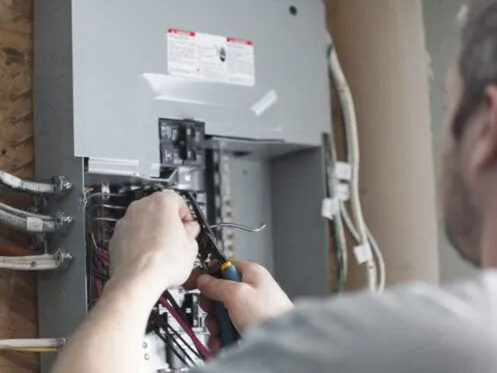
Your electrical panel distributes electricity throughout the building. It also contains circuit breakers designed to interrupt power when certain electrical faults occur.
Because the panel is central to your electrical system, it deserves regular attention.
Electrical panel maintenance checklist:
- Check for visible rust, corrosion, or water damage around the panel enclosure.
- Listen for unusual buzzing or humming.
- Watch for burning odors or signs of overheating.
- Confirm that the panel is accessible and not blocked by stored materials.
- Verify that circuit labels are accurate and easy to understand.
- Record breakers that trip repeatedly.
- Schedule professional inspections of aging or heavily loaded panels.
Electrical panels should not be opened or serviced by unqualified employees.
A licensed electrician can evaluate panel capacity, inspect connections, assess circuit breaker conditions, and determine whether repairs or an electrical panel upgrade are necessary.
When to schedule service: If breakers trip frequently, the panel feels unusually hot, or your business has added equipment that increases electrical demand.
2. Check Electrical Outlets and Switches
Commercial outlets often experience heavier use than residential receptacles. Employees may connect computers, printers, cleaning equipment, chargers, and other devices throughout the day.
Over time, outlets and switches can become worn or damaged.
Outlet and switch inspection checklist:
- Look for cracked, broken, or missing outlet covers.
- Check for discoloration or scorch marks.
- Identify outlets that no longer hold plugs securely.
- Note switches that feel unusually warm.
- Report buzzing, sparking, or burning smells.
- Check whether outlets are located near moisture or water sources.
- Have qualified personnel test GFCI protection where required.
A loose outlet may seem like a minor inconvenience, but poor electrical contact can produce heat and damage connected equipment.
If an outlet sparks, smells like burning plastic, or shows visible heat damage, stop using it and arrange professional electrical repairs.
Businesses should also avoid relying on extension cords as permanent wiring solutions. If employees regularly need additional outlets, installing new receptacles may be the safer long-term option.
3. Examine Electrical Wiring for Damage
Electrical wiring carries power to lighting, outlets, appliances, and commercial equipment.
Although much of a building’s wiring is hidden, exposed cables and accessible wiring systems can be visually inspected for damage.
Commercial wiring inspection checklist:
- Look for frayed or damaged cords and accessible cables.
- Identify exposed conductors or missing electrical box covers.
- Check for signs of rodent damage.
- Look for wiring near water leaks or moisture.
- Note areas where electrical cables appear pinched or crushed.
- Watch for recurring power interruptions affecting specific circuits.
- Report unusual odors coming from walls, outlets, or equipment.
Older commercial buildings may have electrical systems that were installed before modern equipment demands became common.
A business that once operated with basic lighting and a few outlets may now support computers, servers, refrigeration, HVAC equipment, and charging stations.
If existing circuits cannot safely accommodate these loads, commercial rewiring or additional dedicated circuits may be necessary.
4. Inspect Indoor Commercial Lighting
Lighting affects employee productivity, customer experience, and workplace safety.
Poorly maintained lighting can also make work areas harder to navigate and create unnecessary maintenance costs.
Indoor lighting maintenance checklist:
- Replace failed bulbs or LED fixtures.
- Identify lights that flicker or dim unexpectedly.
- Inspect visible fixtures for physical damage.
- Check lighting in stairways, hallways, and storage rooms.
- Confirm that work areas have suitable illumination.
- Clean fixtures where dust buildup reduces light output.
- Evaluate whether older lighting systems should be upgraded.
Flickering lights are not always caused by a defective bulb. They may indicate loose electrical connections, incompatible dimmers, or problems with the circuit.
If several fixtures flicker at the same time, an electrician should investigate the underlying cause.
Upgrading to modern LED lighting can improve light quality and reduce ongoing energy consumption.
5. Maintain Outdoor Lighting and Building Entrances
Outdoor lighting helps employees and customers navigate parking lots, sidewalks, entrances, and loading areas.
It also supports visibility around commercial properties after dark.
Outdoor lighting checklist:
- Check parking lot lights for failed fixtures.
- Inspect exterior lighting for cracked or damaged housings.
- Confirm that building entrances are properly illuminated.
- Test timers, photocells, and lighting controls.
- Look for water intrusion around outdoor fixtures.
- Inspect visible conduit for damage.
- Check lighting around loading docks and service entrances.
Minnesota’s weather makes exterior electrical maintenance especially important.
Snow, ice, rain, temperature changes, and moisture can affect outdoor electrical equipment over time.
Commercial properties in Forest Lake and the surrounding Twin Cities should pay particular attention to fixtures exposed to harsh winter conditions.
6. Test GFCI Outlets and Electrical Protection Devices
Ground-fault circuit interrupters, commonly called GFCIs, help protect people from electric shock by interrupting power when they detect certain ground-fault conditions.
These devices are especially important in locations where electricity and moisture may come into contact.
Depending on the building and applicable electrical code, GFCI protection may be required in areas such as bathrooms, kitchens, garages, outdoor locations, and certain commercial workspaces.
GFCI maintenance checklist:
- Identify locations that require GFCI protection.
- Check for damaged or missing devices.
- Test accessible GFCI devices according to manufacturer instructions.
- Record devices that fail to trip or reset properly.
- Arrange replacement of defective GFCI outlets or breakers.
- Have an electrician evaluate whether protection meets current requirements when electrical work is planned.
GFCI protection is not the same as surge protection or ordinary circuit breaker protection. Each serves a different electrical safety function.
A device that fails its prescribed test should be evaluated and replaced as needed.
7. Evaluate Surge Protection
Power surges can occur during lightning events, utility disturbances, and certain electrical switching operations.
These voltage spikes can damage computers, payment systems, communication equipment, and other electronics.
Small businesses often depend on multiple sensitive devices, making surge protection an important part of electrical system planning.
Surge protection checklist:
- Identify sensitive equipment that requires protection.
- Check the status indicators on installed surge protection devices.
- Replace damaged or end-of-life plug-in surge protectors.
- Review whether critical equipment needs additional point-of-use protection.
- Ask an electrician to evaluate whole-building surge protection.
- Confirm that grounding and bonding systems are properly maintained.
A whole-building surge protection device can help limit transient overvoltages entering or moving through the electrical distribution system.
For sensitive electronics, coordinated protection at the electrical panel and equipment level may provide additional protection.
Surge protection devices do not prevent every type of electrical disturbance, and they cannot guarantee that equipment will never be damaged.
8. Inspect Extension Cords and Power Strips
Extension cords and power strips are common in offices, retail spaces, and workshops. However, improper use can create overheating and fire hazards.
Power cord safety checklist:
- Remove cords with cracked insulation or damaged plugs.
- Avoid connecting multiple power strips together.
- Keep cords away from walkways and doorways.
- Do not run extension cords under carpets or through walls.
- Check equipment power requirements before using a power strip.
- Replace temporary cord arrangements with permanent outlets when needed.
- Confirm that cords and power strips are rated for their intended use.
Space heaters, commercial appliances, and other high-demand equipment may require dedicated outlets or circuits.
If your business constantly relies on extension cords, it may be time to expand the electrical system.
9. Check Emergency and Exit Lighting
Emergency lighting helps occupants move safely when normal lighting power is lost.
Exit signs and emergency illumination may be required depending on the building’s occupancy, layout, and applicable fire and building codes.
Emergency lighting maintenance checklist:
- Confirm that exit signs are illuminated where required.
- Check that emergency fixtures are not obstructed.
- Inspect visible battery indicators and fixture conditions.
- Test emergency lighting according to applicable requirements.
- Record failed tests and corrective actions.
- Replace defective batteries, lamps, or fixtures.
- Maintain inspection and testing records.
Many facilities subject to NFPA 101 requirements must perform monthly functional tests and annual extended-duration tests of applicable battery-powered emergency lighting systems.
The exact requirements depend on the building and governing code.
Businesses should coordinate required testing with qualified service personnel and the appropriate fire or building authority.
10. Inspect Equipment Connections and Dedicated Circuits
Commercial equipment can place significant demands on electrical systems.
Refrigerators, air compressors, commercial kitchen appliances, HVAC systems, and specialized machinery may require dedicated circuits.
Equipment electrical checklist:
- Identify equipment that repeatedly trips breakers.
- Inspect accessible plugs and power cords for damage.
- Check for loose or damaged receptacles.
- Record unusual electrical noises or burning odors.
- Confirm that newly installed equipment has appropriate electrical connections.
- Review whether existing circuits support equipment power requirements.
- Schedule professional inspections for equipment with recurring electrical problems.
Adding equipment without reviewing circuit capacity can overload existing electrical infrastructure.
For example, a small restaurant installing additional refrigeration equipment may need dedicated circuits or an electrical panel upgrade.
A licensed electrician can calculate electrical loads and recommend suitable installations.
11. Evaluate Grounding and Bonding
Grounding and bonding are essential parts of a properly designed electrical system.
They help establish effective fault-current paths and support the operation of protective devices.
However, grounding and bonding systems can be difficult to assess through visual inspections alone.
Qualified electricians can evaluate grounding electrode connections, bonding conductors, and other components when performing electrical maintenance.
This is especially important after renovations, equipment upgrades, or changes to electrical distribution systems.
12. Review EV Charging Equipment
More businesses are installing electric vehicle charging stations for employees, customers, and company vehicles.
EV chargers introduce additional electrical demand and require proper installation, circuit protection, and ongoing maintenance.
Commercial EV charging checklist:
- Inspect charging cables and connectors for visible damage.
- Check charging stations for signs of vandalism or impact damage.
- Keep charging equipment clear of snow and debris.
- Confirm that charging stations operate normally.
- Review manufacturer maintenance recommendations.
- Report repeated charging faults.
- Have an electrician inspect electrical connections and protection devices as needed.
Before adding commercial EV charging stations, businesses should evaluate their available electrical capacity.
Plugz Electric provides EV charger installation services for properties throughout the Twin Cities, helping owners plan electrical infrastructure for vehicle charging needs.
How Often Should Small Businesses Schedule Electrical Maintenance?
The right maintenance schedule depends on the age of the building, electrical system condition, equipment usage, and type of business.
A small office with relatively light electrical demands will have different maintenance needs than a restaurant operating commercial kitchen equipment throughout the day.
The following schedule provides a practical starting point.
| Frequency | Recommended electrical maintenance |
| Daily | Watch for flickering lights, damaged cords, unusual smells, and equipment problems. |
| Monthly | Visually inspect accessible outlets, switches, lighting, and electrical panel surroundings. Perform required emergency lighting checks. |
| Quarterly | Review recurring electrical problems, inspect exterior lighting, and check surge protection indicators. |
| Every 6 months | Review equipment loads, temporary wiring, electrical maintenance records, and seasonal electrical concerns. |
| Annually | Arrange a professional electrical system review based on building conditions, equipment demands, and risk. |
| As needed | Schedule immediate service for overheating, damaged wiring, repeated breaker trips, or other hazardous conditions. |
This is a suggested preventive maintenance schedule rather than a universal inspection requirement. Certain facilities and equipment may require more frequent testing under applicable codes, manufacturer instructions, or insurance requirements.
For older commercial buildings, high-demand facilities, or properties with a history of electrical problems, an electrician may recommend more frequent professional inspections.
Warning Signs Your Business Needs Electrical Repairs
Electrical systems often show signs of trouble before a complete failure occurs.
Recognizing these symptoms can help business owners address problems while they are still manageable.
Circuit Breakers Keep Tripping
A breaker that trips occasionally may be responding to a temporary overload. However, repeated trips suggest a problem that needs investigation.
Possible causes include overloaded circuits, damaged wiring, ground faults, short circuits, or defective equipment.
Repeatedly resetting the breaker without identifying the cause can allow a dangerous condition to continue.
Lights Flicker or Dim
If lights dim when equipment starts, the circuit may be experiencing a voltage drop or another electrical issue.
Flickering throughout a building can indicate problems with connections, wiring, or electrical distribution equipment.
An electrician can determine whether the issue originates in a specific circuit, the electrical panel, or the incoming electrical supply.
Outlets or Switches Feel Hot
Electrical devices should not become excessively hot during normal operation.
Unusual heat can indicate loose connections, overloaded circuits, or deteriorating components.
Discolored outlets, melted plastic, and burning odors require prompt professional attention.
Equipment Frequently Loses Power
Intermittent power loss can affect computers, machinery, refrigeration, and other essential business equipment.
The problem may involve a loose connection, damaged receptacle, failing breaker, or equipment fault.
Rather than replacing equipment immediately, have the electrical supply evaluated to determine the actual cause.
Electrical Panels Make Unusual Noises
Buzzing, crackling, or snapping sounds coming from an electrical panel may indicate an electrical fault.
These symptoms should never be ignored.
If you notice smoke, arcing, or signs of an active electrical fire, keep people away from the affected area and contact emergency services. Do not attempt to open or troubleshoot the panel.
Electrical Maintenance Considerations for Different Types of Small Businesses
Not every business uses electricity in the same way. A maintenance program should reflect the equipment, operating hours, and risks associated with the property.
Retail Stores
Retail businesses rely on lighting, payment systems, security equipment, and climate control.
Maintenance priorities include checking display lighting, inspecting customer-accessible outlets, reviewing electrical loads, and keeping exterior entrances well illuminated.
Stores that frequently rearrange displays should also evaluate whether their outlet locations meet changing needs.
Restaurants and Cafes
Commercial kitchens place substantial demands on electrical systems.
Refrigeration, food preparation equipment, dishwashers, ventilation systems, and cooking appliances may operate simultaneously.
Restaurant electrical maintenance should emphasize dedicated circuits, equipment connections, GFCI protection where required, and electrical components exposed to moisture or heat.
Because refrigeration failures can lead to inventory losses, recurring power problems should be investigated promptly.
Professional Offices
Office electrical systems support computers, printers, networking equipment, lighting, and HVAC systems.
Businesses should pay particular attention to overloaded power strips, inadequate outlet availability, and surge protection for sensitive electronics.
As offices add workstations, servers, or specialized equipment, electrical capacity should be reassessed.
Warehouses and Workshops
Warehouses and small manufacturing facilities may operate machinery, compressors, battery chargers, and other high-demand equipment.
Their maintenance programs should account for motor loads, industrial receptacles, exposed conduit, equipment disconnects, and physical damage caused by material handling.
Facilities with substantial electrical equipment may benefit from formal preventive maintenance programs that include qualified-person inspections and condition-based testing.
Electrical Maintenance in Minnesota: Seasonal Considerations
Minnesota businesses experience weather conditions that can affect outdoor electrical equipment and building systems.
Seasonal inspections are especially useful for properties throughout Forest Lake and the Twin Cities.
Winter Electrical Maintenance
Cold weather can increase demand on electrical systems, particularly in buildings that use electric heating or supplemental heaters.
Snow and ice can also affect outdoor equipment, lighting fixtures, and EV charging stations.
Before winter, businesses should inspect exterior lighting, review heating equipment electrical connections, and confirm that outdoor electrical enclosures remain in good condition.
Spring Electrical Inspections
Melting snow and spring rain can expose electrical equipment to moisture.
Check accessible outdoor fixtures, receptacles, and electrical enclosures for water damage or corrosion.
Businesses with basements or utility rooms should also watch for evidence of water intrusion near electrical equipment.
Summer Electrical Maintenance
Air conditioning systems can increase electrical demand during hot weather.
If breakers trip when cooling equipment starts, the system may require professional evaluation.
Summer is also a practical time to inspect parking lot lighting, exterior outlets, and electrical infrastructure before colder weather returns.
Fall Electrical Preparation
Fall is an opportunity to address outstanding electrical repairs and prepare for winter operating conditions.
Businesses should review emergency lighting, exterior fixtures, electrical panels, and equipment that will see increased use during colder months.
How to Create an Electrical Preventive Maintenance Plan
A checklist is most useful when it becomes part of an organized maintenance process.
Instead of waiting for employees to report failures, establish a consistent approach to identifying, documenting, and correcting electrical problems.
Identify Critical Electrical Equipment
Start by listing the electrical systems your business depends on.
These may include refrigeration, computers, networking equipment, security systems, lighting, HVAC equipment, and production machinery.
Determine which systems would cause the greatest disruption if they lost power.
This helps prioritize inspections and repairs.
Assign Maintenance Responsibilities
Designate an employee or manager to coordinate routine visual inspections and maintenance records.
Staff should understand how to recognize warning signs and report problems.
Electrical testing, repairs, and work involving exposed energized components must be performed by appropriately qualified personnel.
Keep an Electrical Maintenance Log
Document electrical problems and completed repairs.
Useful information includes the inspection date, equipment location, observed condition, corrective action, and name of the person or contractor completing the work.
Maintenance records help identify recurring issues.
For example, if the same circuit trips several times over a few months, those records can help an electrician investigate the problem.
Prioritize Repairs Based on Risk
Not every maintenance issue requires the same response.
A failed decorative light may be scheduled for routine replacement. A smoking outlet or overheating panel requires immediate attention.
Businesses should prioritize conditions that threaten employee safety, create fire hazards, or affect critical operations.
Review Electrical Capacity Before Expanding
Electrical maintenance should also support future business plans.
Adding refrigeration equipment, new workstations, commercial machinery, or EV charging stations may increase electrical demand.
Before installing new equipment, have an electrician determine whether existing circuits and panels can support the additional load.
Should Small Businesses Invest in Electrical Panel Upgrades?
An electrical panel upgrade is not automatically necessary because a building is older.
However, a panel may need replacement or expansion when it becomes damaged, deteriorated, or unable to support the property’s electrical requirements.
Common reasons to consider an upgrade include:
- Frequent breaker trips caused by capacity limitations.
- Corrosion, overheating, or damaged panel components.
- Insufficient space for additional circuits.
- New equipment requires substantial electrical capacity.
- Planned renovations or building expansions.
- Existing electrical equipment that cannot be safely maintained.
A professional electrical load calculation can help determine whether the current panel is adequate.
For example, a small office expanding into an adjacent suite may need additional circuits for lighting, outlets, and HVAC equipment. An electrician can evaluate the existing electrical distribution system before recommending upgrades.
Plugz Electric provides electrical panel repair and replacement services and electrical upgrades in Forest Lake and surrounding communities.
How Much Does Commercial Electrical Maintenance Cost?
Electrical maintenance costs vary based on the size of the property, condition of the electrical system, accessibility of equipment, and scope of work.
A small office requiring a basic electrical inspection will generally have different costs than a warehouse with multiple electrical panels and specialized machinery.
Several factors influence the final price.
Building Size and Electrical Complexity
Larger properties typically contain more circuits, electrical panels, lighting fixtures, and equipment connections.
Inspecting these systems takes additional time.
Age and Condition of Existing Wiring
Older electrical systems may require additional investigation, particularly when previous modifications were poorly documented.
Damaged wiring, obsolete components, and inadequate electrical capacity can increase repair costs.
Type of Maintenance Required
Routine visual inspections and basic testing generally involve less work than extensive electrical troubleshooting.
Specialized testing, panel repairs, rewiring, and equipment upgrades can increase the project scope.
Emergency Repairs Versus Planned Maintenance
Unexpected electrical failures can create additional expenses through business downtime, damaged equipment, and emergency service needs.
Scheduling maintenance during normal business planning cycles can make repairs easier to coordinate and budget.
Rather than relying on a universal price estimate, business owners should request an electrical assessment based on their property’s actual needs.
When Should You Hire a Commercial Electrician?
Business owners can perform basic visual checks, but electrical repairs and technical inspections require professional expertise.
A qualified commercial electrician has the training and equipment needed to diagnose problems safely.
Professional service is particularly important when:
- Circuit breakers trip repeatedly.
- Outlets or switches show signs of overheating.
- Electrical wiring is damaged.
- New equipment requires dedicated circuits.
- Electrical panels need repair or replacement.
- A business is planning renovations.
- Surge protection or EV charging equipment needs installation.
- Electrical problems affect multiple areas of a building.
Electrical work should also be coordinated with appropriate permits and inspections when required.
In Minnesota, businesses should use properly licensed electrical contractors for work that requires a contractor license.
Professional Electrical Services for Small Businesses in Forest Lake and the Twin Cities
A reliable electrical system is essential for keeping your business operating safely and efficiently.
Plugz Electric is based in Forest Lake, Minnesota, and provides residential and commercial electrical services throughout the Twin Cities Metro area.
Our electricians help business owners address existing electrical problems and plan improvements that support their operations.
Services include electrical repairs and installations, electrical wiring and rewiring, outlet and switch installation, electrical panel upgrades, surge protection, indoor and outdoor lighting, and EV charging installation.
Whether your business needs help with a recurring breaker problem, outdated wiring, additional outlets, or a larger electrical upgrade, the first step is understanding the condition of the existing system.
Keep your business powered with Plugz Electric. Contact our team at 612-295-1595 or visit Plugz Electric to discuss your electrical maintenance needs and schedule service.
We do have financing options available, so give our team a call today to discuss your options.
Frequently Asked Questions About Electrical Maintenance for Small Businesses
What should be included in an electrical maintenance checklist for small businesses?
A small business electrical maintenance checklist should cover electrical panels, circuit breakers, outlets, switches, wiring, indoor and outdoor lighting, surge protection, GFCI devices, equipment connections, and emergency lighting.
It should also include a process for documenting problems and scheduling professional repairs.
Businesses with specialized machinery, commercial kitchens, or EV charging equipment may need additional inspections.
How often should a small business have its electrical system inspected?
Many small businesses benefit from an annual professional electrical review, although this is a planning recommendation rather than a universal legal requirement.
Older buildings, high-demand facilities, and businesses with recurring electrical problems may need more frequent inspections.
The appropriate schedule depends on equipment conditions, applicable regulations, manufacturer recommendations, and the property’s electrical risks.
What are the most common electrical problems in commercial buildings?
Common commercial electrical problems include overloaded circuits, frequently tripping breakers, damaged outlets, loose electrical connections, outdated wiring, flickering lights, and insufficient electrical capacity.
Power surges and improperly connected equipment can also cause operational problems.
A licensed electrician can identify the underlying cause and recommend repairs.
Can business owners perform their own electrical maintenance?
Business owners and designated employees can perform basic visual checks, such as identifying damaged cords, reporting flickering lights, and confirming that electrical panels remain accessible.
However, opening electrical equipment, testing energized circuits, replacing wiring, and performing electrical repairs require appropriate qualifications.
Professional electricians should handle electrical work that involves exposure to electrical hazards.
What is preventive electrical maintenance?
Preventive electrical maintenance is the process of inspecting, testing, servicing, and repairing electrical equipment before unexpected failures occur.
Its purpose is to identify deteriorating components, reduce safety risks, and improve system reliability.
A preventive maintenance program may include scheduled inspections, equipment testing, maintenance records, and planned repairs.
How do I know if my business needs an electrical panel upgrade?
Signs that a commercial electrical panel may need an upgrade include repeated breaker trips, overheating, corrosion, insufficient circuit capacity, and difficulty supporting new equipment.
However, these symptoms do not always mean the entire panel needs replacement.
An electrician should inspect the system and perform electrical load calculations before recommending an upgrade.
Are electrical inspections required for small businesses in Minnesota?
Electrical inspections are required for many types of new electrical installations, alterations, and repairs in Minnesota, subject to applicable exemptions and permitting rules.
Existing commercial properties may also have inspection or maintenance obligations based on their occupancy, equipment, workplace safety requirements, and local regulations.
A licensed electrical contractor can help determine which requirements apply to a particular project.
How can electrical maintenance reduce business operating costs?
Electrical maintenance can reduce costs by helping prevent equipment damage, unexpected downtime, and major electrical failures.
It can also identify opportunities to improve energy efficiency through LED lighting, updated electrical equipment, and better management of electrical loads.
Addressing small problems early may prevent more extensive repairs later.
Do small businesses need surge protection?
Surge protection is worth considering for businesses that depend on computers, payment terminals, communication systems, refrigeration controls, and other sensitive electronics.
A properly selected surge protection system can reduce the impact of certain transient voltage spikes.
An electrician can evaluate whether panel-mounted protection, point-of-use devices, or a combination is appropriate.
How long does a commercial electrical inspection take?
Inspection time depends on building size, electrical system complexity, equipment accessibility, and the scope of testing.
A small office with one electrical panel may require substantially less time than a warehouse with multiple panels and specialized equipment.
An electrician can provide a more accurate estimate after reviewing the property’s needs.
What electrical maintenance should businesses complete before winter in Minnesota?
Before winter, Minnesota businesses should check outdoor lighting, inspect accessible exterior electrical equipment, review electrical heating loads, and confirm that emergency lighting works properly.
Businesses with outdoor EV charging stations should also inspect charging cables and equipment for damage.
Any signs of moisture intrusion, corrosion, overheating, or repeated breaker trips should be addressed before severe weather arrives.
What is the difference between electrical maintenance and electrical repair?
Electrical maintenance focuses on keeping equipment in good condition and identifying problems before failures occur.
Electrical repair addresses an existing defect or malfunction.
For example, inspecting a commercial electrical panel for deterioration is maintenance. Replacing a damaged breaker or repairing a faulty connection is electrical repair.
Both are important parts of managing a safe, reliable commercial electrical system.