
Electrical problems rarely announce exactly where they started. A light may flicker even though the bulb is fine. An outlet can suddenly stop working while every other receptacle in the room still has power. A circuit breaker may trip repeatedly with no obvious explanation.
That is where electrical troubleshooting comes in.
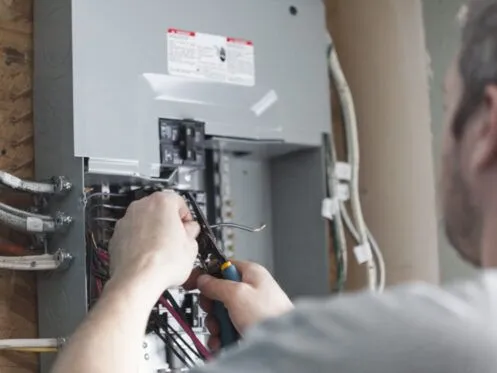
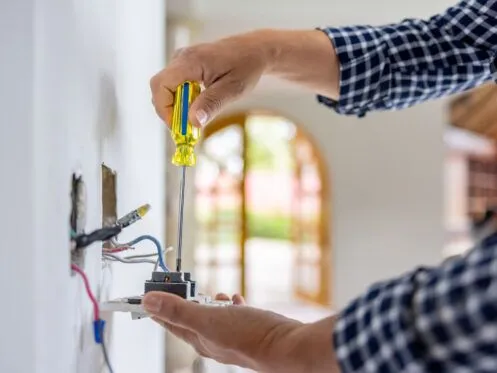
Electrical troubleshooting is the systematic process of identifying the source of an electrical problem, determining why it happened, and finding the correct repair. In a home, that may involve anything from a worn light switch or tripped GFCI outlet to damaged wiring, an overloaded circuit, or a problem inside the electrical panel.
Some basic checks are simple. Others require electrical testing, knowledge of circuit design, and an understanding of how different parts of the home’s electrical system interact.
For homeowners in Forest Lake and throughout the Twin Cities Metro area, recognizing the signs of an electrical problem can help you respond before a small issue becomes a larger repair. Plugz Electric provides electrical troubleshooting and repair for problems involving wiring, outlets, switches, panels, lighting, surge protection, and EV charging equipment. We do this for both residential and commercial properties.
What Is Electrical Troubleshooting?
Electrical troubleshooting is the process electricians use to locate and diagnose faults within an electrical system.
The keyword is diagnose.
Replacing the component that appears to be malfunctioning does not necessarily solve the underlying problem. If a light fixture stops working, for example, the fixture itself might be perfectly functional. The actual problem could be a bad switch, loose connection, damaged conductor, tripped breaker, faulty neutral, or another component upstream on the circuit.
Professional electrical troubleshooting works backward from the symptom to identify the actual cause.
An electrician may evaluate:
- Circuit breakers and electrical panels
- Electrical wiring and connections
- Outlets and receptacles
- GFCI and AFCI protection
- Light switches and dimmers
- Indoor and outdoor lighting
- Dedicated appliance circuits
- Grounding and bonding
- Electrical loads
- Voltage irregularities
- Surge protection
- EV charging circuits
- Connections inside electrical boxes
This systematic approach matters because electrical systems are interconnected. The location where you notice the problem is not always where the electrical fault is located.
How Electrical Troubleshooting Works
Experienced electricians do not simply replace parts until something starts working. Troubleshooting follows a logical sequence designed to narrow the problem down.
The process usually begins with the symptom.
Suppose several outlets in a bedroom stop working. An electrician may first determine whether the affected receptacles are on the same circuit. The breaker can then be evaluated, followed by upstream outlets, connections, wiring, and any protective devices associated with that circuit.
Every test eliminates possibilities.
Eventually, the electrician isolates the point where normal electrical operation changes. That transition often reveals the source of the problem.
Step 1: Identify the Exact Electrical Problem
Good troubleshooting starts by defining what is actually happening.
Instead of simply noting that “the electricity isn’t working,” useful questions include:
- Which outlets, switches, lights, or appliances are affected?
- Did everything stop working at once?
- Is the problem constant or intermittent?
- Does it happen when a particular appliance turns on?
- Did a circuit breaker trip?
- Has the problem happened before?
- Was electrical work recently performed?
- Are there buzzing sounds, unusual odors, heat, or visible discoloration?
These details can significantly narrow the diagnostic process.
A breaker that trips whenever a specific appliance operates presents a very different troubleshooting scenario from a breaker that trips unpredictably several hours after being reset.
Step 2: Determine the Scope of the Problem
The next question is whether the issue affects one device, one circuit, several circuits, or the entire property.
If a single lamp does not work, the problem may be isolated to the lamp, receptacle, switch, or fixture.
If every outlet in one room loses power, the issue is more likely related to the branch circuit supplying that area.
When multiple unrelated circuits behave abnormally, the investigation may shift toward the electrical panel, service equipment, neutral connection, or incoming electrical supply.
Defining the scope prevents unnecessary repairs.
Step 3: Inspect the Circuit and Components
Electricians then examine the relevant components for physical evidence of failure.
Depending on the problem, this can include checking for:
- Loose electrical connections
- Burned terminals
- Damaged insulation
- Corrosion
- Overheated wiring
- Worn receptacles
- Faulty switches
- Improper wiring
- Damaged breakers
- Moisture inside electrical boxes
- Signs of arcing
- Overloaded circuits
A connection does not have to be completely disconnected to cause problems. A loose terminal may continue conducting electricity while creating resistance and excessive heat.
That can make intermittent electrical problems particularly important to investigate.
Step 4: Test the Electrical System
When visual inspection does not reveal the cause, electrical measurements help isolate the fault.
Professional electricians may use meters and other testing equipment to evaluate voltage, continuity, resistance, grounding, current flow, and circuit conditions.
Testing is especially useful when a fault is hidden behind walls or distributed across several devices.
Instead of opening every electrical box in the house, an electrician can use circuit behavior and test results to progressively narrow the search.
Step 5: Find the Root Cause
Finding a failed component is only part of the job.
The next question is why it failed.
Consider a burned outlet. Replacing the receptacle addresses the visible damage, but the electrician should also determine whether the damage resulted from a loose connection, excessive electrical load, worn receptacle contacts, improper installation, or another problem.
Without correcting the cause, the same failure can return.
Step 6: Repair and Verify the Circuit
Once the source is identified, the necessary electrical repair can be completed.
The system should then be tested again.
Verification confirms that the original symptom has disappeared and that the affected circuit operates as intended.
Common Electrical Problems and What They Can Mean
Home electrical systems can develop dozens of different faults, but several symptoms appear more frequently than others.
Understanding what those symptoms can indicate makes it easier to know when professional electrical troubleshooting is warranted.
Circuit Breaker Keeps Tripping
A circuit breaker is designed to interrupt electrical current when unsafe circuit conditions occur.
An occasional trip may result from a temporary overload. Frequent trips are different.
Repeated breaker trips can indicate:
- An overloaded circuit
- Short circuit
- Ground fault
- Damaged wiring
- Faulty appliance
- Loose connection
- Failing breaker
- Problems with equipment connected to the circuit
Resetting a breaker repeatedly does not correct the condition causing it to trip.
Pay attention to when the breaker trips. If it happens when a space heater, microwave, hair dryer, air conditioner, or another high-demand appliance turns on, electrical load may be an important clue.
If the breaker trips with little or nothing connected, the circuit itself deserves closer inspection.
Plugz Electric specifically identifies frequent breaker trips as one of the warning signs that electrical repair may be needed.
Electrical Outlet Not Working
A dead outlet does not automatically mean the receptacle itself has failed.
Possible causes include:
- Tripped circuit breaker
- Tripped GFCI device
- Loose connection
- Failed receptacle
- Damaged wiring
- Open neutral
- Upstream outlet failure
- Switch-controlled receptacle
This is a good example of why electrical troubleshooting requires understanding the circuit as a whole.
Several outlets may be wired together. A loose connection at one receptacle can interrupt power to additional outlets farther downstream.
Check for a Tripped GFCI
When an outlet suddenly loses power, a GFCI receptacle elsewhere on the circuit may have tripped.
This can be confusing because the GFCI controlling the dead receptacle is not necessarily located immediately beside it.
Depending on the electrical layout, check appropriate GFCI devices serving areas such as kitchens, bathrooms, garages, basements, utility spaces, and outdoor locations.
If a GFCI will not reset or repeatedly trips again, the cause needs further investigation.
Flickering Lights
A flickering light can be as simple as a loose bulb. When multiple lights flicker or the problem occurs repeatedly, however, the cause may be deeper within the electrical system.
Potential causes include:
- Loose bulb
- Worn light socket
- Faulty switch
- Loose wiring connection
- Circuit overload
- Voltage fluctuations
- Panel problems
- Loose neutral connection
Patterns matter.
If one fixture flickers, troubleshooting can focus on that fixture and its circuit. If lights throughout the house brighten, dim, or flicker together, the problem may involve a broader part of the electrical system.
Plugz Electric lists flickering lights among the conditions its electricians troubleshoot and also identifies them as a possible indication of panel problems.
Lights Dim When an Appliance Turns On
It is common to notice a very brief change in lighting when certain high-demand equipment starts. Significant or persistent dimming deserves more attention.
Possible explanations include:
- Excessive load on a circuit
- Undersized circuit
- Loose connection
- Voltage drop
- Inadequate electrical service
- Aging electrical panel
- Wiring problems
Older homes can be particularly vulnerable when their electrical systems were designed before today’s collection of HVAC equipment, kitchen appliances, entertainment systems, computers, chargers, and other high-demand devices.
Plugz Electric notes that dimming lights when high-draw equipment starts can indicate that an electrical system is struggling with demand and may warrant an electrical upgrade.
Light Switch Not Working
A light switch that no longer controls its light or fixture may have a relatively simple mechanical failure, but several electrical faults can produce the same symptom.
Common possibilities include:
- Failed switch
- Loose terminal
- Damaged wiring
- Tripped breaker
- Faulty fixture
- Failed dimmer
- Circuit connection problem
Crackling, buzzing, excessive warmth, or visible discoloration around a switch should receive prompt attention.
Switches are used constantly. Internal contacts can wear over time, and loose connections can create resistance and heat.
Buzzing Electrical Outlet or Switch
Electrical devices should generally operate quietly.
A buzzing or crackling sound can be associated with:
- Loose wiring
- Electrical arcing
- Damaged receptacle
- Failing switch
- Poor connection
- Improperly installed device
- Problems with a dimmer or compatible load
The sound itself does not tell you exactly which fault is present. It tells you the device or circuit deserves inspection.
Plugz Electric includes buzzing and hot outlets or switch plates among signs that homeowners may need electrical repair.
Outlet or Switch Feels Hot
Electrical components can produce some warmth under certain operating conditions, but an unexpectedly hot outlet, faceplate, plug, or switch can signal excessive resistance or another electrical problem.
Potential causes include loose connections, overloaded circuits, damaged receptacles, improper wiring, or failing devices.
Heat is particularly important because electrical resistance can generate additional heat at damaged or poorly connected points.
Discoloration, melting, or a burning smell increases the urgency of the situation.
Burning Smell From an Outlet or Electrical Panel
An unexplained burning or hot-plastic odor near electrical equipment needs prompt attention.
Possible causes include:
- Overheated wiring
- Loose connections
- Electrical arcing
- Overloaded components
- Damaged insulation
- Failing breaker
- Burned receptacle
Do not assume the problem has disappeared simply because the smell goes away.
Intermittent faults can stop producing heat when the electrical load changes and return later.
Plugz Electric identifies burning odors as a sign that a home’s wiring, panel, outlets, or related components may require professional electrical repair.
Electrical Panel Problems
The electrical panel distributes power through individual branch circuits throughout the property. A problem at the panel can therefore affect much more than one outlet or fixture.
Warning signs can include:
- Frequent breaker trips
- Breakers that will not remain reset
- Buzzing or unusual sounds
- Corrosion
- Burning odors
- Excessive heat
- Discolored components
- Flickering lights
- Multiple dead outlets
- Insufficient breaker capacity
Plugz Electric lists frequent outages, flickering lights, nonworking outlets, and unusual panel sounds among indications that an electrical panel may need evaluation.
Older panels can also become inadequate as household electrical demand increases. EV chargers, electric ranges, heat pumps, workshops, hot tubs, and other substantial loads can change what a home’s electrical system needs to support.
In those situations, troubleshooting may reveal that the appropriate solution is an electrical panel upgrade rather than another temporary repair.
GFCI Outlet Keeps Tripping
Ground-fault circuit interrupters are designed to respond to certain electrical leakage conditions.
Repeated GFCI trips may be related to:
- Moisture
- Damaged appliance
- Faulty equipment
- Wiring problems
- Ground faults
- Deteriorated GFCI device
- Problems elsewhere downstream
Troubleshooting becomes especially useful when several outlets lose power because one GFCI device may provide downstream protection to multiple receptacles.
Breaker Is On, but There Is No Power
This situation often confuses homeowners.
A breaker can appear to be in the ON position even though a circuit has tripped. Depending on the breaker, it may need to be moved completely to OFF before being reset.
If the breaker has been properly reset and there is still no power, possible causes include:
- Tripped GFCI
- Loose wire
- Failed receptacle
- Open neutral
- Failed breaker
- Damaged conductor
- Upstream connection failure
When multiple devices on the same circuit are affected, mapping which devices work and which do not can provide valuable diagnostic information.
Sparks From an Outlet
A tiny, momentary spark can occasionally occur when a plug makes or breaks an electrical connection, particularly with equipment drawing current.
Repeated, large, unusual, or prolonged sparking is different.
Sparking can be associated with loose contacts, damaged receptacles, electrical arcing, faulty equipment, or wiring problems.
Burn marks, melting, smoke, or heat around the outlet indicate that the receptacle needs immediate attention.
Electrical Troubleshooting in Older Homes
Older Twin Cities homes can present unique troubleshooting challenges because electrical systems are often modified repeatedly over decades.
A house may contain original wiring alongside newer circuits added during renovations. Previous homeowners may have added receptacles, remodeled rooms, finished basements, upgraded appliances, or expanded electrical loads.
The resulting system is not always as straightforward as the original electrical plan.
Troubleshooting may uncover:
- Aging wiring insulation
- Older electrical panels
- Improper previous modifications
- Limited circuit capacity
- Ungrounded receptacles
- Overloaded circuits
- Loose connections
- Inadequate outlet placement
- Wiring that no longer meets the property’s electrical needs
Plugz Electric provides wiring and whole-home rewiring services for older or deteriorated systems and notes that aging wiring can develop deteriorating insulation and other problems that are hidden behind walls.
Why Loose Electrical Connections Cause So Many Problems
Loose connections are among the more deceptive electrical faults because they can produce intermittent symptoms.
A wire that is completely disconnected creates an obvious failure. A loose connection may work most of the time.
As electrical load changes, the connection can behave differently. Lights may flicker. An outlet may work intermittently. Heat may develop around a terminal.
That intermittent behavior can make the problem appear mysterious when it actually has a physical cause.
Professional troubleshooting looks for patterns rather than treating each symptom as an isolated event.
Overloaded Circuit vs. Short Circuit
These terms are sometimes used interchangeably, but they describe different electrical conditions.
Electrical Overload
An overload occurs when connected equipment demands more current than a circuit is intended to carry.
For example, plugging several high-wattage devices into receptacles on the same circuit can exceed the circuit’s capacity.
The breaker trips to interrupt the excessive current.
The long-term solution may involve reducing the load, redistributing equipment, installing additional circuits, or upgrading the electrical system.
Short Circuit
A short circuit occurs when electrical current takes an unintended low-resistance path.
The resulting current can rise rapidly, causing the breaker to trip.
Finding the source may require inspecting wiring, devices, appliances, junction boxes, and other components associated with the affected circuit.
Ground Fault
A ground fault involves electrical current flowing along an unintended path toward ground.
Ground faults are particularly important in locations where electricity and moisture may be present, which is why GFCI protection plays such an important role in residential electrical systems.
Why Electrical Problems Sometimes Come and Go
Intermittent electrical problems should not be dismissed simply because everything starts working again.
Temperature, vibration, electrical load, moisture, and movement can change the behavior of a failing connection.
You might notice that:
- An outlet works some days but not others.
- The lights flicker when another appliance starts.
- A breaker trips only during heavy household electrical use.
- An outdoor circuit fails after rain.
- A switch works when pressed at a particular angle.
- An EV charger produces errors only during certain charging sessions.
Those patterns are useful diagnostic clues.
Documenting when the problem occurs can help an electrician reproduce the condition and isolate the fault more efficiently.
Electrical Troubleshooting After a Power Outage
When utility power returns after an outage, not every electrical problem necessarily originates with the utility.
If neighboring properties have power but part of your home does not, check whether breakers or GFCI devices have tripped.
If only certain circuits remain unavailable, the problem may be within the home’s electrical system.
Power restoration can also coincide with voltage fluctuations or surges. Whole-home surge protection provides another layer of protection for appliances and electronics connected throughout the house. Plugz Electric offers whole-home surge protection as part of its residential electrical services.
Troubleshooting Electrical Problems After Remodeling
Renovations often change a home’s electrical requirements.
A kitchen remodel might add lighting, receptacles, cooking equipment, or dedicated circuits. A finished basement can add an entirely new collection of loads. Home offices, workshops, additions, and converted garages create similar demands.
If electrical problems begin after remodeling, troubleshooting may involve reviewing:
- Recently added circuits
- New outlets
- Lighting installations
- Junction boxes
- Circuit capacity
- Panel capacity
- New appliance loads
- Connections between old and new wiring
This is another reason electrical planning should be part of a remodeling project rather than an afterthought.
Troubleshooting EV Charger Problems
Home EV charging introduces a significant electrical load, so charger problems are not always caused by the charger itself.
An electrician may need to investigate:
- Dedicated charging circuit
- Circuit breaker
- Wiring
- Connections
- Available panel capacity
- Voltage
- Grounding
- Charging equipment installation
- Other loads are operating simultaneously
Plugz Electric installs and services EV charging equipment as part of its electrical offerings in Forest Lake and throughout its Twin Cities service area.
If an EV charger repeatedly trips a breaker or stops charging, identifying the electrical cause is preferable to repeatedly resetting the equipment.
When Electrical Troubleshooting Leads to Rewiring
Not every wiring problem means an entire house needs to be rewired.
A localized damaged conductor or connection may require only a targeted repair.
Whole-home or substantial rewiring becomes more relevant when problems are widespread or the existing wiring itself is outdated, damaged, or inadequate for current electrical demands.
Possible indications include:
- Recurring wiring failures
- Deteriorated insulation
- Extensive outdated wiring
- Persistent electrical problems throughout the home
- Major renovations
- Insufficient circuits
- Safety concerns discovered during inspection
Plugz Electric provides electrical wiring and whole-home rewiring if you’re in or around the Twin Cities Metro area, including upgrades for aging systems and new electrical loads.
When Troubleshooting Reveals You Need a Panel Upgrade
Sometimes the electrical system is functioning exactly as designed—the home has simply outgrown it.
Today’s electrical demands can be considerably higher than those of an older house.
Common additions include:
- EV chargers
- Electric ranges
- Heat pumps
- Additional air-conditioning equipment
- Home offices
- Workshops
- Finished basements
- Hot tubs
- New appliances
- Expanded lighting
- Home additions
If the panel lacks capacity or available circuit space, continued small fixes may not address the underlying limitation.
Plugz Electric recommends evaluating panel upgrades when older equipment cannot meet modern demand, when a panel lacks space for additional circuits, or when homeowners are adding substantial new electrical loads.
What Electrical Problems Can Homeowners Check?
Homeowners can gather useful information without taking electrical equipment apart.
Reasonable observations include checking whether the problem affects one device or several, determining whether a breaker or GFCI has tripped, testing whether a lamp or appliance works in another functioning outlet, and noting exactly when the problem occurs.
You can also look for visible warning signs such as discoloration, unusual heat, odors, or damaged devices.
The distinction is important: observation helps troubleshooting; opening energized electrical equipment creates an entirely different level of risk.
Plugz Electric advises homeowners to use a professional electrician for troubleshooting residential electrical systems and commercial electrical systems so problems can be diagnosed safely and the electrical system can remain compliant with applicable requirements.
Electrical Warning Signs That Need Prompt Attention
Some electrical symptoms are more concerning than an inconvenient dead outlet.
Arrange professional electrical service promptly if you notice:
- Burning or melting odors
- Smoke
- Repeated electrical arcing
- Scorched outlets
- Melted receptacles
- Hot switches or outlets
- Buzzing from the electrical panel
- Breakers that repeatedly trip
- Visible wiring damage
- Significant unexplained light fluctuations
- Water contacting electrical components
- Multiple circuits are failing unexpectedly
These symptoms can point toward conditions that should be identified rather than ignored.
Why Professional Electrical Troubleshooting Saves Time
Electrical troubleshooting can look simple from the outside: find what stopped working and replace it.
In practice, good diagnostics can prevent unnecessary work.
Replacing an outlet will not fix damaged wiring upstream. Installing a new light fixture will not correct a failing switch. Replacing a breaker will not solve a genuinely overloaded circuit.
A professional electrician approaches the problem as a system.
That can mean distinguishing between a component failure and a circuit problem, locating hidden faults, identifying why equipment failed, and verifying that the repair corrected the underlying condition.
The objective is not simply to make electricity flow again. It is to understand why it stopped working correctly in the first place.
Electrical Troubleshooting and Preventive Upgrades
Troubleshooting can also reveal opportunities to prevent future problems.
For example, an electrician investigating recurring breaker trips may determine that a new dedicated circuit is appropriate. An inspection of deteriorated wiring may lead to rewiring. Repeated panel limitations may point toward a panel replacement.
Other useful upgrades can include:
- Additional outlets
- New dedicated circuits
- GFCI or AFCI protection where appropriate
- Electrical panel upgrades
- Whole-home surge protection
- Updated switches
- Indoor lighting upgrades
- Outdoor lighting
- EV charging circuits
- Updated electrical wiring
The best solution depends on the condition of the existing electrical system and how the household actually uses electricity.
Electrical Troubleshooting in Forest Lake and the Twin Cities
Minnesota homes range from older properties with decades of electrical modifications to newer houses filled with modern appliances, smart technology, entertainment equipment, and EV charging systems.
Both can develop electrical problems, although the causes may be very different.
Plugz Electric is based in Forest Lake and provides residential and commercial electrical services across communities in the Twin Cities Metro area, including portions of Washington, Anoka, Ramsey, Hennepin, Dakota, and Chisago counties.
The company’s electrical services include troubleshooting and repairs as well as panel replacement, electrical wiring, whole-home rewiring, outlet and switch work, surge protection, EV charging stations, indoor and outdoor lighting, ceiling fans, remodeling electrical work, and other electrical upgrades.
That range becomes particularly useful when troubleshooting uncovers a larger problem. A dead outlet may lead to a wiring repair. Repeated breaker trips may reveal a capacity issue. Flickering lights could point toward a failing connection or panel problem.
The symptom starts the investigation. The diagnosis determines what actually needs to be repaired.
Get to the Bottom of Your Electrical Problem
Electrical problems have causes, even when those causes are hidden behind walls, inside electrical boxes, or elsewhere on the circuit.
The goal of electrical troubleshooting is to move beyond the symptom.
A breaker that keeps tripping, an outlet without power, flickering lights, a buzzing switch, or an intermittent circuit should be evaluated in context with the rest of the electrical system. Once the source is identified, the appropriate repair may be surprisingly small—or it may reveal that an aging system needs a more substantial upgrade.
Plugz Electric provides professional electrical troubleshooting and repair from its Forest Lake location for homeowners and businesses throughout the Twin Cities Metro area. Its electricians work with electrical repairs, wiring and rewiring, panels, outlets, switches, surge protection, lighting, EV charging, and related electrical installations.
Contact Plugz Electric to schedule electrical service or have a persistent electrical problem properly diagnosed.
You can reach us 24/7 by calling 612-295-1595 or by clicking on the button at the top of the page to start booking.
Frequently Asked Questions About Electrical Troubleshooting
What is electrical troubleshooting?
Electrical troubleshooting is the systematic process of identifying, testing, and diagnosing problems in an electrical system. An electrician starts with the symptom, evaluates the affected circuit and related components, performs appropriate testing, finds the root cause, completes the repair, and verifies proper operation.
What are the most common electrical problems in a house?
Common residential electrical problems include tripped breakers, dead outlets, flickering lights, faulty switches, tripped GFCI outlets, loose electrical connections, overloaded circuits, damaged wiring, hot outlets, buzzing devices, and aging electrical panels.
Why does my circuit breaker keep tripping?
A breaker may repeatedly trip because of an overloaded circuit, short circuit, ground fault, damaged wiring, faulty appliance, loose connection, or breaker problem. The timing of the trip can provide an important clue. If it repeatedly happens when one particular appliance operates, for example, the appliance or circuit load may need to be investigated.
Why is my outlet not working if the breaker isn’t tripped?
The outlet could be affected by a tripped GFCI, failed receptacle, loose wire, open neutral, damaged wiring, upstream connection problem, or another device on the circuit. Some receptacles are also controlled by wall switches.
Why are my lights flickering?
A single flickering light may result from a loose bulb, worn socket, faulty fixture, or switch problem. Flickering across multiple fixtures can indicate loose connections, circuit issues, voltage problems, or an electrical panel concern.
What causes an electrical outlet to buzz?
Buzzing can result from loose wiring, worn contacts, electrical arcing, a damaged receptacle, or another poor electrical connection. Because outlets normally operate quietly, persistent buzzing should be investigated.
Why do my lights dim when appliances turn on?
High-demand appliances can cause noticeable voltage changes when they start. Significant or persistent dimming may indicate circuit loading problems, voltage drop, loose wiring, or an electrical system that needs greater capacity.
How do electricians find electrical problems behind walls?
Electricians combine knowledge of circuit layouts with electrical testing to narrow down the location of a fault. By comparing readings and determining which devices are affected, they can often isolate the problem to a particular portion of a circuit before accessing the wiring.
Does frequent breaker tripping mean I need a new electrical panel?
Not necessarily. Frequent trips can have several causes, including circuit overloads, appliance faults, wiring problems, or a failing breaker. However, if the existing panel cannot adequately support the home’s electrical demand or lacks capacity for additional circuits, troubleshooting may lead to a recommendation for a panel upgrade.
When does a house need electrical rewiring?
Rewiring may become appropriate when wiring is deteriorated, damaged, outdated, improperly modified, or inadequate for the home’s current electrical requirements. Localized wiring problems may only require targeted repairs, so an electrical evaluation can help determine the appropriate scope of work.
Can EV chargers cause electrical problems?
An EV charger places a substantial load on a home’s electrical system. Problems can occur when there are issues with the dedicated circuit, breaker, wiring, connections, charger installation, grounding, or available panel capacity. Proper troubleshooting can determine whether the problem is with the charging equipment or the electrical system supplying it.
When should I call an electrician for electrical troubleshooting?
Professional electrical troubleshooting is appropriate when breakers repeatedly trip, outlets stop working without an obvious explanation, lights continually flicker, switches or receptacles become hot, electrical components buzz or crackle, burning odors occur, or an electrical problem repeatedly disappears and returns. Diagnosing the root cause is especially important when the same problem continues despite resets or basic equipment checks.