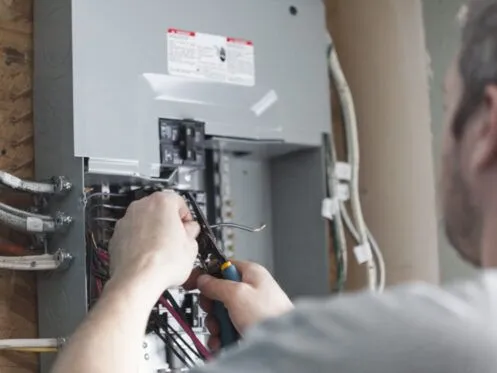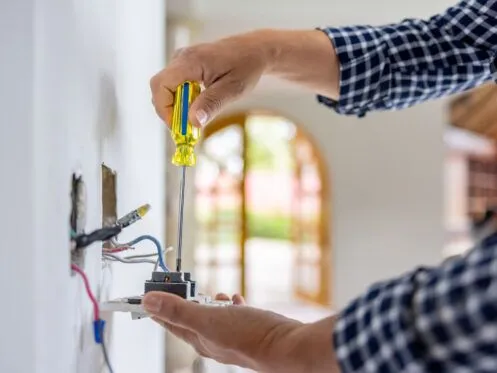

If your home needs a new electrical panel, one of the first practical questions is usually: How long does an electrical panel replacement take?
For a straightforward residential project, the physical panel replacement can often be completed within one working day, commonly taking several hours. Commercial electrical replacements or more complicated projects may require additional time, particularly when the electrical service is also being upgraded, the existing wiring needs correction, the meter or service equipment is involved, or other electrical problems are discovered during the work.
That does not necessarily mean the entire project—from the first estimate through final inspection—happens in a single day. Permits, utility coordination, inspections, equipment availability, and the scope of the upgrade can all affect the overall timeline.
For homeowners in Forest Lake and throughout the Twin Cities Metro Area, understanding that distinction makes planning an electrical panel replacement much easier.
How Long Does It Take to Replace an Electrical Panel?
A typical electrical panel replacement generally requires about 4 to 8 hours of on-site work, although every property is different.
During that period, the electrician must do considerably more than remove one box and install another. The project can involve shutting down power, disconnecting existing circuits, removing the old panel, installing the replacement equipment, reconnecting and organizing branch circuits, installing appropriate breakers, completing grounding and bonding work, labeling circuits, testing the system, and preparing the installation for inspection.
Some projects move quickly because the existing electrical system is in good condition and the replacement is relatively straightforward. Others become more involved once the old panel is opened.
A house that has undergone several renovations, for example, may contain circuit modifications made at different times. An electrician may find crowded wiring, improperly sized breakers, damaged conductors, grounding or bonding concerns, or circuits that need to be corrected before the new panel can be put into service.
The better question, therefore, is not simply how many hours panel replacement takes. It is what needs to be done to replace your particular panel correctly.
What Happens During an Electrical Panel Replacement?
Understanding the process helps explain why replacing an electrical panel can take most of the day.
An electrical panel is the distribution point for the circuits serving your home. Electricity enters through the electrical service and is distributed through breakers to lighting, receptacles, appliances, HVAC equipment, and other loads.
Replacing the panel means those electrical connections have to be transferred safely to the new equipment.
Evaluating the Existing Electrical System
Before beginning the replacement, the electrician evaluates the existing installation and determines the scope of work.
That may include examining:
- The existing panel and breakers
- Service capacity
- Branch circuit wiring
- Grounding and bonding
- Available panel space
- Signs of overheating or damage
- Previous electrical modifications
- Current and anticipated electrical demand
- Equipment that may require dedicated circuits
This evaluation is particularly important in older Twin Cities homes. A house may have newer wiring in a remodeled kitchen while retaining considerably older electrical components elsewhere.
The age of the house does not necessarily tell you the age or condition of every part of its electrical system.
Shutting Off Electrical Power
The home’s electrical supply must be safely disconnected before the existing panel can be replaced.
As a result, homeowners should expect a period without normal electrical power while the work is underway.
The exact outage period depends on the project. If service equipment, the meter, or utility-side work is involved, additional coordination may be necessary.
Before replacement day, ask your electrician how long the expected outage will last so you can plan accordingly.
Removing the Existing Panel
Once the electrical system is safely de-energized, the electrician can begin disconnecting circuits and removing the old equipment.
This step requires careful identification of the existing wiring. The objective is not simply to get the old panel off the wall quickly. Each circuit needs to be properly handled so it can be safely incorporated into the new installation.
Installing the New Electrical Panel
The replacement panel is then installed and configured for the home’s electrical system.
Depending on the project, this stage can include installing new breakers, reconnecting branch circuits, completing grounding and bonding requirements, arranging conductors, and making other necessary electrical connections.
Circuit labeling is also important. A properly organized directory makes future troubleshooting, maintenance, and electrical repairs much easier.
Testing the Electrical System
The job is not finished when the last breaker is installed.
The electrician needs to verify that the installation is functioning correctly and that circuits have been properly restored. Any required corrections discovered during the project also need to be addressed.
Depending on local requirements and the scope of work, a permitted electrical project may also require an inspection by the applicable authority.
What Can Make an Electrical Panel Replacement Take Longer?
Two homes on the same street can require very different amounts of work.
Several factors have a particularly significant effect on the timeline.
Upgrading the Home’s Electrical Service
Replacing a panel and upgrading electrical service are related projects, but they are not always the same thing.
If the existing electrical capacity is insufficient for the home’s current or future needs, the project may involve more than swapping panels.
A service upgrade can require additional equipment and coordination. The scope depends on the existing electrical service and what is necessary to support the new installation.
This often comes up when homeowners are preparing for significant new electrical loads.
Old or Damaged Wiring
An electrician may discover wiring problems after opening an older electrical panel.
Damaged conductors, deteriorated insulation, questionable connections, overcrowding, or previous modifications can require additional work.
Simply connecting unsafe wiring to a brand-new panel does not solve the underlying problem.
In some homes, targeted wiring repairs are sufficient. Properties with widespread outdated or deteriorated wiring may require more substantial rewiring.
Previous DIY Electrical Work
Electrical systems accumulate history.
A house that is several decades old may have been renovated multiple times. Circuits may have been added for finished basements, garages, kitchens, workshops, additions, lighting, or appliances.
Not every modification was necessarily performed to the same standard.
Once an electrician starts tracing and transferring circuits, previously hidden issues can become visible. Correcting those problems adds time, but it also prevents questionable existing work from simply being carried into the new panel.
Grounding and Bonding Corrections
Grounding and bonding are fundamental parts of an electrical system.
If the existing installation needs modifications in conjunction with the panel project, those corrections can increase the scope of work.
This is another reason a professional evaluation before replacement is valuable. The panel itself is only one component of a larger electrical system.
Relocating the Electrical Panel
Replacing a panel in essentially the same location is generally more straightforward than moving it.
Panel relocation can require extending or rerouting circuits, modifying service equipment, opening finished surfaces, and coordinating additional electrical work.
If remodeling plans require moving the panel, homeowners should expect a more involved project than a conventional panel replacement.
Adding New Circuits
Panel replacement is often performed at the same time as other electrical upgrades.
You might want additional circuits for a remodeled kitchen, basement, workshop, outdoor space, home office, appliances, or lighting.
Combining projects can be efficient, but additional work naturally increases the installation time.
Installing an EV Charger
An electric vehicle charger can represent a substantial new electrical load.
If you’re considering an EV charging station, tell your electrician before selecting the replacement panel. The electrician can evaluate the home’s electrical capacity and determine how the planned charging equipment fits into the overall system.
Planning ahead can prevent replacing a panel today only to discover that additional changes are necessary when an EV charger is installed later.
How Long Will My Electricity Be Off During Panel Replacement?
Homeowners frequently assume that if a panel replacement takes eight hours, their electricity will necessarily be unavailable for exactly eight hours.
That is not always the case.
The power must remain off during portions of the project where electricians are working on equipment that cannot safely remain energized. The actual outage depends on the type of replacement, service configuration, required utility involvement, and the work being performed.
For planning purposes, it is sensible to prepare for a substantial portion of the working day without normal electrical service unless your electrician gives you a more specific timeframe.
That means thinking ahead about:
- Working from home
- Internet access
- Medical or essential electrical equipment
- Refrigerators and freezers
- Garage door operation
- Heating or cooling needs
- Security systems
- Charging phones and computers
Minnesota weather also matters. A planned power interruption during a mild September afternoon is very different from an outage during extreme January temperatures.
Discuss those concerns when scheduling the project.
Does an Electrical Panel Replacement Require a Permit?
Panel replacement is substantial electrical work, and permitting and inspection requirements may apply based on the location and project scope.
These administrative steps are an important distinction when discussing how long panel replacement takes.
The installation itself may be completed in one day, while the complete project timeline can extend beyond that because of scheduling, permits, inspections, utility coordination, or related service work.
Requirements can also vary by jurisdiction. Forest Lake and communities elsewhere in the Twin Cities Metro Area may not all follow identical administrative procedures.
A qualified electrical contractor can determine what is required for the property where the work is being performed.
When Is Electrical Panel Replacement Necessary?
Age alone does not automatically mean an electrical panel must be replaced.
Condition, capacity, configuration, reliability, and the electrical demands of the home are more useful considerations.
An electrician may recommend evaluating the panel if you are experiencing issues such as:
- Breakers that repeatedly trip
- Evidence of overheating
- Burning odors near electrical equipment
- Buzzing or unusual panel noises
- Visible corrosion or damage
- Insufficient breaker space
- An older system that no longer supports household demand
- Electrical problems are occurring across multiple circuits
A panel evaluation can also make sense before a major renovation or the addition of substantial electrical loads.
Panel Replacement vs. Electrical Panel Upgrade
Homeowners often use “panel replacement” and “panel upgrade” interchangeably, but there can be an important difference.
A panel replacement may involve replacing existing equipment while maintaining the basic electrical service configuration.
An electrical panel upgrade may be part of a larger project intended to provide additional capacity or accommodate new electrical demands.
The distinction matters because the larger the scope, the more time and coordination may be required.
For example, a homeowner might replace an aging panel because the equipment has deteriorated. Another homeowner might be planning a kitchen remodel, EV charger, new HVAC equipment, workshop, and other electrical additions.
Those projects require different planning, even if both involve installing a new panel.
Should You Upgrade Your Panel Before Remodeling?
A renovation is an excellent time to evaluate whether the electrical system can support the finished space.
Modern remodels frequently add electrical demand through additional receptacles, lighting, appliances, entertainment equipment, smart-home technology, and dedicated circuits.
The kitchen is a good example.
A renovated kitchen can include refrigerators, dishwashers, microwaves, ranges, countertop appliances, lighting, garbage disposals, and other electrical equipment. The electrical plan should account for those loads before walls and finishes are completed.
The same principle applies to finished basements, home additions, workshops, garages, and other substantial remodeling projects.
Evaluating the panel early allows the electrician to coordinate electrical wiring, new outlets, lighting installation, panel work, and other electrical upgrades as part of the larger project instead of addressing capacity problems after construction is nearly finished.
Can You Add Whole-Home Surge Protection During Panel Replacement?
Panel replacement can be a practical opportunity to discuss whole-home surge protection with your electrician.
Homes contain more sensitive electronics than ever. Beyond televisions and computers, modern appliances, HVAC equipment, chargers, entertainment systems, and smart-home devices can all contain electronic components.
Whole-home surge protection is intended to protect against damaging voltage surges entering or occurring within the home’s electrical system.
Because surge protection equipment is associated with the electrical distribution system, homeowners already replacing or upgrading their panel may want to incorporate it into the project’s planning.
Should You Replace Your Panel Before Installing an EV Charger?
Not necessarily.
Installing an EV charger does not automatically mean your electrical panel needs replacement. What matters is whether the existing electrical system has sufficient capacity and can appropriately support the charging equipment.
An electrician can perform a load evaluation and examine the panel before the charger is installed.
Possible outcomes include:
- The existing panel can support the charger without replacement.
- Electrical modifications are required, but a complete panel replacement is unnecessary.
- The existing panel lacks appropriate capacity or space and an upgrade is recommended.
- Other electrical improvements are advisable before installing the charger.
This is another situation where planning future electrical needs can influence the type of panel you choose today.
Is It Worth Replacing an Old Electrical Panel Before Problems Develop?
Sometimes.
Waiting until an electrical panel completely fails is rarely the most convenient way to handle an upgrade.
If an electrician identifies deterioration, inadequate capacity, recurring problems, or other legitimate concerns, planned replacement allows you to schedule the project rather than dealing with an unexpected electrical failure.
Preventive evaluation is especially useful when buying an older home, preparing for remodeling, adding major electrical equipment, or experiencing unexplained electrical issues.
Plugz Electric’s electrical safety inspection guidance notes that inspections can evaluate panels, breakers, wiring, receptacles, switches, grounding and bonding, and other components. That whole-system approach matters because a panel problem does not always exist in isolation.
How to Prepare for Electrical Panel Replacement Day
A little preparation can make the installation easier for everyone involved.
Make sure the electrician has unobstructed access to the electrical panel and related equipment. Move storage, furniture, shelving, or other belongings that could interfere with the work area.
Charge phones, laptops, portable power banks, and other devices beforehand.
If you work remotely, consider making alternate arrangements for the day. Your modem and router will lose power along with the rest of the home unless you have appropriate backup power.
Avoid repeatedly opening refrigerators and freezers while the power is off.
You should also tell your electrician beforehand about equipment that cannot tolerate an extended outage.
Most importantly, discuss the expected schedule before work begins. A good project plan should give you a reasonable idea of when power will be disconnected, what work is being performed, and what needs to happen before normal service can be restored.
Electrical Panel Replacement in Forest Lake and the Twin Cities
Replacing an electrical panel is ultimately about more than installing new breakers. The panel sits at the center of a home’s electrical distribution system, so the project should account for the condition of the existing wiring, electrical demand, grounding and bonding, circuit configuration, and plans for the property.
Plugz Electric is based in Forest Lake and provides residential and commercial electrical services throughout the Twin Cities Metro Area. In addition to electrical panel replacement and electrical upgrades, the company works on electrical repairs, wiring, and whole-home rewiring, outlet and switch installation and repair, whole-home surge protection, indoor and outdoor lighting, and EV charging stations.
That range of services can be particularly useful when a panel project reveals another issue or is part of a larger electrical upgrade.
For example, an older home may need panel replacement along with wiring corrections. A remodel might combine a panel upgrade with new circuits, outlets, and lighting. A homeowner preparing for an electric vehicle may need an electrical capacity evaluation before installing an EV charging station.
Looking at those needs together can produce a better long-term electrical plan than treating every project as an isolated repair.
If you’re concerned about an aging, overloaded, damaged, or undersized electrical panel, Plugz Electric can evaluate the existing system and determine what work is appropriate for your home.
Schedule a free consult today, click on the booking link at the top of the website, or give us a call at 612-295-1595.
Frequently Asked Questions About Electrical Panel Replacement
How Long Does an Electrical Panel Replacement Take?
A typical residential electrical panel replacement can often be completed within one working day, with straightforward installations commonly requiring roughly 4 to 8 hours of on-site work. More complicated projects can take longer when they involve service upgrades, wiring corrections, panel relocation, grounding or bonding work, or other electrical modifications.
Can an Electrical Panel Be Replaced in One Day?
Many standard residential panel replacements can be completed in one day. The overall project timeline may still be longer when permits, inspections, utility coordination, service equipment, or additional electrical work are involved.
How Long Will the Power Be Off When Replacing an Electrical Panel?
The outage depends on the project. Homeowners should generally prepare for power to be unavailable for a significant portion of the workday, although the actual interruption may be shorter than the total time electricians are on site. Your electrician can provide a better estimate after evaluating the existing system and project scope.
What Causes a Panel Replacement to Take Longer Than Expected?
Older or damaged wiring, previous DIY electrical modifications, grounding and bonding corrections, panel relocation, service upgrades, difficult access, additional circuits, and unexpected electrical problems can all increase the amount of work required.
Do I Need to Be Home During an Electrical Panel Replacement?
Ask your electrical contractor about access requirements when scheduling the project. Someone may need to be available at certain stages of the job, particularly at the beginning or completion of the work. You should also make arrangements for anything in the home that requires continuous electricity.
Can I Use My Electricity While the Panel Is Being Replaced?
Normal household electrical service will need to be disconnected during critical portions of the replacement. Because circuits terminate at the electrical panel, electricians cannot simply keep the entire home operating normally while transferring those circuits to new equipment.
Should I Replace My Electrical Panel If My Breakers Keep Tripping?
Not automatically. A tripping breaker can result from an overloaded circuit, short circuit, ground fault, equipment problem, wiring issue, or another electrical condition. An electrician should diagnose why the breaker is tripping before determining whether panel repair, replacement, wiring work, or another solution is appropriate.
Does Replacing an Electrical Panel Mean I Need to Rewire My House?
No. Panel replacement and whole-home rewiring are separate projects. However, an electrician may discover damaged, outdated, improperly installed, or otherwise problematic wiring while evaluating an older electrical system. When wiring problems are present, repairs or partial or whole-home rewiring may be recommended based on their extent.
Do I Need a New Electrical Panel for an EV Charger?
Not always. Whether an existing panel can support an EV charger depends on factors such as electrical capacity, existing loads, available circuit space, and the charging equipment being installed. An electrician can evaluate the system and determine whether the charger can be added to the existing setup or an electrical upgrade is needed.
Is Panel Replacement a Good Time to Add Whole-Home Surge Protection?
It can be. Because the electrician is already working at the home’s electrical distribution equipment, panel replacement is a logical time to discuss whole-home surge protection and determine whether it should be incorporated into the project.
How Do I Know Whether My Electrical Panel Needs to Be Replaced?
Repeated breaker trips, overheating, burning odors, unusual noises, corrosion, physical damage, insufficient circuit capacity, and problems supporting modern electrical loads can all justify professional evaluation. The correct solution depends on what is causing the problem rather than the panel’s age alone.
Who Replaces Electrical Panels in Forest Lake and the Twin Cities?
Plugz Electric provides electrical panel replacement and electrical upgrades from its Forest Lake location throughout the Twin Cities Metro Area. The company also provides electrical repairs, wiring and rewiring, outlet and switch services, surge protection, indoor and outdoor lighting, EV charger installation, and other residential and commercial electrical services.